
For more than two decades, Search Engine Optimization (SEO) has largely meant optimizing websites to rank on Google. Businesses focused on keywords, backlinks, technical SEO, and content quality to improve their position in Google’s search results.
However, the search landscape is changing rapidly.
Today, users don’t rely on Google alone to find information. They search on ChatGPT, Gemini, YouTube, LinkedIn, Instagram, TikTok, Reddit, Amazon, and many other platforms. At the same time, Google AI Overviews are transforming how search results are presented by providing direct AI-generated answers before users even visit websites.
This shift means SEO is no longer limited to a single search engine. Instead, businesses must optimize their content so it can be discovered across multiple search experiences, including AI-powered answer engines, video platforms, marketplaces, and social media.
In this comprehensive guide by Digital Ashwani, you’ll learn why SEO is no longer just about Google, explore the biggest changes shaping digital visibility in 2026, and discover practical strategies to build a future-ready SEO approach.
Why Search Is Changing
The way people search online has evolved dramatically.
Instead of searching only on Google, users now ask questions directly to AI assistants, watch tutorial videos on YouTube, search products on Amazon, and look for recommendations in online communities.
For example:
Instead of searching:
“Best digital marketing course”
A user might:
- Ask ChatGPT for recommendations.
- Watch reviews on YouTube.
- Read discussions on Reddit.
- Compare courses on LinkedIn.
- Search directly on Google.
This behavior creates multiple opportunities for businesses to reach potential customers.
What Is Search Everywhere Optimization?
Search Everywhere Optimization is the practice of improving your visibility across all major search platforms rather than focusing exclusively on Google.
This includes optimizing for:
- Google Search
- Google AI Overviews
- ChatGPT
- Gemini
- YouTube
- Bing
- Amazon
- TikTok
- Voice Search
The goal is to make your content discoverable wherever users search for information.
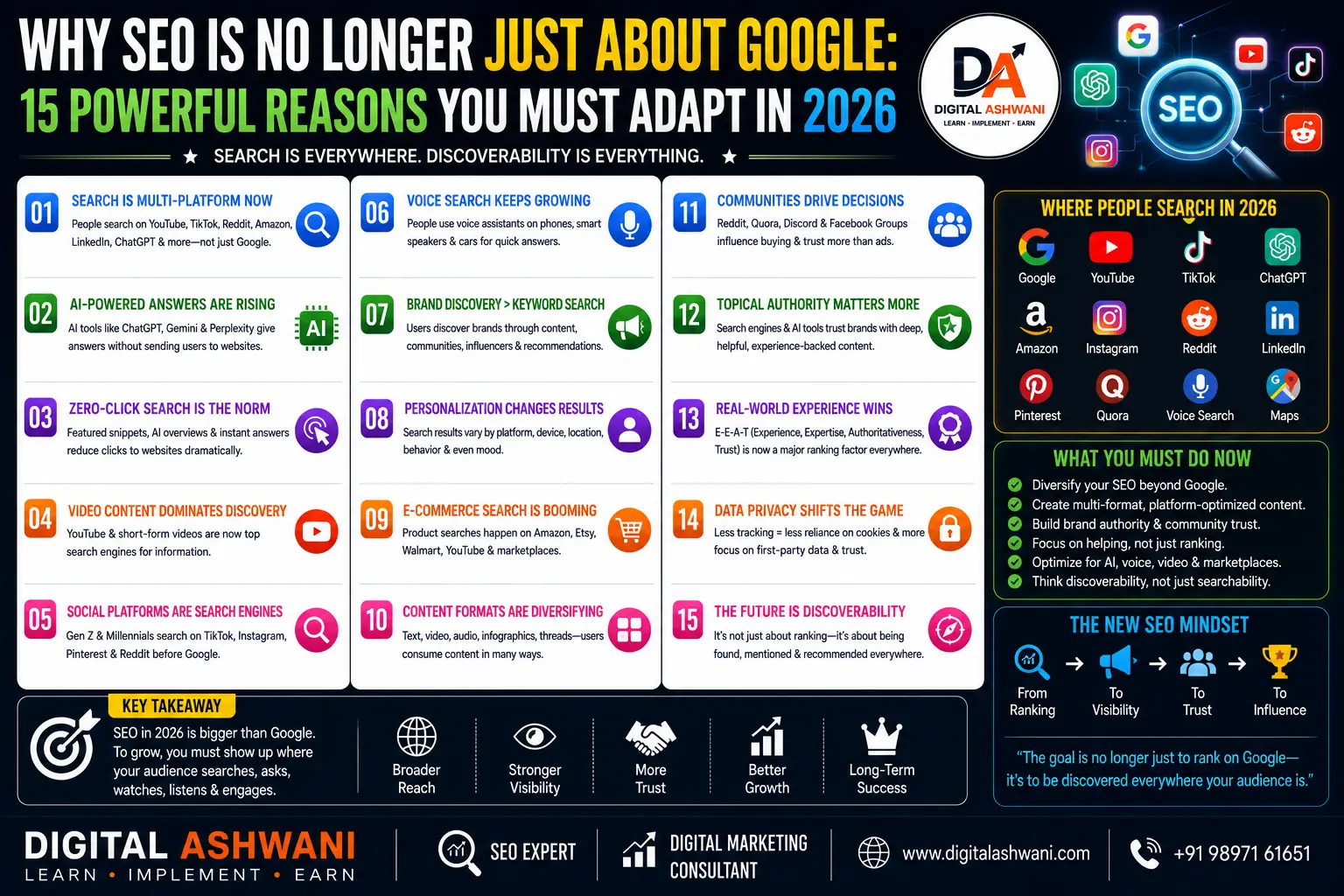
15 Powerful Reasons SEO Is No Longer Just About Google
1. AI Search Is Changing User Behavior
One of the biggest changes is the growing popularity of AI-powered search.
Users increasingly ask complete questions such as:
- How do I improve SEO in 2026?
- What is AI SEO?
- Which digital marketing strategy works best?
- How can I rank in ChatGPT?
AI platforms provide direct answers instead of simply listing websites.
Businesses must create content that AI systems can easily understand and reference.
2. Google AI Overviews Reduce Traditional Clicks
Google now displays AI-generated summaries for many informational searches.
These summaries answer user questions before they click on a website.
This has increased the importance of:
- Brand visibility
- Featured Snippets
- Clear answers
- Topical authority
- EEAT
Instead of optimizing only for clicks, businesses should optimize for visibility within AI-generated search experiences.
3. ChatGPT Has Become a Search Tool
Millions of users now use ChatGPT to:
- Learn new skills
- Compare products
- Research topics
- Write content
- Solve technical problems
This means businesses should publish high-quality, well-structured content that AI assistants can reference and summarize effectively.
4. Gemini Is Expanding AI Search
Google’s Gemini brings conversational AI directly into the search experience.
Users can ask follow-up questions, explore topics in greater depth, and receive personalized explanations.
As conversational search becomes more common, content should answer questions naturally rather than relying on isolated keywords.
5. YouTube Is the World’s Second-Largest Search Platform
Many users prefer watching videos instead of reading articles.
People search YouTube for:
- Tutorials
- Product reviews
- Comparisons
- How-to guides
- Industry news
Creating videos that complement your blog content increases visibility and reaches audiences who prefer visual learning.
6. Social Platforms Have Become Search Engines
Users increasingly search on platforms like:
- TikTok
- X (formerly Twitter)
Instead of using Google first, many users search these platforms for trends, product recommendations, and educational content.
Repurposing blog content into social media posts, carousels, and short-form videos helps expand your reach.
7. Reddit and Online Communities Influence Decisions
Community-driven platforms play a growing role in research.
Users visit online discussions to:
- Read genuine experiences
- Compare products
- Solve technical issues
- Ask questions
- Discover recommendations
Participating constructively in relevant communities can strengthen your brand visibility and authority.
8. Brand Searches Are Becoming More Important
People increasingly search for businesses by brand name rather than generic keywords.
For example:
Instead of searching:
“SEO agency”
Users search:
“Digital Ashwani AI SEO Guide”
Strong brands earn:
- More trust
- Better recognition
- Higher click-through rates
- More returning visitors
9. Voice Search Is Becoming More Common
Smart speakers, smartphones, and AI assistants have made voice search a regular part of how people find information.
Users now ask questions like:
- “What is the best SEO strategy in 2026?”
- “How do I improve my website ranking?”
- “Which AI tool is best for content writing?”
Voice searches are usually longer and more conversational than text searches.
How to Optimize
- Use natural language.
- Answer questions directly.
- Include FAQ sections.
- Target long-tail keywords.
- Optimize for local SEO.
10. Amazon Has Become a Product Search Engine
For eCommerce businesses, Google isn’t always the first destination.
Many shoppers begin directly on Amazon when searching for:
- Electronics
- Clothing
- Home products
- Books
- Digital accessories
This means SEO also includes:
- Product title optimization
- Product descriptions
- Reviews
- Images
- Conversion optimization
Search visibility now extends beyond traditional search engines.
11. LinkedIn Search Matters for B2B SEO
Professionals increasingly search LinkedIn for:
- Industry experts
- Agencies
- Freelancers
- Marketing advice
- Business services
A strong LinkedIn presence can generate:
- Brand awareness
- Referral traffic
- Leads
- Partnerships
- Authority
For B2B companies, LinkedIn has become an important search platform.
12. Search Intent Matters More Than Keywords
Old SEO focused heavily on keyword placement.
Modern SEO focuses on understanding why someone is searching.
Four major search intent types include:
- Informational
- Navigational
- Commercial
- Transactional
Businesses that satisfy user intent consistently outperform websites that simply repeat keywords.
13. EEAT Is More Important Than Ever
Google and AI-powered search systems increasingly prioritize:
- Experience
- Expertise
- Authoritativeness
- Trustworthiness
Ways to improve EEAT include:
- Publishing original insights.
- Sharing real case studies.
- Including author information.
- Updating content regularly.
- Citing reliable sources.
Strong EEAT helps both traditional search engines and AI-powered answer engines trust your content.
14. Topical Authority Beats Random Content
Publishing hundreds of unrelated articles no longer produces the same SEO results.
Instead, create content clusters around a specific niche.
For example, if your website focuses on Digital Marketing, publish interconnected articles on:
- AI SEO
- Google Updates
- Google Ads
- Blogging
- Content Marketing
- Technical SEO
- AI Tools
- Social Media Marketing
- Email Marketing
Internal links between these articles strengthen topical authority and improve user experience.
15. SEO Is Becoming Search Everywhere Optimization
The future of SEO is broader than Google rankings.
Businesses should optimize for visibility across:
- Google Search
- Google AI Overviews
- ChatGPT
- Gemini
- Bing
- YouTube
- Amazon
- TikTok
- Voice Search
This approach is often called Search Everywhere Optimization, where your content is discoverable wherever your audience searches.
How Businesses Should Adapt
To remain competitive in 2026 and beyond, businesses should adopt a multi-platform strategy.
Build Topical Authority
Create comprehensive content around your niche instead of covering unrelated topics.
Optimize for AI Search
Structure content using:
- Clear H2 and H3 headings
- Short paragraphs
- Bullet points
- Comparison tables
- FAQ sections
These elements make content easier for AI systems to understand and summarize.
Invest in Video Content
Repurpose blog posts into:
- YouTube videos
- Shorts
- Reels
- Webinars
- Tutorials
Video expands your reach and supports search visibility.
Strengthen Your Brand
Encourage branded searches by consistently publishing high-quality content and engaging with your audience across multiple platforms.
Diversify Traffic Sources
Avoid relying entirely on Google by building visibility through:
- Email newsletters
- Social media
- AI platforms
- Communities
- Video platforms
A diversified strategy reduces the impact of algorithm changes.
Common SEO Mistakes in the AI Era
Relying Only on Google
Ignoring AI platforms and social search limits your potential audience.
Publishing Thin AI Content
Low-value, repetitive content is less likely to perform well.
Ignoring User Intent
Always answer the questions your audience is actually asking.
Weak Internal Linking
Link related articles to reinforce topical authority.
Neglecting Brand Building
SEO is no longer just about rankings—it is also about reputation and recognition.
The Future of Search Everywhere Optimization
Search will continue evolving toward a connected ecosystem where users move seamlessly between AI assistants, search engines, social media, video platforms, and communities.
Successful businesses will:
- Publish helpful content.
- Build recognizable brands.
- Optimize for AI Search.
- Maintain strong technical SEO.
- Invest in multimedia content.
- Engage audiences across multiple channels.
The companies that adapt early will gain a significant competitive advantage.
Internal Linking Suggestions (Digital Ashwani)
Strengthen your SEO content cluster by linking this article with:
- AI SEO vs Traditional SEO
- Zero-Click SEO Strategy
- How to Rank in ChatGPT Search Results
- Gemini AI Search vs Google Search
- Brand Mentions vs Backlinks
- Is SEO Dead After AI?
- Future of Blogging in the AI Era
- Google Ads AI Features 2026
- Google Marketing Live 2026
- SEO Checklist for 2026
- Top Digital Marketing Trends in 2026
- Best AI Tools Every Digital Marketer Should Use
This internal linking strategy helps search engines understand your expertise while encouraging readers to explore more of your content.
External Resources
For the latest guidance on search and AI, refer to these trusted resources:
- Google Search Central
- Google Search Central Blog
- Google Search Console Help
- Google AI
- Google Analytics Help Center
- Google Ads Help Center
Following official documentation ensures your SEO strategy remains aligned with current best practices.
Frequently Asked Questions
Is SEO still important if AI is changing search?
Yes. SEO remains essential, but it now extends beyond Google rankings. Optimizing for AI-powered search, social platforms, video search, and brand visibility is becoming increasingly important.
What is Search Everywhere Optimization?
Search Everywhere Optimization is the practice of making your content discoverable across search engines, AI assistants, social media, marketplaces, and other platforms where users search for information.
Can ChatGPT and Gemini replace Google Search?
Not entirely. AI assistants are excellent for explanations and research, while traditional search engines remain important for discovering websites, current information, products, and local businesses.
Why are branded searches important?
Branded searches indicate trust and recognition. Users who search specifically for your business are more likely to engage with your content and become loyal visitors or customers.
How should businesses prepare for the future of SEO?
Focus on helpful content, strong EEAT, topical authority, AI Search Optimization, multimedia content, and a diversified traffic strategy rather than relying on Google alone.
Final Thoughts
The idea that SEO is only about Google is no longer accurate.
Search behavior has expanded across AI assistants, video platforms, social media, online communities, and marketplaces. Users now expect instant answers, conversational experiences, and trusted recommendations wherever they search.
Google remains a major source of organic traffic, but it is now one part of a much larger search ecosystem. Businesses that continue to optimize only for traditional rankings risk missing opportunities on platforms like ChatGPT, Gemini, YouTube, LinkedIn, Reddit, and emerging AI-powered search experiences.
The future belongs to organizations that create high-quality, people-first content, build recognizable brands, demonstrate expertise, and maintain visibility across multiple platforms.
At Digital Ashwani, we recommend combining traditional SEO with AI Search Optimization, Answer Engine Optimization (AEO), strong topical authority, and consistent brand building. This balanced approach helps future-proof your website and maximize visibility as search continues to evolve.
