
What Is Organic Reach?
In today’s digital marketing landscape, businesses want their content to reach as many people as possible. While paid advertising can quickly expand visibility, many brands also rely on organic reach to build long-term relationships with their audience without paying for every view.
Whether you’re using Facebook, Instagram, LinkedIn, X, YouTube, or another social media platform, understanding organic reach is essential for growing your online presence sustainably.
Organic reach helps businesses increase brand awareness, build trust, engage their audience, and drive website traffic without depending entirely on advertising budgets.
In this comprehensive guide by Digital Ashwani, you’ll learn 15 proven strategies to improve organic reach, understand how platform algorithms work, and grow your audience naturally in 2026.
What Is Organic Reach?
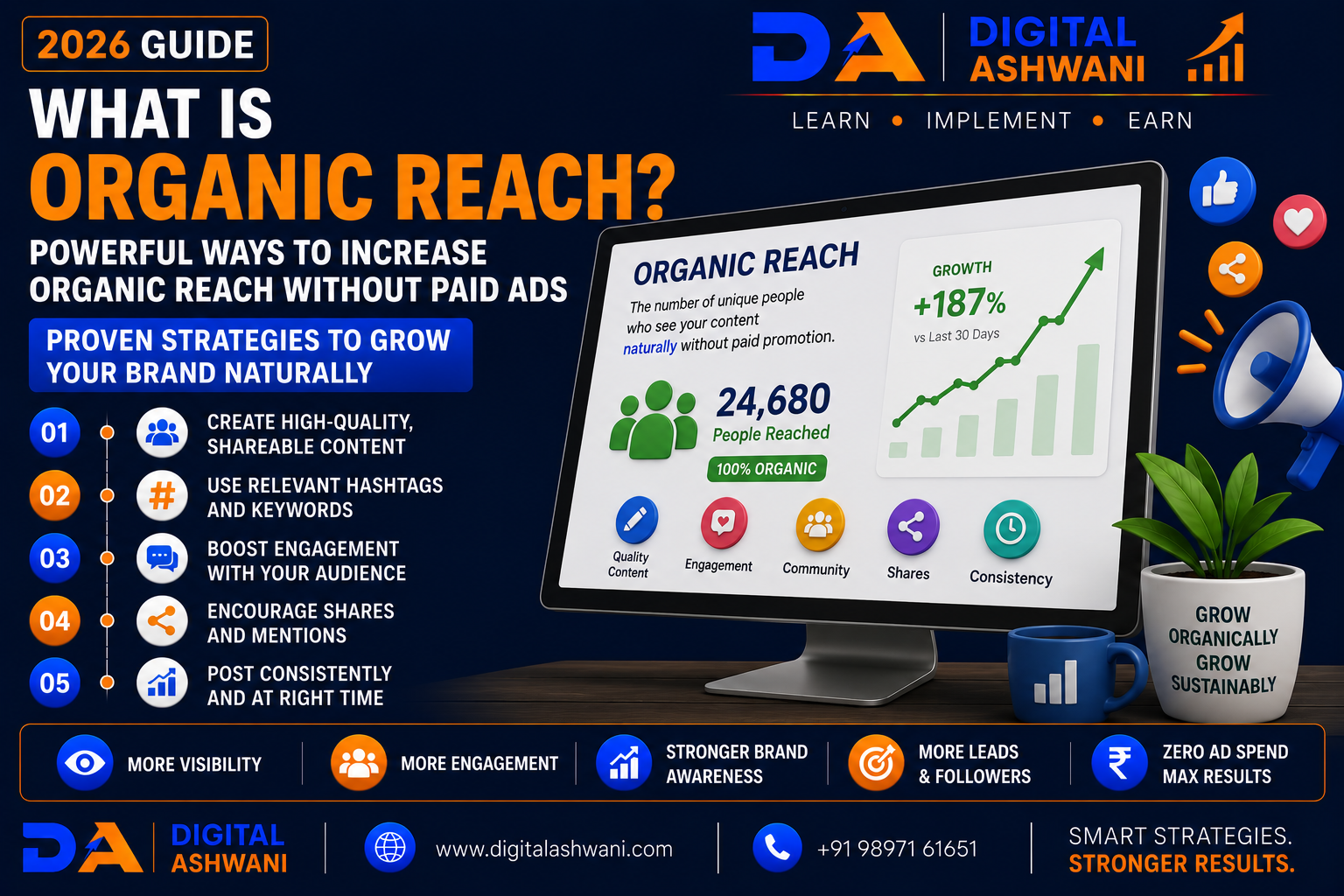
Organic Reach is the number of unique people who see your content naturally, without paid promotion.
Organic reach comes from:
- Followers
- Shares
- Search Results
- Hashtags
- Recommendations
- Platform Algorithms
Unlike paid reach, organic reach doesn’t require advertising spend for each impression.
How Organic Reach Works
Social media platforms evaluate factors such as:
- Content Quality
- User Engagement
- Relevance
- Posting Consistency
- Audience Interest
- Watch Time
- Shares and Saves
The better your content performs, the more people the platform may show it to organically.
Why Organic Reach Matters
Strong organic reach helps businesses:
- Build Brand Awareness
- Increase Audience Trust
- Generate Website Traffic
- Improve Engagement
- Reduce Advertising Costs
- Create Long-Term Growth
Organic visibility complements paid marketing rather than replacing it.
Benefits of Organic Reach
Growing organic reach helps businesses:
- Reach More People Naturally
- Build Community
- Increase Brand Authority
- Generate Leads
- Improve Customer Relationships
- Support SEO
- Encourage User Engagement
- Create Sustainable Marketing Growth
15 Proven Ways to Increase Organic Reach
1. Publish High-Quality Content
Helpful and engaging content receives more interactions.
Create:
- Educational Posts
- Tips
- Tutorials
- Case Studies
- Infographics
- Videos
Quality remains the strongest long-term growth factor.
2. Post Consistently
Maintain a regular publishing schedule.
Consistency helps algorithms recognize active creators and keeps your audience engaged.
3. Understand Your Audience
Research:
- Interests
- Pain Points
- Questions
- Goals
- Preferred Content Types
Relevant content naturally receives more engagement.
4. Use Short-Form Video
Platforms increasingly promote:
- Reels
- Shorts
- Short Videos
Video content often generates higher organic visibility.
5. Encourage Engagement
Ask questions that invite genuine discussion.
Examples:
- Polls
- Opinions
- Experiences
- Industry Questions
Meaningful engagement supports organic distribution.
6. Write Strong Captions
Compelling captions encourage users to:
- Read
- Comment
- Share
- Save
Clear messaging improves engagement.
7. Use Relevant Hashtags
Use targeted hashtags related to:
- Industry
- Topic
- Audience
- Location
Avoid excessive or unrelated hashtags.
8. Post at the Right Time
Publish when your audience is most active.
Review platform analytics to identify the best posting times for your followers.
9. Optimize Your Content for Each Platform
Every social media platform has a different algorithm.
Customize content for:
- X
- YouTube
Platform-specific content usually performs better than identical cross-posts.
10. Encourage Shares and Saves
Content that people save or share often receives additional organic distribution.
Create content worth sharing, such as:
- Checklists
- Industry Tips
- Infographics
- How-To Guides
- Educational Carousels
These formats typically generate stronger long-term reach.
11. Collaborate with Other Creators
Partner with:
- Industry Experts
- Influencers
- Local Businesses
- Brand Partners
- Subject Matter Specialists
Collaborative content introduces your brand to new audiences organically.
12. Respond to Comments Promptly
Engaging with your audience encourages ongoing conversations.
Reply to:
- Comments
- Questions
- Feedback
- Mentions
Active engagement strengthens community relationships and may increase content visibility.
13. Analyze Performance Regularly
Review analytics using:
- Meta Business Suite
- LinkedIn Analytics
- YouTube Analytics
- Google Analytics 4
Track important metrics such as:
- Organic Reach
- Engagement Rate
- Shares
- Saves
- Clicks
- Website Traffic
Performance analysis helps identify successful content.
14. Build a Strong Community
Long-term organic growth comes from loyal audiences.
Encourage:
- Conversations
- User-Generated Content
- Community Discussions
- Customer Stories
- Interactive Posts
Communities create sustainable engagement.
15. Continue Testing and Improving
Algorithms change frequently.
Experiment with:
- Content Formats
- Headlines
- Posting Times
- Captions
- Images
- Videos
- Calls-to-Action
Continuous testing helps maintain strong organic performance.
Organic Reach Checklist
Before publishing your content, verify the following:
- High-Quality Content Created
- Audience Research Completed
- Strong Caption Written
- Relevant Hashtags Used
- Images or Videos Optimized
- Best Posting Time Selected
- Comments Monitored
- Analytics Reviewed
- Platform-Specific Format Used
- Consistent Publishing Schedule Maintained
Following this checklist improves long-term organic growth.
Common Organic Reach Mistakes
Publishing Low-Quality Content
Poor-quality or repetitive posts receive less engagement.
Focus on creating valuable, original content.
Posting Inconsistently
Long gaps between posts can reduce audience engagement.
Maintain a realistic and consistent publishing schedule.
Ignoring Audience Engagement
Failing to respond to comments or questions reduces community interaction.
Build relationships through regular conversations.
Using Irrelevant Hashtags
Generic or unrelated hashtags rarely improve discoverability.
Use hashtags that genuinely relate to your content and audience.
Depending Only on Organic Reach
Organic reach is valuable, but combining it with SEO, email marketing, and carefully targeted paid campaigns often creates a stronger overall marketing strategy.
Internal Linking Suggestions (Digital Ashwani)
Strengthen your social media marketing content cluster by linking this article with:
- Complete Facebook Marketing Guide for Small Businesses and Local Brands
- Complete Instagram Marketing Guide for Business Growth
- Complete LinkedIn Marketing Guide for B2B Business Lead Generation
- Complete YouTube Marketing Guide for Business Growth and Brand Awareness
- How Artificial Intelligence Is Changing Social Media Marketing Strategies Today
- How to Create Viral Social Media Content That Attracts More Customers
- What Is Reach vs Impressions?
- Website Conversion Rate Optimization Guide
- Top Digital Marketing Trends in 2026
- Ultimate Analytics and Tracking Guide for Long-Term Business Growth
These internal links strengthen topical authority while helping readers explore social media marketing, analytics, AI marketing, and conversion optimization.
External Resources
For trusted social media marketing guidance, refer to:
- Meta Business Help Center
- Instagram Creators
- LinkedIn Marketing Solutions
- YouTube Creator Academy
- Google Analytics Help Center
These official resources provide current recommendations for audience growth, content optimization, analytics, and platform best practices.
Frequently Asked Questions
What is organic reach?
Organic reach is the number of unique people who see your content naturally without paid promotion or advertising.
Why has organic reach decreased on some social media platforms?
As platforms have become more competitive, algorithms prioritize content they believe users are most likely to engage with. Increasing content volume also means not every post is shown to every follower.
How can I improve my organic reach?
Focus on creating valuable content, posting consistently, encouraging meaningful engagement, using relevant hashtags where appropriate, publishing short-form videos, and analyzing performance to improve future content.
Is organic reach better than paid reach?
Neither is universally better. Organic reach helps build long-term trust and community, while paid reach can quickly expand visibility and target specific audiences. Many successful strategies use both together.
Does organic reach affect SEO?
While social media signals are not direct Google ranking factors, strong organic reach can increase brand awareness, generate website visits, earn backlinks indirectly, and support your overall digital marketing strategy.
Final Thoughts
Understanding What Is Organic Reach helps businesses build a sustainable online presence without relying entirely on advertising budgets. By consistently publishing helpful content, engaging with your audience, optimizing for each platform, and continuously analyzing performance, brands can expand their visibility naturally over time.
Rather than chasing viral success with every post, focus on creating content that genuinely helps your audience. Valuable, relevant, and trustworthy content is more likely to earn shares, saves, comments, and long-term engagement, all of which support stronger organic reach.
As social media algorithms continue evolving, businesses that prioritize audience value, consistency, authenticity, and continuous improvement will be better positioned to achieve lasting organic growth.
At Digital Ashwani, we regularly publish practical guides on SEO, AI SEO, Social Media Marketing, Google Ads, Analytics, and Digital Marketing to help businesses grow their online presence and generate sustainable results.
