

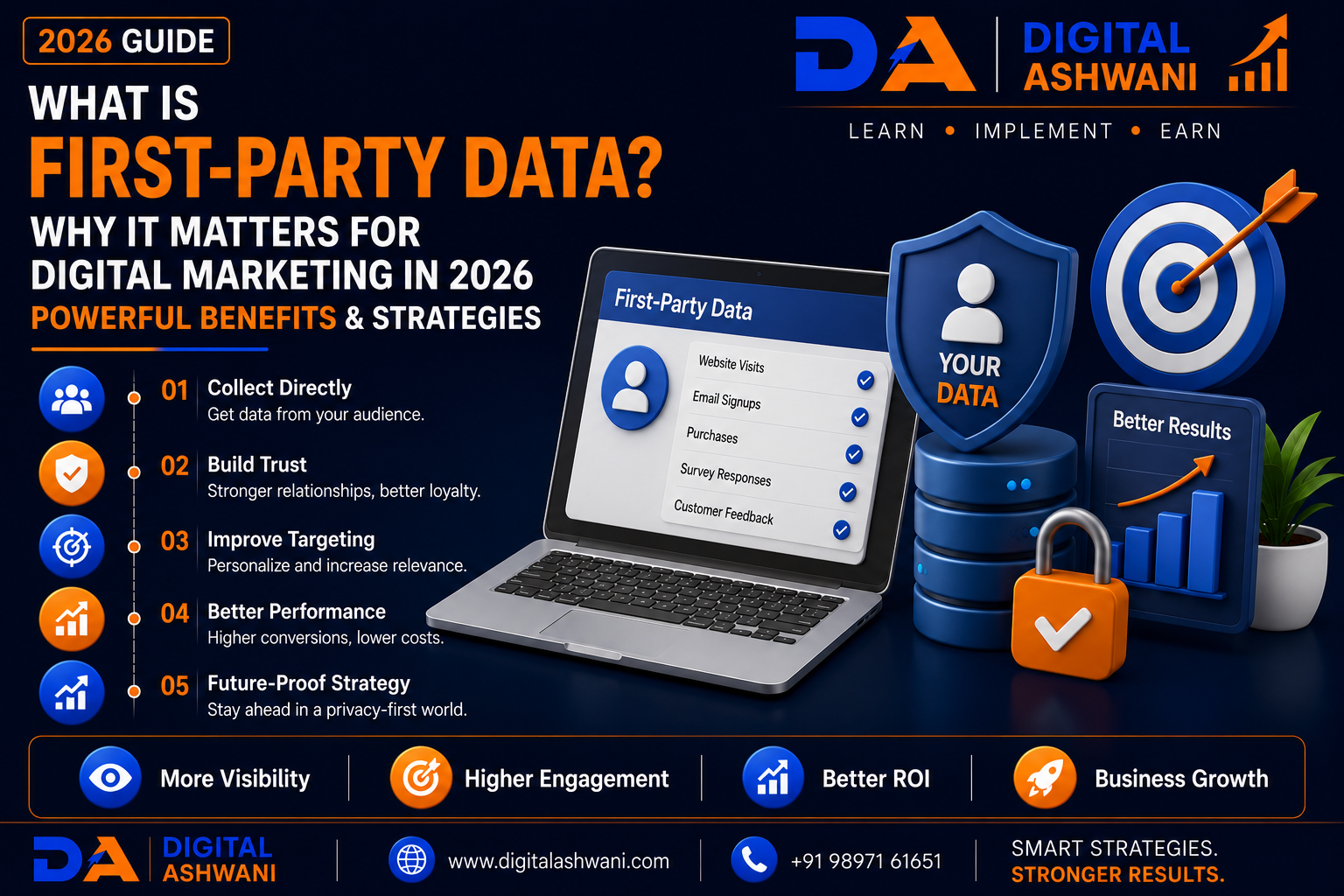
What Is First-Party Data?
As digital marketing continues to evolve, businesses are facing one of the biggest changes in online advertising—the shift away from third-party cookies. Increasing privacy regulations, browser restrictions, and changing consumer expectations are forcing marketers to rethink how they collect and use customer data.
This is where First-Party Data becomes one of the most valuable assets for any business.
Unlike third-party data purchased from external providers, first-party data comes directly from your own customers and website visitors. Because it is collected with user interaction and consent where required, it is generally more accurate, relevant, and valuable for marketing, personalization, and business growth.
Whether you run an eCommerce store, SaaS company, coaching institute, healthcare clinic, digital marketing agency, or local business, building a strong first-party data strategy is essential for long-term success.
In this comprehensive guide by Digital Ashwani, you’ll learn what First-Party Data is, why it matters, and 15 powerful strategies to use it effectively in 2026.
What Is First-Party Data?
First-Party Data is information that a business collects directly from its own audience through its own digital channels.
Common sources include:
- Website Visitors
- Customer Accounts
- Purchase History
- Email Subscribers
- Contact Forms
- Mobile Apps
- CRM Systems
- Customer Surveys
- Loyalty Programs
- Live Chat Conversations
Because this data comes directly from your own audience, it is generally more reliable than data obtained from third parties.
Why First-Party Data Is Important
Privacy regulations and browser changes have reduced the effectiveness of third-party tracking.
As a result, businesses increasingly rely on their own customer data to:
- Personalize Marketing
- Improve Customer Experience
- Increase Conversions
- Build Long-Term Relationships
- Improve Advertising Performance
- Reduce Dependence on Third-Party Data
Businesses that invest in first-party data today will be better prepared for the future of digital marketing.
Benefits of First-Party Data
Using first-party data helps businesses:
- Understand Customer Behavior
- Improve Audience Targeting
- Increase Marketing ROI
- Build Customer Trust
- Deliver Personalized Experiences
- Improve Email Marketing
- Optimize Advertising Campaigns
- Strengthen Customer Retention
Accurate customer data supports better business decisions.
15 Powerful First-Party Data Strategies
1. Optimize Your Website for Data Collection
Your website is one of the most valuable first-party data sources.
Collect information through:
- Contact Forms
- Newsletter Signups
- Demo Requests
- Consultation Bookings
- Account Registrations
Keep forms simple to improve completion rates.
2. Grow Your Email Subscriber List
Email subscribers provide one of the strongest sources of first-party data.
Offer valuable incentives such as:
- Free eBooks
- Industry Reports
- Checklists
- Templates
- Discount Coupons
- Free Webinars
Focus on attracting genuinely interested subscribers rather than simply increasing list size.
3. Encourage Customer Account Registration
Customer accounts provide valuable information including:
- Purchase History
- Preferences
- Saved Products
- Order Frequency
- Customer Lifetime Value
This information supports better personalization and customer service.
4. Use CRM Software Effectively
A Customer Relationship Management (CRM) system centralizes customer information.
Track:
- Customer Interactions
- Purchase History
- Sales Pipeline
- Follow-Ups
- Support Requests
A well-maintained CRM improves marketing efficiency and customer relationships.
5. Collect Customer Feedback
Feedback provides valuable first-party insights.
Use:
- Surveys
- Feedback Forms
- Product Reviews
- Customer Interviews
- Polls
Understanding customer needs helps improve products and services.
6. Track Website Behavior Responsibly
Analyze how visitors interact with your website.
Monitor:
- Popular Pages
- Time on Site
- Conversion Paths
- Downloads
- Form Submissions
Use aggregated insights responsibly and respect applicable privacy requirements.
7. Build a Customer Loyalty Program
Loyalty programs encourage repeat purchases while providing valuable customer insights.
Track:
- Purchase Frequency
- Reward Usage
- Preferred Products
- Customer Engagement
Loyal customers often provide the highest long-term business value.
8. Personalize Customer Experiences
Use first-party data to deliver:
- Personalized Emails
- Product Recommendations
- Customized Offers
- Relevant Content
- Better Customer Support
Relevant experiences improve satisfaction and encourage repeat business.
9. Segment Your Customer Data
Collecting data is only the first step. Organizing it into meaningful groups makes your marketing more effective.
Segment customers based on:
- Purchase History
- Interests
- Geographic Location
- Website Behavior
- Customer Lifecycle Stage
- Engagement Level
Segmentation helps deliver relevant messages to the right audience at the right time.
10. Use First-Party Data for Personalized Marketing
Customers expect personalized experiences.
Use your first-party data to personalize:
- Email Campaigns
- Product Recommendations
- Website Content
- Special Offers
- Remarketing Campaigns
- Customer Support
Relevant personalization improves engagement, conversions, and customer satisfaction.
11. Integrate First-Party Data Across Marketing Channels
Avoid keeping customer information in separate systems.
Connect your:
- CRM
- Email Marketing Platform
- Website Analytics
- Google Ads
- Meta Ads
- Customer Support Software
A unified customer view helps create more consistent and effective marketing campaigns.
12. Protect Customer Privacy
Customer trust is one of your most valuable business assets.
Follow privacy best practices by:
- Explaining what data you collect
- Providing a clear Privacy Policy
- Using secure data storage
- Limiting access to sensitive information
- Respecting user consent where required
- Allowing users to manage their preferences when applicable
Responsible data handling strengthens customer confidence and long-term relationships.
13. Use AI to Analyze First-Party Data
Artificial Intelligence helps businesses identify patterns that are difficult to detect manually.
AI can assist with:
- Customer Segmentation
- Predictive Analytics
- Product Recommendations
- Lead Scoring
- Customer Retention Analysis
- Marketing Automation
AI should support decision-making while human oversight ensures context and accuracy.
14. Measure the Performance of Your Data Strategy
Regularly evaluate how your first-party data supports business growth.
Monitor important KPIs such as:
- Email Open Rate
- Click-Through Rate (CTR)
- Conversion Rate
- Customer Retention Rate
- Repeat Purchase Rate
- Customer Lifetime Value (CLV)
- Cost Per Acquisition (CPA)
- Return on Marketing Investment (ROMI)
Data-driven measurement helps improve future marketing strategies.
15. Continuously Improve Your First-Party Data Strategy
Customer behavior changes over time.
Regularly review and optimize your:
- Data Collection Methods
- Lead Forms
- Email Campaigns
- Customer Journeys
- CRM Records
- Audience Segments
- Marketing Automation Workflows
Continuous improvement keeps your customer data accurate, useful, and aligned with business goals.
First-Party Data Strategy Checklist
Before implementing a first-party data strategy, ensure you’ve completed the following:
- Website Data Collection Optimized
- CRM System Configured
- Email Subscriber Strategy Created
- Customer Accounts Enabled
- Feedback Collection System Active
- Loyalty Program Implemented (if applicable)
- Audience Segmentation Completed
- Privacy Policy Updated
- Analytics & Tracking Configured
- Marketing Automation Connected
Following this checklist helps build a reliable foundation for long-term customer relationship management.
Common First-Party Data Mistakes
Collecting Too Much Unnecessary Data
Only collect information that has a clear business purpose.
Excessive data collection may reduce form completion rates and increase data management complexity.
Ignoring Data Quality
Outdated or inaccurate customer information reduces marketing effectiveness.
Review and clean your database regularly.
Not Segmenting Customers
Treating every customer the same often leads to lower engagement.
Use segmentation to deliver more relevant marketing messages.
Poor Data Security
Weak security practices can damage customer trust.
Protect customer information using secure systems, strong access controls, and regular monitoring.
Failing to Use Collected Data
Many businesses collect customer information but never apply it to improve marketing.
Use your data to personalize customer experiences, improve campaigns, and support better business decisions.
Internal Linking Suggestions (Digital Ashwani)
Strengthen your customer data and digital marketing content cluster by linking this article with:
- What Is Artificial Intelligence (AI) in Digital Marketing?
- What Is Google Analytics 4 and Why Every Business Should Use It?
- Ultimate Analytics and Tracking Guide for Long-Term Business Growth
- How to Increase Website Conversion Rates Using Data-Driven Optimization Methods
- Complete Google Search Ads Campaign Setup Guide for Better Lead Generation
- Complete Facebook Marketing Guide for Small Businesses and Local Brands
- Complete LinkedIn Marketing Guide for B2B Business Lead Generation
- Ecommerce SEO Strategies to Increase Organic Product Sales
- AI SEO: How Artificial Intelligence Is Changing Search Optimization
- Digital Marketing Career in 2026
These internal links strengthen topical authority while helping readers explore related topics across analytics, AI, advertising, and digital marketing.
External Resources
For trusted guidance on analytics, privacy, and customer data management, explore:
- Google Analytics Help Center
- Google Tag Manager Help Center
- Google Search Central
- Meta Business Help Center
- World Wide Web Consortium (W3C) Privacy Resources
These resources provide official documentation and best practices for responsible data collection, website analytics, and digital marketing.
Frequently Asked Questions
What is First-Party Data?
First-party data is information collected directly by a business from its own customers and website visitors through channels such as websites, mobile apps, CRM systems, email subscriptions, purchases, and customer interactions.
Why is First-Party Data important?
First-party data helps businesses understand customer behavior, personalize marketing, improve customer experiences, and reduce reliance on third-party tracking technologies.
Is First-Party Data better than Third-Party Data?
In many cases, yes. Because it comes directly from your own audience, first-party data is generally more accurate, relevant, and reliable for marketing and customer relationship management.
How can small businesses collect First-Party Data?
Small businesses can collect first-party data through contact forms, newsletter subscriptions, customer accounts, purchases, surveys, loyalty programs, live chat, and CRM systems.
How does AI help with First-Party Data?
AI can analyze customer behavior, identify patterns, automate segmentation, personalize recommendations, predict future trends, and improve marketing efficiency using first-party data.
Final Thoughts
First-Party Data has become one of the most valuable assets in modern digital marketing. As privacy expectations continue to evolve and third-party tracking becomes less reliable, businesses that invest in collecting and managing their own customer data will be better positioned for sustainable growth.
A strong first-party data strategy is not about collecting the largest amount of information—it’s about collecting relevant, accurate data responsibly and using it to create better customer experiences. When combined with AI, analytics, marketing automation, SEO, and paid advertising, first-party data enables businesses to make smarter decisions, improve personalization, strengthen customer relationships, and increase marketing ROI.
Rather than depending on external data sources, focus on building trust with your audience and creating a long-term data strategy that supports both business growth and customer privacy.
At Digital Ashwani, we regularly publish practical guides on AI Marketing, SEO, Google Ads, Analytics, Customer Data, Social Media Marketing, and Digital Marketing to help businesses succeed in an increasingly privacy-focused digital world.
