
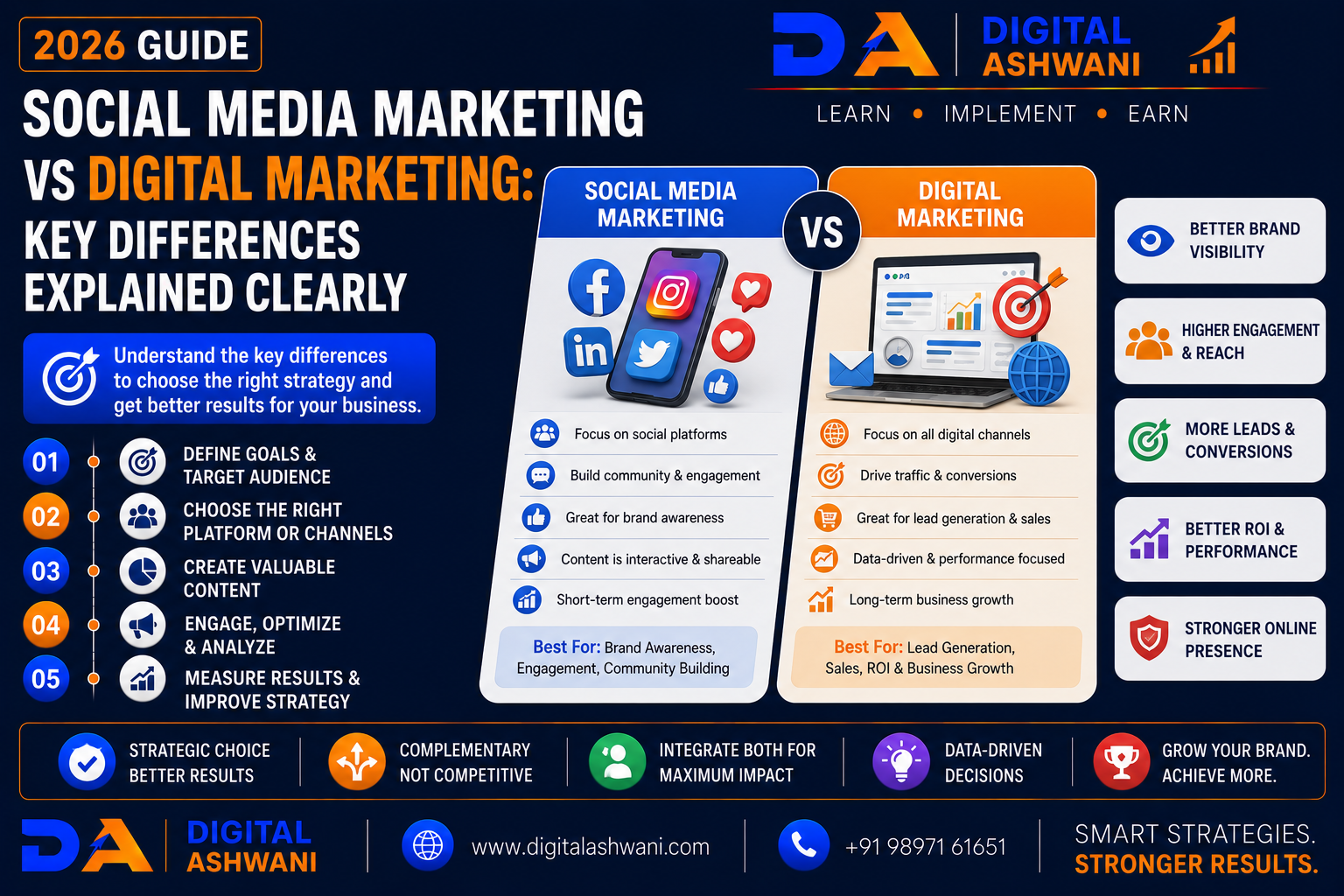
Social Media Marketing vs Digital Marketing: Key Differences Explained Clearly
Many beginners, business owners, and students often use the terms Social Media Marketing and Digital Marketing interchangeably. Although they are closely related, they are not the same.
Social Media Marketing is one component of Digital Marketing. While Digital Marketing includes every online marketing channel, Social Media Marketing focuses specifically on promoting businesses through social networking platforms such as Facebook, Instagram, LinkedIn, X, Pinterest, and YouTube.
Understanding the difference helps businesses choose the right strategy, allocate marketing budgets effectively, and achieve better business results.
In this comprehensive guide by Digital Ashwani, you’ll learn 15 key differences between Social Media Marketing and Digital Marketing, their benefits, career opportunities, and how to decide which approach best suits your business in 2026.
What Is Digital Marketing?
Digital Marketing is the promotion of products or services using online channels.
It includes:
- Search Engine Optimization (SEO)
- Google Ads (PPC)
- Social Media Marketing
- Content Marketing
- Email Marketing
- Affiliate Marketing
- Video Marketing
- Marketing Analytics
Digital Marketing covers the entire online customer journey.
What Is Social Media Marketing?
Social Media Marketing (SMM) focuses on promoting businesses through social media platforms.
Common platforms include:
- X
- YouTube
- Threads
The goal is to increase brand awareness, engagement, website traffic, and conversions through social interactions.
Why Understanding the Difference Matters
Knowing the difference helps businesses:
- Choose the Right Marketing Strategy
- Allocate Budgets Efficiently
- Reach the Right Audience
- Improve ROI
- Build Stronger Brand Awareness
Social Media Marketing supports Digital Marketing—it does not replace it.
15 Key Differences Between Social Media Marketing and Digital Marketing
1. Scope
Digital Marketing Covers Multiple Channels
Digital Marketing includes:
- SEO
- PPC
- Email Marketing
- Content Marketing
- Social Media Marketing
- Analytics
It is a broad marketing discipline.
Social Media Marketing Focuses Only on Social Platforms
It primarily involves promoting businesses through social media networks.
2. Marketing Channels
Digital Marketing Uses
- Search Engines
- Websites
- Mobile Apps
- Display Advertising
- Social Media
Social Media Marketing Uses
- X
- YouTube
3. Primary Goal
Digital Marketing
Focuses on:
- Lead Generation
- Sales
- Traffic
- Brand Growth
- Customer Acquisition
Social Media Marketing
Focuses on:
- Brand Awareness
- Community Building
- Audience Engagement
- Social Interaction
4. Audience Reach
Digital Marketing Reaches Users Across Many Platforms
Businesses connect with customers through multiple online touchpoints.
Social Media Marketing Reaches Users on Social Networks
Success depends on platform-specific content and audience engagement.
5. Content Types
Digital Marketing Uses
- Blogs
- Landing Pages
- Emails
- Advertisements
- Videos
- Websites
Social Media Marketing Uses
- Posts
- Reels
- Stories
- Shorts
- Carousels
- Live Videos
6. Search Visibility
Digital Marketing Includes SEO
Businesses optimize websites for Google Search and AI-powered search experiences.
Social Media Marketing Focuses on Platform Discovery
Content is discovered through feeds, hashtags, recommendations, and platform search.
7. Advertising Options
Digital Marketing Supports Multiple Advertising Platforms
Examples include:
- Google Ads
- Microsoft Ads
- Display Ads
- Shopping Ads
- Social Ads
Social Media Marketing Uses Social Advertising
Examples include:
- Facebook Ads
- Instagram Ads
- LinkedIn Ads
- Pinterest Ads
8. Performance Measurement
Digital Marketing Measures
- Organic Traffic
- Leads
- Conversions
- Revenue
- ROI
Social Media Marketing Measures
- Reach
- Engagement
- Followers
- Shares
- Comments
9. Customer Relationship
Digital Marketing Builds the Complete Customer Journey
Digital Marketing helps businesses attract, nurture, convert, and retain customers using multiple channels such as SEO, email marketing, paid advertising, content marketing, and analytics.
The focus is on creating a complete marketing ecosystem.
Social Media Marketing Builds Community Engagement
Social Media Marketing primarily strengthens relationships by encouraging:
- Conversations
- Comments
- Shares
- Direct Messages
- Community Participation
Its strength lies in building long-term audience engagement.
10. Conversion Strategy
Digital Marketing Focuses on Conversions
Businesses optimize:
- Landing Pages
- Lead Forms
- Sales Funnels
- Email Campaigns
- Remarketing Campaigns
The objective is measurable business growth.
Social Media Marketing Generates Interest
Social platforms introduce potential customers to your brand and encourage them to take the next step, such as visiting your website or contacting your business.
11. Marketing Cost
Digital Marketing Budget
Digital Marketing budgets may include:
- SEO
- PPC
- Email Marketing
- Website Development
- Content Marketing
- Analytics Tools
Investment varies depending on business goals.
Social Media Marketing Budget
Costs typically involve:
- Content Creation
- Community Management
- Influencer Marketing
- Paid Social Advertising
Many businesses start with organic social media before investing in paid campaigns.
12. Career Opportunities
Digital Marketing Careers
Popular roles include:
- SEO Specialist
- Google Ads Expert
- Content Marketer
- Performance Marketer
- Marketing Analyst
- Digital Marketing Manager
Digital Marketing offers a wide variety of career paths.
Social Media Marketing Careers
Popular roles include:
- Social Media Manager
- Community Manager
- Content Creator
- Influencer Marketing Specialist
- Social Media Strategist
These roles focus specifically on social platforms and audience engagement.
13. Best Business Use Cases
Digital Marketing Works Best For
- Lead Generation
- eCommerce
- SaaS Companies
- Healthcare
- Education
- Professional Services
- B2B Businesses
It supports the complete online marketing process.
Social Media Marketing Works Best For
- Brand Awareness
- Lifestyle Brands
- Restaurants
- Fashion
- Beauty
- Travel
- Entertainment
Businesses that rely on visual storytelling and engagement often benefit significantly from social media.
14. AI Integration
Digital Marketing Uses AI Across Multiple Channels
AI assists with:
- SEO
- Google Ads
- Email Marketing
- Analytics
- Conversion Optimization
- Customer Insights
AI improves efficiency throughout the marketing funnel.
Social Media Marketing Uses AI for Content Optimization
AI helps with:
- Caption Generation
- Content Ideas
- Scheduling
- Audience Insights
- Performance Analysis
It supports faster content creation and campaign optimization.
15. Which One Should You Choose?
Choose Digital Marketing If You Want
- More Leads
- Website Traffic
- Online Sales
- Business Growth
- Long-Term ROI
Digital Marketing is the broader strategy that supports complete business growth.
Choose Social Media Marketing If You Want
- Brand Awareness
- Audience Engagement
- Community Building
- Better Customer Relationships
For most businesses, the strongest approach is to combine both strategies rather than choosing one over the other.
Digital Marketing vs Social Media Marketing Comparison
| Feature | Digital Marketing | Social Media Marketing |
|---|---|---|
| Scope | Broad | Specific |
| Platforms | Multiple Digital Channels | Social Networks Only |
| SEO | ✅ | Limited |
| Google Ads | ✅ | ❌ |
| Email Marketing | ✅ | ❌ |
| Community Building | Limited | ✅ |
| Brand Awareness | ✅ | ✅ |
| Lead Generation | Strong | Moderate |
| Website Traffic | Strong | Moderate |
| Analytics | Comprehensive | Social Metrics |
Common Mistakes
Assuming Both Terms Mean the Same Thing
Social Media Marketing is only one part of Digital Marketing.
Understanding this distinction helps businesses create more effective marketing strategies.
Ignoring SEO
Many businesses rely only on social media.
SEO provides long-term organic traffic that complements social media marketing.
Not Measuring Performance
Track important metrics such as:
- Website Traffic
- Engagement
- Leads
- Conversion Rate
- ROI
Data-driven decisions improve marketing performance.
Posting Without a Strategy
Random posting rarely produces consistent business results.
Develop a structured content calendar aligned with your marketing goals.
Ignoring Customer Journey
Successful marketing guides users from awareness to conversion.
Use multiple channels to support every stage of the buying process.
Internal Linking Suggestions (Digital Ashwani)
Strengthen your digital marketing content cluster by linking this article with:
- Complete Social Media Marketing Guide for Business Growth
- Complete Digital Marketing Career Guide in 2026
- Complete YouTube Marketing Guide for Business Growth and Brand Awareness
- What Is Meta Business Suite?
- What Is Artificial Intelligence (AI) in Digital Marketing?
- What Is ChatGPT for Marketing?
- Website Conversion Rate Optimization Guide
- Complete Google Search Ads Campaign Setup Guide
- Top Digital Marketing Trends in 2026
- Building Topical Authority Through Strategic Content Clusters and Internal Linking
These internal links strengthen topical authority while helping readers explore digital marketing, social media strategy, AI marketing, advertising, and business growth.
External Resources
For trusted marketing guidance, explore:
- Google Search Central
- Google Analytics Help Center
- Google Ads Help Center
- Meta Business Help Center
- HubSpot Academy
These official resources provide practical guidance on digital marketing, analytics, advertising, SEO, and social media management.
Frequently Asked Questions
What is the difference between Social Media Marketing and Digital Marketing?
Digital Marketing is the broader practice of promoting products and services through multiple online channels, while Social Media Marketing focuses specifically on marketing through platforms such as Facebook, Instagram, LinkedIn, YouTube, and X.
Is Social Media Marketing part of Digital Marketing?
Yes. Social Media Marketing is one important component of Digital Marketing, along with SEO, PPC, email marketing, content marketing, analytics, and other online marketing channels.
Which is better for small businesses?
Most small businesses benefit from combining both. Digital Marketing generates traffic and leads through multiple channels, while Social Media Marketing builds brand awareness, engagement, and customer relationships.
Can I learn Social Media Marketing without learning Digital Marketing?
Yes, but understanding Digital Marketing provides a stronger foundation because it explains how social media fits into the overall customer acquisition strategy.
Which career has better opportunities?
Both offer excellent career opportunities. Digital Marketing provides a wider range of specializations, while Social Media Marketing focuses on content creation, audience engagement, and community management.
Final Thoughts
Understanding Social Media Marketing vs Digital Marketing helps businesses choose the right marketing strategy based on their goals. While Social Media Marketing focuses on engaging audiences through social platforms, Digital Marketing includes a much broader ecosystem involving SEO, content marketing, Google Ads, email marketing, analytics, conversion optimization, and more.
Rather than viewing these strategies as competitors, businesses should use them together. Social Media Marketing builds awareness and relationships, while Digital Marketing converts that attention into measurable business results through search visibility, lead generation, and customer retention.
As online competition continues to grow, organizations that integrate both strategies into a unified marketing plan will be better positioned to increase visibility, attract qualified customers, improve ROI, and achieve sustainable long-term growth.
At Digital Ashwani, we regularly publish practical guides on SEO, AI Marketing, Google Ads, Social Media Marketing, Analytics, Content Marketing, and Digital Marketing to help businesses stay ahead in the evolving digital landscape.
