

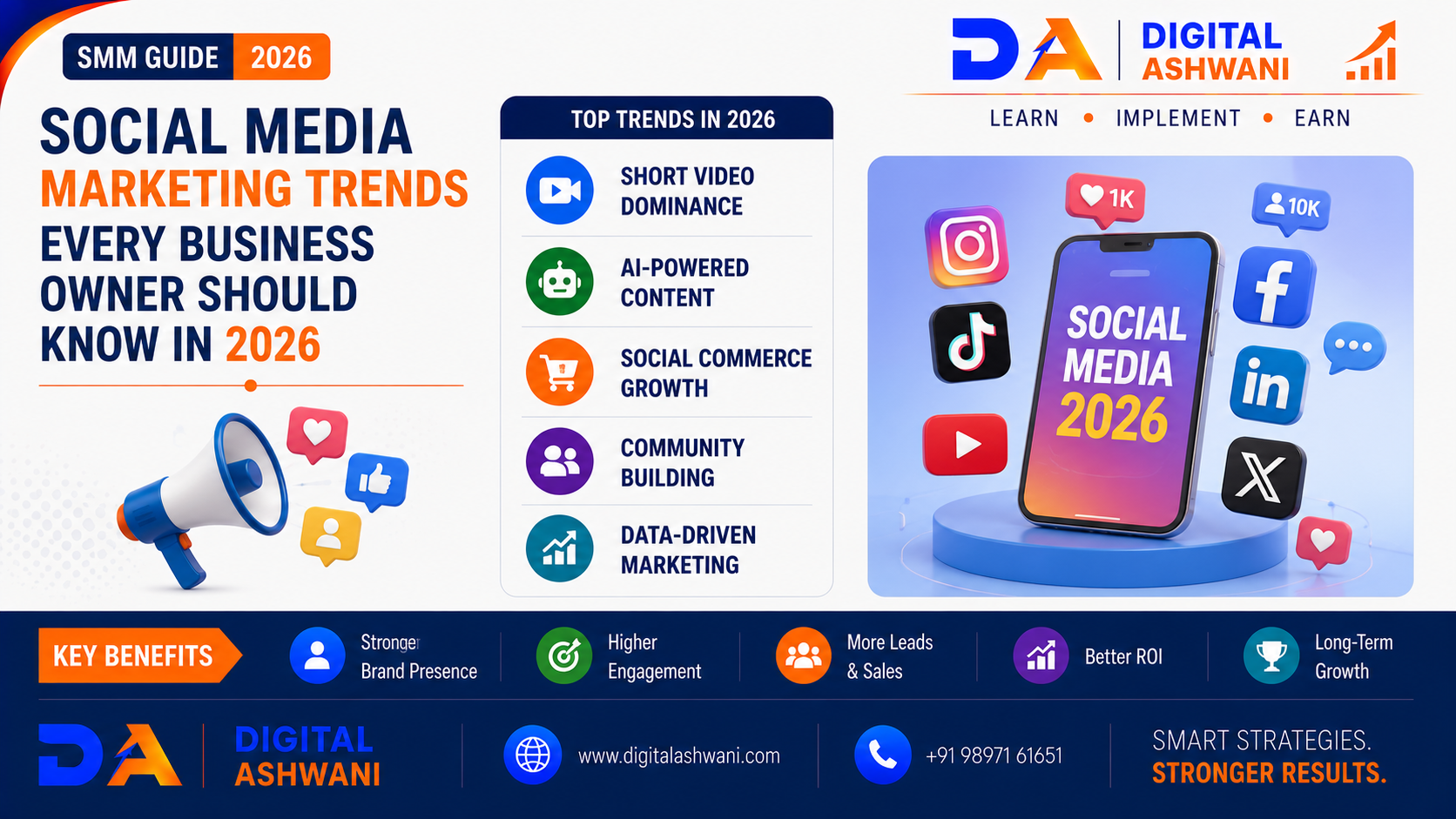
Social Media Marketing Trends Every Business Owner Should Know in 2026
Social media has evolved far beyond simply posting photos, videos, and promotional updates.
In 2026, social platforms are increasingly becoming search engines, shopping channels, customer-service platforms, creator ecosystems, and brand discovery engines. Industry research also points toward interest-based discovery, social search, short-form video, creator partnerships, AI-assisted workflows, and community building as major forces shaping social marketing.
For business owners, this creates both opportunities and challenges.
Posting consistently is no longer enough.
Businesses need to understand how people discover content, what makes them stop scrolling, how creators influence purchasing decisions, and how social platforms contribute to the customer journey.
At the same time, audiences are becoming more selective. Highly polished promotional content can struggle to compete with content that feels authentic, useful, entertaining, and human. Recent reporting also shows growing opportunities for smaller creators and more relatable content.
In this comprehensive guide by Digital Ashwani, you’ll discover the most important Social Media Marketing Trends 2026 and practical ways businesses can adapt their strategies to generate greater reach, engagement, leads, and sales.
Why Social Media Trends Matter in 2026
Social media algorithms and user behavior continue to change rapidly.
A strategy that worked several years ago may no longer produce the same results.
Businesses now need to consider:
- Search Visibility
- Video Content
- Creator Partnerships
- AI Tools
- Community Engagement
- Social Commerce
- Customer Experience
- Content Quality
The focus is shifting from simply accumulating followers toward creating content that reaches the right audience and contributes to meaningful business outcomes.
Social Media Is Becoming a Search Engine
Optimize Content for Social Search
People increasingly use social platforms to discover:
- Products
- Restaurants
- Businesses
- Tutorials
- Reviews
- Destinations
- Services
- Recommendations
This means businesses should think about social content like searchable content.
Use:
- Relevant Keywords
- Descriptive Captions
- Clear Video Titles
- Useful Hashtags
- Location Information
- Search-Friendly Topics
Social search is becoming an increasingly important part of digital discovery.
Short-Form Video Continues to Dominate
Create Reels, Shorts and Short Videos
Short-form video remains one of the most important formats across platforms such as Instagram, TikTok, YouTube, and increasingly other social networks.
Businesses can create:
- Product Demonstrations
- Quick Tutorials
- Before-and-After Videos
- Customer Stories
- Behind-the-Scenes Content
- Industry Tips
- FAQs
Short videos can help businesses reach audiences beyond their existing followers.
Authenticity Is More Important Than Perfect Content
Show the Human Side of Your Business
Audiences increasingly respond to content that feels genuine rather than overly corporate.
Businesses can showcase:
- Team Members
- Daily Operations
- Customer Experiences
- Behind-the-Scenes Moments
- Founder Stories
- Real Product Demonstrations
Current social trends indicate that authenticity and human-made content remain important even as AI becomes increasingly common in marketing workflows.
AI Is Transforming Social Media Marketing
Use AI as a Marketing Assistant
AI can help businesses with:
- Content Ideas
- Caption Drafting
- Video Scripts
- Content Repurposing
- Audience Analysis
- Performance Analysis
- Creative Brainstorming
- Social Media Scheduling
However, businesses should maintain human review to protect accuracy, originality, brand voice, and authenticity.
AI should increase productivity—not turn every social post into generic content.
Creator Marketing Is Becoming More Strategic
Work With Relevant Creators
Influencer marketing is evolving beyond celebrity accounts.
Smaller creators can provide:
- Niche Audiences
- Stronger Community Connections
- Local Relevance
- Authentic Recommendations
- Specialized Expertise
Recent industry reporting highlights growing brand interest in smaller creators, while other research points toward creator partnerships increasingly being evaluated for business impact and ROI.
The best creator isn’t necessarily the one with the largest follower count.
Look for:
- Audience Relevance
- Engagement Quality
- Content Style
- Brand Fit
- Trust
- Conversion Potential
Social Commerce Is Growing
Turn Social Discovery Into Sales
Social platforms are increasingly connecting discovery, product information, and purchasing.
Businesses can use social platforms to:
- Showcase Products
- Demonstrate Products
- Answer Questions
- Share Reviews
- Promote Offers
- Drive Purchases
Research from HubSpot indicates that marketers increasingly expect shopping activity to move further into social platforms.
Businesses should therefore reduce unnecessary friction between content discovery and purchase.
Community Building Is Becoming a Competitive Advantage
Build Relationships Instead of Just Followers
A large follower count doesn’t automatically create a successful business.
Strong communities can generate:
- Repeat Engagement
- Customer Loyalty
- Recommendations
- User-Generated Content
- Brand Advocacy
Create opportunities for people to participate through:
- Questions
- Polls
- Discussions
- Live Sessions
- Community Groups
- Customer Features
Social media should become a place where customers interact with your brand—not just consume advertisements.
User-Generated Content Is Increasingly Valuable
Let Customers Tell Your Story
Customer-created content can include:
- Reviews
- Testimonials
- Product Videos
- Unboxing Videos
- Before-and-After Content
- Customer Photos
Authentic user-generated content can provide social proof that traditional advertisements often cannot replicate.
Always obtain appropriate permission before using customer-created content commercially.
Platform-Specific Content Is Becoming More Important
Stop Posting the Exact Same Content Everywhere
Different platforms have different audiences and content behaviors.
For example:
Instagram: Visual storytelling and Reels
YouTube: Educational and long-form video plus Shorts
LinkedIn: Professional insights, expertise, and business content
Facebook: Community-focused and local content
TikTok: Short-form discovery and entertainment
A single idea can be repurposed, but the presentation should be adapted to the platform.
LinkedIn Is Becoming More Creative
Use Expertise-Based Content
LinkedIn is increasingly supporting richer content formats and a more creator-oriented experience. Hootsuite identifies LinkedIn as one of the platforms businesses should experiment with in 2026.
Businesses can publish:
- Expert Opinions
- Industry Insights
- Case Studies
- Short Videos
- Founder Stories
- Employee Content
- Data-Based Insights
Professional content doesn’t have to be boring.
Employee Advocacy Can Expand Brand Reach
Turn Employees Into Brand Ambassadors
Employees can help humanize a business by sharing:
- Company Culture
- Industry Knowledge
- Events
- Behind-the-Scenes Content
- Professional Experiences
Employee-generated content can make a brand feel more authentic while extending reach beyond the company’s own account.
Social Media Is Becoming a Customer-Service Channel
Respond Faster
Customers increasingly expect brands to respond through social platforms.
Use social media to handle:
- Basic Questions
- Product Information
- Service Queries
- Feedback
- Complaints
- Support Requests
For complex issues, move the conversation to an appropriate private support channel while maintaining professionalism publicly.
Social Analytics Should Focus on Business Results
Stop Measuring Vanity Metrics Alone
Followers and likes can provide useful context, but businesses should also track:
- Reach
- Engagement Rate
- Website Traffic
- Leads
- Qualified Leads
- Sales
- Cost Per Lead
- Customer Acquisition Cost
- Revenue
The most useful social media strategy connects content performance with actual business objectives.
Social Media and First-Party Data
Build Audiences You Can Reach Directly
Social platforms are valuable, but businesses should avoid depending entirely on algorithms.
Build owned relationships through:
- Email Lists
- CRM Systems
- Customer Accounts
- Communities
- Website Traffic
This provides greater control over long-term customer relationships.
How Businesses Should Adapt Their Social Media Strategy
Create a Content System
Instead of posting randomly, build content pillars around:
- Education
- Entertainment
- Trust
- Product Benefits
- Customer Stories
- Industry Expertise
Prioritize Quality Over Volume
Publishing more content isn’t automatically better.
Create fewer pieces that provide greater value.
Experiment Continuously
Test:
- Hooks
- Formats
- Topics
- CTAs
- Posting Times
- Creatives
Use performance data to determine what deserves more investment.
Connect Social Media With Your Marketing Funnel
Your strategy should connect:
Content → Engagement → Website/DM → Lead → Customer → Repeat Business
This makes social media a business-growth channel rather than simply a publishing platform.
Common Social Media Marketing Mistakes
Posting Only Promotional Content
Constant sales messages can reduce audience interest.
Chasing Every Viral Trend
Not every trend fits every brand.
Use trends only when they align with your audience and brand identity.
Ignoring Social Search
Great content can lose discovery opportunities when it isn’t optimized for relevant searches.
Using AI Without Editing
Generic AI-generated posts can make brands appear impersonal.
Buying Followers
Fake followers rarely create meaningful engagement or business value.
Ignoring Comments
Engagement is a two-way process.
Focusing Only on Followers
A smaller but relevant audience can be more valuable than a large inactive one.
Social Media Marketing Trends Checklist for 2026
Before planning your next social media campaign, ask:
- Are We Creating Searchable Content?
- Are We Using Short-Form Video?
- Is Our Content Authentic?
- Are We Using AI Responsibly?
- Are We Testing Creator Partnerships?
- Are We Encouraging User-Generated Content?
- Are We Building a Community?
- Are We Adapting Content by Platform?
- Are We Tracking Leads and Sales?
- Are We Building First-Party Audiences?
- Are We Connecting Social Media With Our Website?
Internal Linking Suggestions (Digital Ashwani)
Strengthen your Social Media Marketing content cluster by linking this article with:
- Social Media Marketing vs Digital Marketing: Key Differences Explained Clearly
- Facebook Organic Marketing Tips to Grow Your Business Without Paid Ads
- How to Write Social Media Captions That Increase Engagement and Sales
- Complete YouTube Marketing Guide for Business Growth and Brand Awareness
- Facebook Lead Ads Strategy That Converts Visitors Into Paying Customers
- Social Media Marketing Ideas for Dental Clinics
- AI Marketing Strategies for Dental Clinics
- How AI Is Transforming Modern SEO Strategies for Business Growth
- What Is Meta Business Suite?
- Meta Ads Optimization Tips to Lower Cost Per Lead
These internal links create a broader content cluster around social media strategy, Meta Ads, YouTube, AI marketing, organic growth, lead generation, and business-specific social media marketing.
External Resources
For current social media marketing trends and platform guidance, refer to:
- Hootsuite Social Trends
- HubSpot Social Media Research
- Sprout Social Insights
- Official platform business resources
Social platforms change frequently, so businesses should review current platform features, advertising policies, and analytics capabilities before implementing major strategy changes.
Frequently Asked Questions
What are the biggest social media marketing trends in 2026?
Major trends include social search, short-form video, authentic content, AI-assisted workflows, creator marketing, social commerce, community building, user-generated content, and stronger focus on measurable business outcomes.
Is short-form video still important for businesses?
Yes. Short-form video remains a major content format across leading social platforms and continues to be widely used for reach and discovery.
Should small businesses use influencer marketing?
Yes, when the creator’s audience is relevant to the business. Smaller creators can offer niche relevance and authentic audience relationships, so follower count should not be the only selection criterion.
How is AI changing social media marketing?
AI is helping marketers accelerate content creation, analyze performance, identify patterns, and experiment with creative ideas. Human review remains important for authenticity, accuracy, and brand voice.
Should businesses focus on followers or engagement?
Neither metric should be viewed in isolation. Businesses should connect social metrics with meaningful outcomes such as qualified leads, sales, customer acquisition, and revenue.
Why is social search important?
Users increasingly discover products, services, information, and recommendations through social platforms. Optimizing captions, videos, topics, and profiles for discovery can help businesses reach users beyond their existing followers.
Final Thoughts
The biggest Social Media Marketing Trends 2026 are not simply about using the newest platform or chasing the latest viral format.
The bigger shift is toward better discovery, authentic content, creator-driven storytelling, AI-assisted productivity, social commerce, community building, and measurable business results.
Business owners should focus on creating content that people genuinely want to watch, search for, share, discuss, and act upon.
The winning approach is:
Useful Content + Authenticity + Smart AI + Social Search + Community + Measurement
Don’t try to follow every trend.
Choose the trends that match your audience, industry, business goals, and available resources.
At Digital Ashwani, we regularly publish practical guides on Social Media Marketing, SEO, Google Ads, AI Marketing, Local SEO, Content Marketing, and Digital Marketing to help businesses adapt to the rapidly changing digital landscape.
