

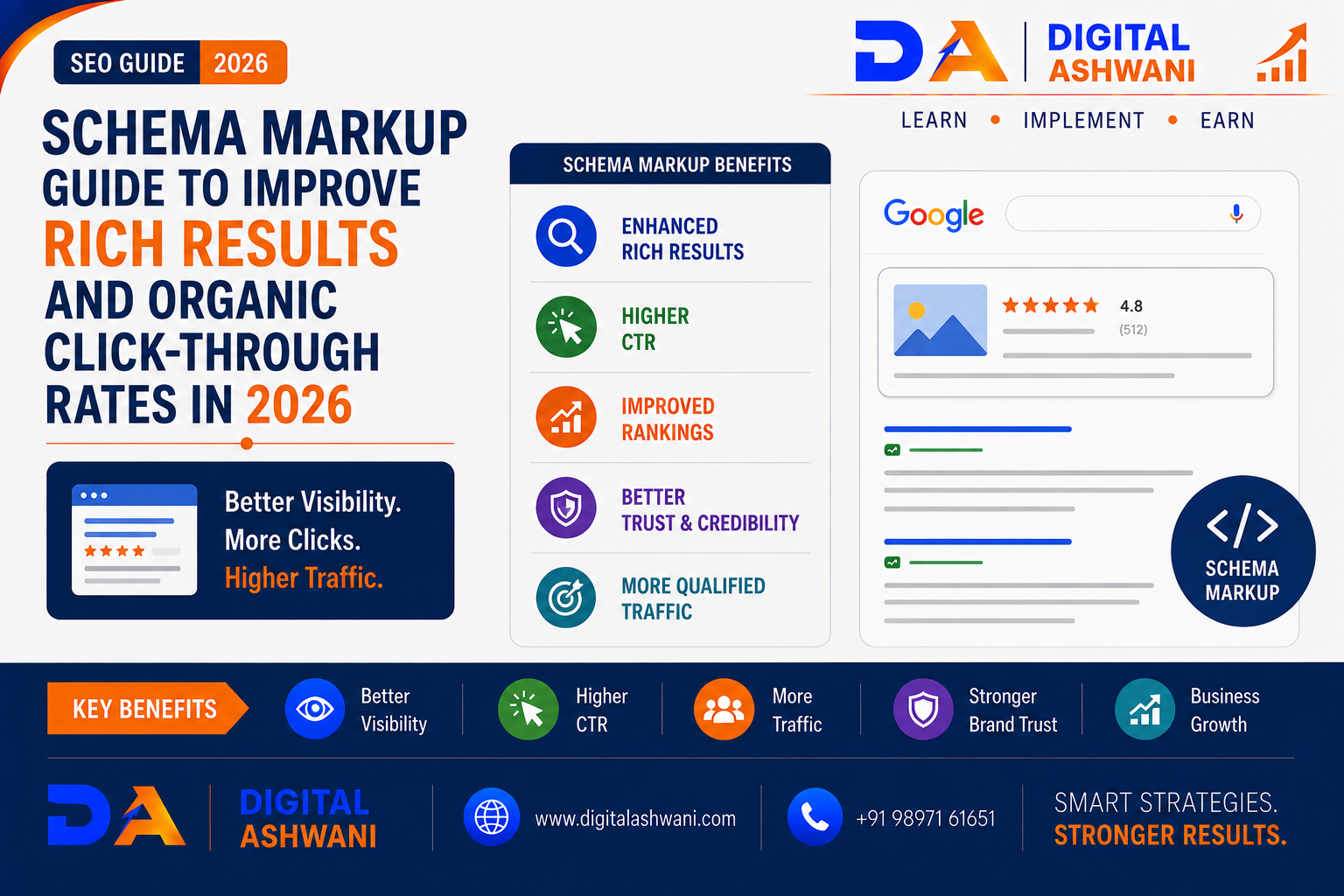
Schema Markup Guide to Improve Rich Results and Organic Click-Through Rates
Search engines need to understand what a webpage is about before they can display the most useful search results.
A webpage may contain information about a product, article, business, event, recipe, organization, course, or service, but search engines need additional context to interpret that information accurately.
This is where Schema Markup becomes useful.
Schema markup is structured data that helps search engines understand the meaning and context of information on a webpage. When implemented correctly and when a page meets the relevant eligibility requirements, structured data can help search engines display enhanced search-result features known as rich results.
For businesses, publishers, eCommerce websites, and local organizations, properly implemented structured data can improve how information is presented in search.
However, schema markup does not guarantee higher rankings or rich results. It should be viewed as a way to provide clearer information to search engines rather than as a direct ranking shortcut.
In this comprehensive guide by Digital Ashwani, you’ll learn what schema markup is, how structured data works, which schema types are useful, how to implement JSON-LD, how to validate your markup, and how structured data can support better organic search visibility.
What Is Schema Markup?
Schema markup is a form of structured data that provides search engines with additional information about the content and entities on a webpage.
It helps communicate information such as:
- Article Type
- Product Details
- Business Information
- Author Information
- Event Details
- Organization Details
- Breadcrumb Structure
- Review Information
- Course Information
Instead of asking search engines to infer everything from visible page content, structured data provides information in a standardized format.
What Is Structured Data?
Structured data is machine-readable information added to webpages to help search engines interpret content.
Schema.org provides a widely used vocabulary for describing entities and relationships.
Common implementation formats include:
- JSON-LD
- Microdata
- RDFa
For most modern websites, JSON-LD is generally the easiest format to manage because the structured data can be separated from the visible HTML content.
Why Schema Markup Matters for SEO
Schema markup can help search engines better understand:
- What Your Page Represents
- Who Created the Content
- What Products You Sell
- Where Your Business Is Located
- What an Event Is About
- How Content Is Structured
This additional context can help eligible pages qualify for supported search features.
Schema markup itself is not a guarantee of higher rankings.
What Are Rich Results?
Rich results are enhanced search-result formats that provide additional information beyond a traditional blue-link listing.
Depending on Google’s current supported features and eligibility requirements, examples can include:
- Product Information
- Review Information
- Breadcrumbs
- Events
- Organization Details
- Article Features
- Recipe Information
- Course Information
The availability of rich-result features changes over time, so always check current Google documentation before implementing a schema strategy.
Schema Markup vs Rich Results
These terms are related but not identical.
Schema Markup:
Structured information added to a webpage.
Rich Result:
An enhanced search-result appearance that Google may generate when a page meets its requirements.
Therefore:
Schema Markup → Better Machine Understanding → Eligibility for Supported Rich Results
But implementation does not guarantee that Google will display the enhanced result.
Common Schema Markup Types
Article Schema
Useful for eligible editorial content such as:
- Blog Posts
- News Articles
- Guides
- Informational Articles
It can help search engines understand article-related information.
Product Schema
Useful for eCommerce product pages.
It can communicate information such as:
- Product Name
- Brand
- Description
- Image
- Offers
- Availability
- Review Information
Local Business Schema
Useful for eligible local businesses.
Information may include:
- Business Name
- Address
- Phone Number
- Opening Hours
- URL
- Business Type
The markup should accurately represent the business and follow Google’s guidelines.
Organization Schema
Organization structured data can help search engines understand important information about a company or organization.
Breadcrumb Schema
Breadcrumb structured data can help search engines understand the hierarchy and categorization of pages.
Event Schema
Useful for eligible events with relevant information such as:
- Event Name
- Date
- Location
- Organizer
- Event URL
FAQ Schema
FAQ structured data has specific eligibility and display limitations. It should only be used when the page genuinely contains eligible FAQ content and meets current Google requirements.
Do not add FAQ markup simply to obtain a rich result.
How Schema Markup Can Support Organic CTR
Schema markup doesn’t directly guarantee a higher click-through rate.
However, eligible enhanced search appearances can make listings more informative and visually distinctive.
For example, additional information may help users understand:
- What the page contains
- Whether a product is available
- When an event takes place
- How a page fits within a website
- What type of organization operates the website
More useful search-result information can potentially improve user engagement.
The actual impact should be measured using Search Console and analytics data.
How to Add Schema Markup Using JSON-LD
Step 1: Identify the Page Type
First determine what the webpage actually represents.
For example:
- Blog Article
- Product
- Local Business
- Organization
- Event
- Course
Choose structured data that accurately describes the page.
Step 2: Collect Accurate Information
Use information that is genuinely present on the page and relevant to the entity being described.
Avoid adding information simply because you want search engines to display it.
Step 3: Create JSON-LD
JSON-LD provides structured information in a machine-readable format.
A simplified example for an article might include:
{
  "@context": "https://schema.org",
  "@type": "Article",
  "headline": "Schema Markup Guide",
  "author": {
    "@type": "Person",
    "name": "Digital Ashwani"
  }
}
The actual implementation should include appropriate properties supported by the relevant schema and should accurately represent the webpage.
Step 4: Add It to the Website
JSON-LD can generally be added to the webpage using a script element or through an SEO plugin or CMS feature.
If you’re using WordPress, plugins such as Rank Math can simplify structured-data implementation for supported content types.
Validate Your Schema Markup
Use Google’s Rich Results Test
Google’s Rich Results Test can help determine whether a webpage’s structured data is eligible for supported rich-result features and identify certain implementation issues.
Use Schema Markup Validator
The Schema Markup Validator can help validate schema.org structured data independently of Google’s rich-result eligibility.
Using both tools can provide a more complete technical review.
Monitor Structured Data in Google Search Console
After implementing schema, monitor Search Console for relevant enhancements and search performance.
Look for:
- Valid Items
- Errors
- Warnings
- Search Impressions
- Clicks
- CTR
- Indexing Issues
Search Console can help identify technical problems and show whether search performance changes after implementation.
Schema Markup Best Practices
Match the Visible Content
Structured data should accurately represent information visible on the page where required by Google’s guidelines.
Use the Most Specific Relevant Type
Don’t use a generic schema type when a more appropriate supported type exists.
Keep Information Accurate
Update structured data whenever important information changes.
Avoid Spammy Markup
Don’t add fake reviews, misleading information, or irrelevant structured data simply to pursue rich results.
Use Valid Properties
Only use properties that are appropriate for the selected schema type and supported by the relevant documentation.
Connect Related Entities
Where appropriate, use identifiers and relationships to help search engines understand connections between:
- Organization
- Website
- Author
- Product
- Article
- Local Business
Schema Markup for Different Website Types
Blog Websites
Consider relevant structured data such as:
- Article
- Breadcrumb
- Organization
- Person
eCommerce Websites
Relevant structured data may include:
- Product
- Organization
- Breadcrumb
- Review-related properties where applicable
Local Businesses
Consider:
- LocalBusiness
- Organization
- Breadcrumb
- Product or Service where appropriate
Educational Websites
Depending on the content, relevant types may include:
- Course
- Organization
- Article
- Breadcrumb
Event Websites
Use eligible event structured data where the page genuinely represents an event.
Common Schema SEO Mistakes
Adding Schema That Doesn’t Match the Page
Never mark a page as something it isn’t.
Using Outdated Schema Recommendations
Search features and Google’s supported structured-data features change.
Always verify current requirements.
Adding Fake Review Markup
Don’t create artificial reviews or ratings to make search results appear more attractive.
Ignoring Validation Errors
Broken structured data can prevent eligibility for supported rich-result features.
Expecting Schema to Improve Rankings Automatically
Schema helps search engines understand content, but it is not a guaranteed ranking boost.
Adding Every Available Schema Type
More schema isn’t automatically better.
Use structured data that genuinely describes the page.
Schema Markup SEO Checklist
Before publishing structured data, verify:
- Correct Schema Type
- Accurate Information
- Relevant Properties
- Valid JSON-LD
- Visible Content Matches Markup
- No Major Validation Errors
- Google Guidelines Followed
- Rich Results Test Checked
- Schema Markup Validator Checked
- Search Console Monitored
- Structured Data Updated When Content Changes
Internal Linking Suggestions (Digital Ashwani)
Strengthen your Technical SEO and structured-data content cluster by linking this guide with:
- How Search Engines Crawl, Index, and Rank Websites for Better Visibility in 2026
- Top On-Page SEO Techniques to Improve Rankings and Organic Website Traffic
- Building Topical Authority Through Strategic Content Clusters and Internal Linking
- Complete Google Business Profile Optimization Guide for Higher Local Search Rankings
- Product Page SEO Best Practices for Higher Conversions
- What Is E-E-A-T and Why Is It Important for Modern SEO?
- How AI Is Transforming Modern SEO Strategies for Business Growth
- Website Conversion Rate Optimization Guide
These internal links connect schema markup with technical SEO, on-page optimization, topical authority, Local SEO, eCommerce SEO, E-E-A-T, and conversion optimization.
External Resources
For authoritative structured-data guidance, refer to:
- Google Search Central
- Google Rich Results Test
- Schema.org
- Google Search Console Help
Always check the latest documentation because supported rich-result types and eligibility requirements can change.
Frequently Asked Questions
Does schema markup improve Google rankings?
Schema markup does not guarantee higher rankings. Its primary purpose is to help search engines understand webpage content and, where eligible, make pages suitable for supported rich-result features.
Can schema markup improve organic CTR?
It can potentially improve visibility and engagement when Google displays an eligible enhanced search result, but there is no guaranteed CTR increase.
Which schema is best for SEO?
There is no single best schema. Use the structured-data type that accurately represents your webpage and is relevant to the search features you want to qualify for.
Should every webpage have schema markup?
Not necessarily. Use relevant structured data where it accurately describes the page and provides useful context to search engines.
Is JSON-LD better than Microdata?
JSON-LD is generally easier to implement and maintain, which is why it is widely preferred for modern structured-data implementations. However, the important factor is accurate and valid implementation.
Can Rank Math add schema markup?
Yes. Rank Math provides schema features for supported WordPress content types, allowing site owners to configure structured data without manually writing all the markup.
Final Thoughts
A strong Schema Markup Guide strategy should focus on accuracy, relevance, and technical correctness—not simply adding as much structured data as possible.
Schema markup helps search engines understand what your content represents and can make eligible pages suitable for enhanced search-result features.
However, schema should work alongside a broader SEO strategy that includes:
High-Quality Content + Technical SEO + Search Intent + Internal Linking + Structured Data + Strong User Experience
If you implement structured data accurately, validate it regularly, monitor Search Console, and keep your markup synchronized with your actual content, you create a stronger technical foundation for modern SEO.
At Digital Ashwani, we regularly publish practical guides on Technical SEO, Google Search, AI SEO, Local SEO, Google Ads, Content Marketing, and Digital Marketing to help businesses improve their organic visibility and online growth.
