

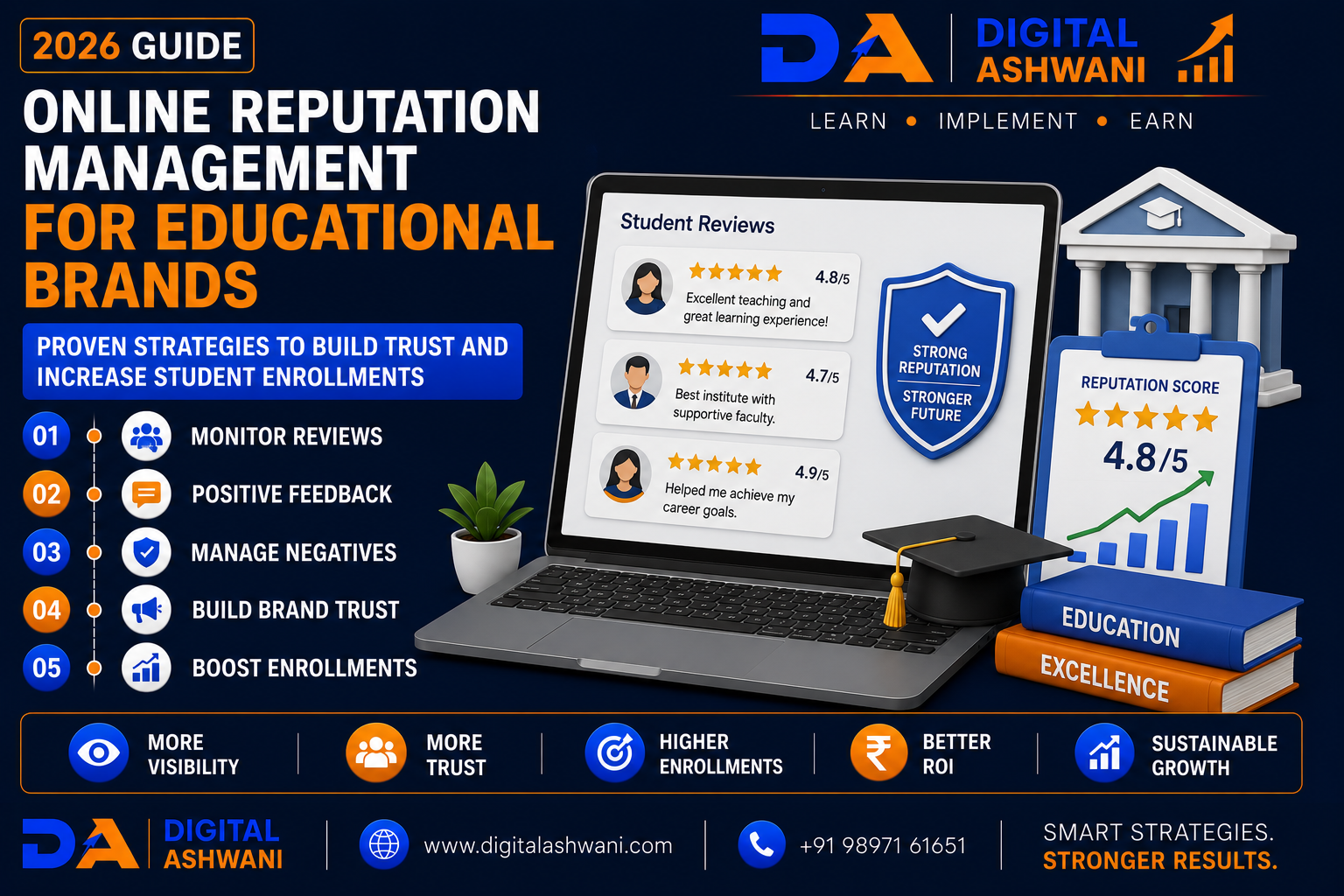
Online Reputation Management for Educational Brands
Before students or parents contact a school, college, university, coaching institute, or training center, they almost always research the institution online.
They search for:
- Best School Near Me
- Top Coaching Institute in Delhi
- College Reviews
- Student Feedback
- Institute Ratings
- Faculty Experience
A single negative review, outdated information, or poor online presence can influence enrollment decisions.
This is why Online Reputation Management (ORM) has become an essential part of digital marketing for educational institutions.
A strong online reputation builds credibility, improves trust, increases inquiries, and helps educational brands stand out in a competitive market.
In this comprehensive guide by Digital Ashwani, you’ll learn 15 proven Online Reputation Management strategies that help educational brands strengthen their reputation, improve online visibility, and increase student admissions in 2026.
What Is Online Reputation Management?
Online Reputation Management (ORM) is the process of monitoring, improving, and protecting how an educational institution appears across digital platforms.
ORM includes managing:
- Google Reviews
- Social Media Mentions
- Student Feedback
- Online Ratings
- Search Results
- News Articles
- Educational Directories
A positive digital reputation helps build confidence among prospective students and parents.
Why ORM Matters for Educational Brands
Students and parents often compare multiple institutions before making a decision.
A strong online reputation helps:
- Build Trust
- Increase Admissions
- Improve Brand Image
- Strengthen Credibility
- Increase Website Traffic
- Generate More Inquiries
- Improve Student Confidence
- Support Long-Term Growth
Benefits of Online Reputation Management
Effective ORM helps educational institutions:
- Increase Student Enrollments
- Improve Google Visibility
- Strengthen Brand Authority
- Encourage Positive Reviews
- Build Parent Trust
- Improve Student Engagement
- Reduce Reputation Risks
- Support Marketing Campaigns
15 Proven Online Reputation Management Strategies
1. Monitor Your Online Reputation
Regularly monitor your institution across:
- Google Search
- Google Reviews
- YouTube
- Educational Directories
Early monitoring helps identify issues before they grow.
2. Optimize Your Google Business Profile
Maintain an accurate Google Business Profile.
Include:
- Institution Name
- Address
- Phone Number
- Website
- Courses Offered
- Photos
- Business Hours
An updated profile builds credibility.
3. Encourage Genuine Reviews
Invite satisfied students and parents to leave honest reviews.
Positive reviews strengthen trust and improve local visibility.
Never purchase or fabricate reviews.
4. Respond Professionally to Reviews
Reply politely to:
- Positive Reviews
- Neutral Reviews
- Negative Reviews
Professional responses demonstrate transparency and commitment to improvement.
5. Publish Success Stories
Share authentic:
- Student Achievements
- Placement Stories
- Scholarship Winners
- Alumni Success
- Academic Awards
Success stories build confidence among prospective students.
6. Maintain Active Social Media Profiles
Regularly publish:
- Campus Updates
- Events
- Workshops
- Student Activities
- Faculty Achievements
- Educational Tips
Consistent activity strengthens your online reputation.
7. Publish High-Quality Educational Content
Create valuable content such as:
- Career Guides
- Admission Tips
- Exam Preparation
- Industry Insights
- Educational Blogs
- FAQs
Helpful content establishes authority and improves SEO.
8. Keep Website Information Updated
Regularly review:
- Course Details
- Admission Dates
- Faculty Profiles
- Contact Information
- Fee Structure
- Campus Facilities
Accurate information builds trust and reduces confusion.
9. Build a Strong Brand Presence Across Platforms
A consistent online presence strengthens credibility and recognition.
Maintain active profiles on:
- Google Business Profile
- YouTube
- X
- Educational Directories
Ensure your branding, contact details, and messaging remain consistent across all platforms.
10. Create an Effective Crisis Management Plan
Every educational institution should be prepared to handle unexpected reputation challenges.
Develop a process for:
- Responding to Negative Publicity
- Handling Student Complaints
- Addressing Misinformation
- Managing Social Media Issues
- Communicating During Emergencies
A timely and transparent response helps protect your institution’s reputation.
11. Improve SEO for Brand Reputation
Search Engine Optimization helps positive content appear prominently in search results.
Optimize:
- About Us Page
- Faculty Profiles
- Student Testimonials
- News Articles
- Success Stories
- Blog Content
Strong SEO helps ensure trustworthy content represents your brand online.
12. Monitor Brand Mentions Regularly
Track conversations about your institution across the web.
Monitor:
- Social Media Mentions
- Online Forums
- News Websites
- Educational Portals
- Review Platforms
- Blogs
Early detection allows you to respond quickly and professionally.
13. Highlight Awards and Accreditations
Showcase achievements that strengthen institutional credibility.
Display:
- Government Recognitions
- Accreditation Certificates
- Industry Partnerships
- Academic Awards
- Placement Statistics
- Faculty Achievements
Verified accomplishments increase trust among students and parents.
14. Optimize for AI Search
AI-powered search platforms increasingly summarize information about educational institutions.
Improve AI visibility by:
- Publishing Accurate Information
- Using Clear Headings
- Creating FAQ Sections
- Updating Course Details
- Demonstrating Expertise
- Maintaining Consistent Brand Information
Reliable and well-structured content improves visibility across both traditional and AI-powered search experiences.
15. Continuously Review and Improve Your Reputation Strategy
Online reputation management is an ongoing process.
Regularly:
- Review Student Feedback
- Update Website Content
- Publish Fresh Success Stories
- Improve Review Response Time
- Analyze Brand Sentiment
- Monitor Search Results
- Refine Communication Strategies
Continuous improvement strengthens long-term trust and brand value.
Online Reputation Management Checklist
Before considering your ORM strategy complete, verify the following:
- Reputation Monitoring Active
- Google Business Profile Updated
- Student Reviews Managed
- Social Media Profiles Active
- Website Information Current
- Success Stories Published
- Brand Mentions Monitored
- Crisis Response Plan Prepared
- SEO Optimized
- Monthly Reputation Audit Scheduled
Following this checklist helps maintain a strong digital reputation.
Common Online Reputation Management Mistakes
Ignoring Negative Reviews
Failing to respond to genuine concerns can damage trust.
Always reply politely, professionally, and constructively.
Publishing Outdated Information
Old admission dates, discontinued courses, or incorrect contact details reduce credibility.
Review your website regularly.
Using Fake Reviews
Artificial reviews may violate platform policies and harm long-term trust.
Encourage authentic feedback from students and parents.
Inconsistent Branding
Different logos, addresses, phone numbers, or messaging across platforms create confusion.
Maintain consistent branding everywhere.
Ignoring SEO
A strong reputation also depends on what appears in search results.
Publish authoritative, helpful content that accurately represents your institution.
Internal Linking Suggestions (Digital Ashwani)
Strengthen your education marketing content cluster by linking this article with:
- Digital Marketing Guide for Coaching Institutes
- SEO Strategies for Educational Institutions to Increase Student Admissions
- Local SEO Guide for Coaching Centers
- Social Media Marketing Strategy for Educational Institutes
- Google Ads Guide for Educational Institutions
- How to Increase Website Conversion Rates Using Data-Driven Optimization Methods
- What Is AI SEO and How Can It Improve Your Search Engine Rankings?
- How Structured Data Helps AI Understand Your Website Better
- Ultimate Analytics and Tracking Guide for Long-Term Business Growth
- Complete Beginner’s Guide to Understanding How Google Search Ranking Really Works
These internal links strengthen topical authority while helping readers explore related education marketing, SEO, AI SEO, analytics, and conversion optimization topics.
External Resources
For trusted guidance on reputation management and digital marketing, refer to:
- Google Business Profile Help
- Google Search Central
- Google Search Console Help
- Google Analytics Help Center
- Google for Education
These official resources provide current recommendations for search visibility, business profiles, analytics, and online reputation best practices.
Frequently Asked Questions
Why is Online Reputation Management important for educational brands?
Online Reputation Management helps schools, colleges, universities, coaching institutes, and training centers build trust, improve credibility, attract more student inquiries, and strengthen their digital presence.
How do online reviews affect admissions?
Many parents and students read reviews before making enrollment decisions. Positive, authentic reviews improve confidence and support higher inquiry rates.
Can SEO improve an educational institution’s reputation?
Yes. SEO helps positive and informative content rank higher in search results, making it easier for prospective students to find accurate information about your institution.
How often should educational brands monitor their online reputation?
Monitor reviews, social media mentions, and search results regularly. A monthly reputation audit, combined with ongoing monitoring, helps identify and address issues promptly.
Does AI-powered search make reputation management more important?
Yes. AI search systems often summarize publicly available information. Maintaining accurate, up-to-date, and trustworthy content helps ensure your institution is represented positively.
Final Thoughts
Implementing Online Reputation Management for Educational Brands is essential for building long-term trust and increasing student admissions. Parents and students increasingly rely on online reviews, search results, and social media before choosing an educational institution. A strong reputation can influence enrollment decisions just as much as academic programs or campus facilities.
By combining reputation monitoring, review management, SEO, helpful educational content, active social media engagement, transparent communication, and AI search optimization, educational institutions can strengthen their digital presence and stand out in a competitive market.
Rather than focusing only on promotional campaigns, invest in consistently delivering valuable information, responding to feedback professionally, and showcasing genuine student success. A positive online reputation supports sustainable growth, stronger brand recognition, and long-term credibility.
At Digital Ashwani, we regularly publish practical guides on SEO, AI SEO, Google Ads, Local SEO, Analytics, Social Media Marketing, and Digital Marketing to help educational institutions and businesses build stronger online brands and achieve sustainable growth.
