
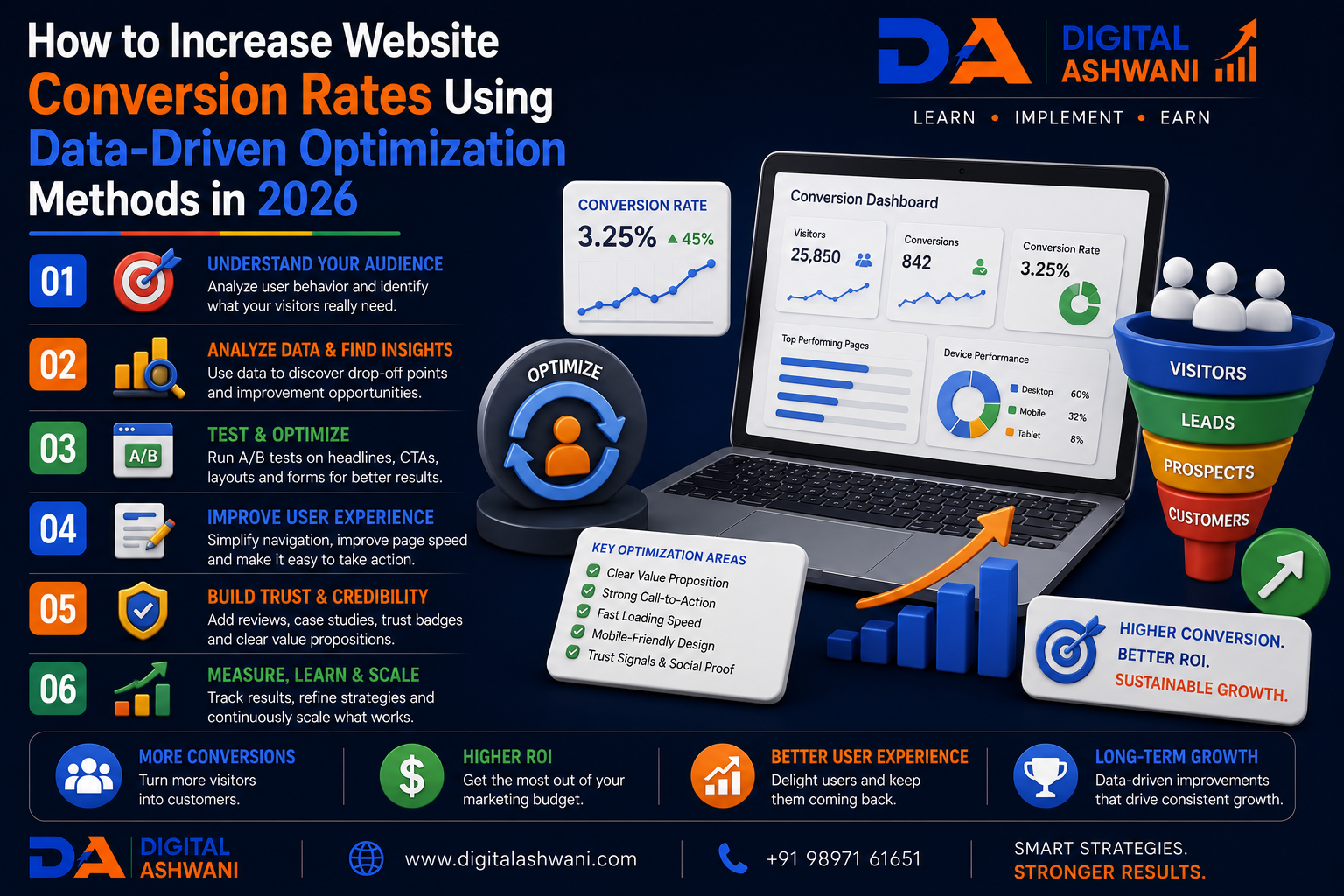
How to Increase Website Conversion Rates Using Data-Driven Optimization Methods
Driving traffic to your website is only half the battle. Whether visitors arrive through SEO, Google Ads, social media, email marketing, or referrals, your website must convince them to take action. If they leave without contacting you, making a purchase, or filling out a form, your marketing investment delivers limited value.
This is where Website Conversion Rate Optimization (CRO) becomes essential.
Conversion Rate Optimization is the process of improving your website so that a higher percentage of visitors complete valuable actions. These actions may include purchasing a product, requesting a quote, booking an appointment, downloading a resource, subscribing to a newsletter, or contacting your business.
Unlike simply increasing traffic, CRO helps businesses maximize the value of their existing visitors. By making data-driven improvements to user experience, content, design, and conversion funnels, businesses can generate more leads and revenue without significantly increasing marketing costs.
In this comprehensive guide by Digital Ashwani, you’ll learn what Website Conversion Rate Optimization is, why it matters, and the proven optimization methods businesses should use to improve conversions in 2026.
What Is Website Conversion Rate Optimization?
Website Conversion Rate Optimization (CRO) is the process of improving your website to increase the percentage of visitors who complete a desired action.
Examples of conversions include:
- Purchasing a product
- Filling out a contact form
- Booking a consultation
- Calling your business
- Downloading an eBook
- Signing up for a newsletter
- Registering for a webinar
- Starting a free trial
The goal is to improve business results without relying solely on additional traffic.
Why CRO Matters
Generating more traffic can be expensive.
CRO helps businesses increase revenue by making better use of existing visitors.
Benefits include:
- Higher lead generation
- Better ROI
- Lower acquisition costs
- Increased sales
- Improved customer experience
- Stronger marketing performance
Even small improvements in conversion rates can significantly increase business profitability.
How Is Conversion Rate Calculated?
Your conversion rate measures the percentage of visitors who complete a desired action.
Formula:
Conversion Rate = (Conversions ÷ Total Visitors) × 100
For example:
- Visitors: 5,000
- Leads: 250
Conversion Rate = 5%
Tracking this metric helps evaluate marketing effectiveness over time.
Benefits of Data-Driven Optimization
Instead of relying on assumptions, data-driven optimization uses real user behavior to guide improvements.
Businesses can make informed decisions using:
- Analytics
- Heatmaps
- Session recordings
- User feedback
- A/B testing
- Conversion tracking
This approach reduces guesswork and improves long-term performance.
15 Proven Website Conversion Rate Optimization Strategies
1. Understand Your Target Audience
Successful CRO begins with understanding your visitors.
Research:
- User goals
- Pain points
- Questions
- Buying behavior
- Devices used
- Traffic sources
The better you understand users, the easier it becomes to improve conversions.
2. Improve Website Speed
Slow websites lose potential customers.
Improve:
- Image optimization
- Browser caching
- Code minification
- Hosting performance
- Core Web Vitals
Fast-loading websites create better user experiences and increase conversion rates.
3. Create Clear Calls-to-Action (CTAs)
Visitors should immediately understand the next step.
Examples:
- Get a Free Quote
- Book a Consultation
- Contact Us
- Start Free Trial
- Download Guide
Clear CTAs encourage more conversions.
4. Build Trust
Trust significantly influences buying decisions.
Include:
- Customer testimonials
- Reviews
- Certifications
- Security badges
- Case studies
- Client logos
- Money-back guarantees
Trust signals reduce hesitation.
5. Optimize Landing Pages
Every landing page should focus on one primary goal.
Include:
- Strong headline
- Clear benefits
- CTA
- Visuals
- Social proof
- Simple forms
Reduce distractions that may interrupt the conversion process.
6. Simplify Contact Forms
Long forms often reduce conversions.
Ask only for essential information.
Examples:
- Name
- Phone
- Message
Shorter forms usually achieve higher completion rates.
7. Improve Mobile Experience
Most website visitors now browse using mobile devices.
Ensure:
- Responsive design
- Clickable buttons
- Fast loading
- Easy navigation
- Readable text
Mobile optimization improves both SEO and conversions.
8. Use Analytics to Identify Problems
Analytics reveal where visitors leave your website.
Monitor:
- Bounce rate
- Exit pages
- Session duration
- User flow
- Conversion funnel
- Device performance
Data helps prioritize improvements with the greatest impact.
9. Conduct A/B Testing Regularly
A/B testing helps determine which version of a webpage performs better.
Instead of making assumptions, test changes using real user behavior.
Elements You Can Test
- Headlines
- CTA buttons
- Landing page layouts
- Images
- Product descriptions
- Forms
- Pricing displays
- Button colors
Even small improvements can significantly increase conversions over time.
10. Use Heatmaps and Session Recordings
Heatmaps show where users click, scroll, and spend the most time on your website.
Session recordings reveal how visitors interact with each page.
Analyze User Behavior
Look for:
- Frequently clicked elements
- Dead clicks
- Rage clicks
- Scroll depth
- Navigation patterns
- Abandoned forms
These insights help identify obstacles that prevent conversions.
11. Personalize User Experience
Visitors are more likely to convert when content matches their interests.
Personalization Ideas
Show personalized:
- Product recommendations
- Location-based offers
- Dynamic CTAs
- Returning visitor messages
- Related content
- Industry-specific landing pages
Personalization improves engagement and customer satisfaction.
12. Reduce Bounce Rate
High bounce rates often indicate that visitors aren’t finding what they expected.
Improve Engagement By
- Matching search intent
- Improving page speed
- Using compelling headlines
- Adding internal links
- Improving readability
- Using engaging visuals
The longer users stay engaged, the higher the likelihood of conversion.
13. Optimize the Entire Conversion Funnel
Every stage of the customer journey should be optimized.
Typical Funnel
- Visitor
- Landing Page
- Product or Service Page
- Contact Form / Checkout
- Confirmation
- Follow-up
Reducing friction at every step improves overall conversion rates.
14. Monitor Conversion Metrics Continuously
Successful CRO requires ongoing analysis.
Important KPIs
Track:
- Conversion Rate
- Bounce Rate
- Average Session Duration
- Pages Per Session
- Form Completion Rate
- Cart Abandonment Rate
- Revenue Per Visitor
- Cost Per Acquisition (CPA)
Regular reporting helps identify opportunities for optimization.
15. Continuously Improve Based on Data
Conversion optimization is an ongoing process—not a one-time project.
Review performance regularly and continue testing new improvements.
Businesses that consistently optimize their websites often outperform competitors over time.
Best Tools for Conversion Rate Optimization
Popular CRO tools include:
- Google Analytics 4
- Google Tag Manager
- Google Search Console
- Microsoft Clarity
- Hotjar
- Optimizely
- VWO
- Looker Studio
Using multiple tools provides a more complete understanding of user behavior and website performance.
Common Website Conversion Optimization Mistakes
Ignoring User Intent
Visitors should immediately find the information they expect.
Align landing pages closely with keywords, advertisements, and user expectations.
Too Many Calls-to-Action
Multiple competing CTAs can confuse visitors.
Focus on one primary objective per landing page.
Slow Website Performance
Long loading times increase abandonment rates.
Optimize speed before investing heavily in additional traffic.
No Trust Signals
Without reviews, testimonials, certifications, or security indicators, visitors may hesitate to convert.
Build credibility throughout your website.
Making Decisions Without Data
Avoid redesigning pages based only on opinions.
Use analytics, testing, and user behavior data to guide improvements.
Website CRO Checklist
| Optimization Task | Status |
|---|---|
| Audience Research | ✅ |
| Website Speed Optimization | ✅ |
| Mobile Optimization | ✅ |
| Strong CTAs | ✅ |
| Landing Page Optimization | ✅ |
| Trust Signals Added | ✅ |
| A/B Testing | ✅ |
| Heatmap Analysis | ✅ |
| Conversion Tracking | ✅ |
| Continuous Optimization | ✅ |
Internal Linking Suggestions (Digital Ashwani)
Strengthen your CRO and Digital Marketing content cluster by linking this article with:
- Google Ads Guide for Beginners
- Landing Page Optimization Guide
- Performance Marketing vs Digital Marketing
- Google Analytics 4 Guide
- SEO Guide for Beginners
- Technical SEO Checklist
- Keyword Research Guide
- How Google Ads Works
- Content Marketing Strategy Guide
- Digital Marketing Trends 2026
These internal links strengthen topical authority, improve website navigation, and support higher search visibility.
External Resources
For official guidance and analytics resources, explore:
- Google Analytics Help Center
- Google Tag Manager Help
- Google Search Console
- Google PageSpeed Insights
- Google Lighthouse Documentation
These resources provide trusted recommendations for improving website performance and conversion optimization.
Frequently Asked Questions
What is Website Conversion Rate Optimization (CRO)?
Conversion Rate Optimization (CRO) is the process of improving a website so that a higher percentage of visitors complete desired actions such as purchases, inquiries, sign-ups, or downloads.
What is a good website conversion rate?
Conversion rates vary by industry, traffic source, and business model. Rather than focusing only on averages, businesses should continuously improve their own performance over time through testing and optimization.
Why is A/B testing important?
A/B testing compares different versions of a webpage or element to determine which one generates better conversion results using real user data.
Can CRO improve SEO?
While CRO is not a direct Google ranking factor, improving user experience, page speed, and engagement can positively support overall SEO performance and business outcomes.
How long does it take to improve conversion rates?
Some improvements can produce measurable results within a few weeks, while larger optimization programs require ongoing testing and refinement over several months.
Final Thoughts
Website Conversion Rate Optimization (CRO) is one of the most profitable digital marketing strategies because it helps businesses generate more leads, sales, and revenue from their existing website traffic. Instead of relying solely on increasing visitor numbers, CRO focuses on improving user experience, reducing friction, and making informed decisions based on real data.
By combining analytics, A/B testing, heatmaps, personalization, landing page optimization, and continuous performance monitoring, businesses can build websites that not only attract visitors but also convert them into loyal customers. In today’s competitive digital landscape, businesses that consistently optimize their websites using data-driven methods gain a significant competitive advantage.
At Digital Ashwani, we regularly publish practical guides on Conversion Rate Optimization (CRO), SEO, Google Ads, AI Marketing, Analytics, and Digital Marketing to help businesses maximize their online growth.
