

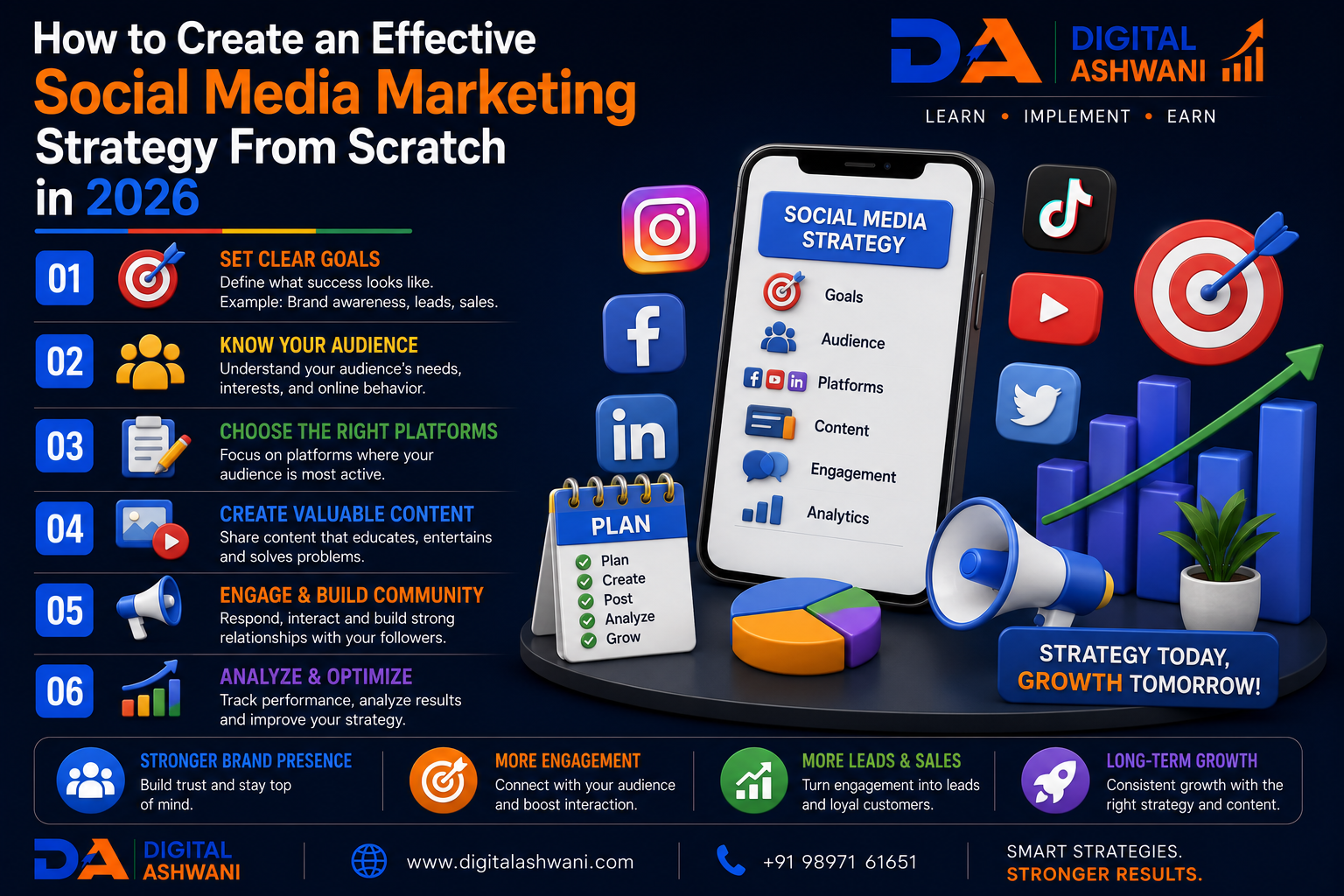
How to Create an Effective Social Media Marketing Strategy From Scratch
Social media has become one of the most powerful marketing channels for businesses of every size. Whether you’re a startup, local business, eCommerce store, SaaS company, educational institute, healthcare clinic, or digital marketing agency, a well-planned Social Media Marketing Strategy helps you build brand awareness, engage customers, generate leads, and increase sales.
However, many businesses post content randomly without a clear plan. They publish inconsistent updates, chase every new trend, and wonder why their engagement remains low. The problem isn’t the platforms—it’s the lack of a structured strategy.
An effective social media strategy is more than posting attractive images. It involves understanding your audience, setting measurable goals, creating valuable content, choosing the right platforms, analyzing performance, and continuously improving based on data.
With AI-powered content tools, social commerce, and changing platform algorithms shaping the future of marketing, businesses need a strategy that balances creativity with data-driven decision-making.
In this comprehensive guide by Digital Ashwani, you’ll learn how to create a successful Social Media Marketing Strategy from scratch and build a sustainable system for long-term business growth.
What Is a Social Media Marketing Strategy?
A Social Media Marketing Strategy is a documented plan that outlines how your business will use social media platforms to achieve specific marketing goals.
A successful strategy defines:
- Business objectives
- Target audience
- Preferred platforms
- Content plan
- Posting schedule
- Advertising strategy
- Performance metrics
Rather than posting randomly, every activity supports measurable business outcomes.
Why Every Business Needs a Social Media Strategy
Without a strategy, businesses often experience:
- Inconsistent posting
- Low engagement
- Poor brand recognition
- Weak lead generation
- Wasted advertising budget
A structured strategy keeps your marketing focused and aligned with business goals.
Benefits of a Strong Social Media Strategy
A well-planned strategy helps businesses:
- Build brand awareness
- Increase customer engagement
- Generate qualified leads
- Drive website traffic
- Improve customer loyalty
- Increase conversions
- Measure marketing performance
- Strengthen brand authority
It also makes scaling your marketing efforts much easier.
How to Plan Your Social Media Strategy
Planning before publishing content helps avoid confusion later.
Start by understanding:
- Your business goals
- Your audience
- Your competitors
- Available resources
- Marketing budget
A clear plan provides direction for all future campaigns.
15 Proven Steps to Build an Effective Social Media Marketing Strategy
1. Define Clear Business Goals
Every successful strategy begins with measurable objectives.
Examples include:
- Increase followers
- Generate leads
- Improve engagement
- Increase website traffic
- Drive online sales
- Build brand awareness
Clear goals make it easier to measure success.
2. Understand Your Target Audience
Know exactly who you’re trying to reach.
Research:
- Age
- Location
- Interests
- Pain points
- Online behavior
- Preferred platforms
Understanding your audience helps create more relevant content.
3. Research Your Competitors
Analyze successful competitors to understand:
- Content types
- Posting frequency
- Engagement levels
- Popular topics
- Campaign ideas
Competitor research helps identify opportunities—not copy content.
4. Choose the Right Social Media Platforms
Not every platform is suitable for every business.
Examples:
- LinkedIn for B2B
- Instagram for lifestyle brands
- Facebook for local businesses
- YouTube for education
- Pinterest for visual inspiration
Focus on platforms where your audience is most active.
5. Create Your Brand Voice
Maintain a consistent personality across every platform.
Examples:
- Professional
- Friendly
- Educational
- Inspirational
- Humorous
Consistency strengthens brand recognition.
6. Develop a Content Strategy
Plan content around different objectives.
Include:
- Educational posts
- Tips
- Case studies
- Customer stories
- Videos
- Reels
- Infographics
- Behind-the-scenes content
A balanced content mix keeps audiences engaged.
7. Create a Content Calendar
Publishing consistently builds audience trust.
Schedule content weekly or monthly to maintain consistency.
Use a content calendar to organize campaigns, holidays, launches, and promotional activities.
8. Use AI to Improve Productivity
AI tools help marketers save time.
Use AI for:
- Content ideas
- Caption writing
- Image creation
- Hashtag suggestions
- Performance analysis
- Content repurposing
AI should support creativity—not replace human strategy
9. Focus on Engagement Instead of Just Followers
A large follower count doesn’t always translate into business growth.
Instead, prioritize meaningful engagement with your audience.
Ways to Increase Engagement
- Reply to comments
- Respond to direct messages
- Ask questions
- Create polls
- Conduct live sessions
- Encourage user-generated content
- Share customer success stories
Building genuine relationships improves trust and long-term customer loyalty.
10. Use Paid Social Media Advertising
Organic reach continues to decline across many social platforms.
Paid advertising helps businesses reach highly targeted audiences more quickly.
Popular Campaign Objectives
- Brand Awareness
- Website Traffic
- Lead Generation
- Engagement
- Sales
- App Installs
- Video Views
Combining organic and paid strategies often delivers the best results.
11. Track Key Performance Indicators (KPIs)
Measure your strategy regularly to understand what is working.
Important Social Media Metrics
Monitor:
- Reach
- Impressions
- Engagement Rate
- Click-Through Rate (CTR)
- Website Traffic
- Leads Generated
- Conversion Rate
- Cost Per Lead (CPL)
- Return on Ad Spend (ROAS)
Data-driven decisions lead to continuous improvement.
12. Test, Learn, and Optimize
No strategy is perfect from the beginning.
Successful marketers continuously test new ideas and improve based on performance.
Experiment With
- Posting times
- Content formats
- Headlines
- Visual styles
- Call-to-Action (CTA)
- Ad creatives
- Audience targeting
Small improvements can significantly increase long-term results.
13. Automate Repetitive Tasks
Marketing automation helps save time and improve consistency.
Automate Tasks Like
- Post scheduling
- Welcome messages
- Content planning
- Report generation
- Social listening
- Performance alerts
Automation allows marketers to spend more time on strategy and creativity.
14. Stay Updated with Platform Changes
Social media platforms frequently introduce new features and algorithm updates.
Stay informed about:
- Instagram updates
- Facebook algorithm changes
- LinkedIn features
- YouTube updates
- X (Twitter) features
- AI-powered tools
Businesses that adapt quickly often gain a competitive advantage.
15. Build a Long-Term Brand Instead of Chasing Trends
Trending content can generate temporary attention, but lasting success comes from building a trusted brand.
Focus On
- Consistent branding
- Educational content
- Customer value
- Community building
- Authentic communication
- Long-term relationships
Strong brands continue growing even when trends change.
Recommended Content Mix
Maintain a balanced publishing strategy.
Example Content Distribution
- 40% Educational Content
- 20% Entertaining Content
- 20% Promotional Content
- 10% Community Engagement
- 10% Customer Testimonials & Case Studies
This balance keeps your audience engaged while supporting business goals.
Best AI Tools for Social Media Marketing
AI tools can improve productivity throughout your workflow.
Popular AI Tools
- ChatGPT
- Google Gemini
- Claude
- Canva AI
- Grammarly
- Perplexity
- Adobe Firefly
- Runway AI
Use AI to enhance efficiency while ensuring all content reflects your brand voice and is reviewed for accuracy.
Common Social Media Marketing Mistakes
Posting Without Clear Goals
Random posting rarely produces consistent business results.
Set measurable objectives before creating content.
Ignoring Analytics
Without reviewing performance data, it’s difficult to identify successful campaigns or improve future content.
Publishing Only Promotional Content
Constant sales-focused posts often reduce engagement.
Balance promotional updates with educational and entertaining content.
Inconsistent Branding
Different messaging, colors, or visual styles across platforms can weaken brand recognition.
Maintain a consistent identity across all channels.
Not Engaging with Followers
Social media is designed for conversations.
Actively responding to comments and messages strengthens customer relationships.
Social Media Strategy Checklist
| Strategy Task | Status |
|---|---|
| Business Goals Defined | ✅ |
| Audience Research | ✅ |
| Platform Selection | ✅ |
| Competitor Analysis | ✅ |
| Content Calendar | ✅ |
| Brand Guidelines | ✅ |
| AI Tools Integrated | ✅ |
| Analytics Tracking | ✅ |
| Paid Advertising | ✅ |
| Continuous Optimization | ✅ |
Internal Linking Suggestions (Digital Ashwani)
Strengthen your Social Media and Digital Marketing content cluster by linking this article with:
- What Is Social Media Marketing and Why Does Every Business Need It?
- Digital Marketing Career in 2026
- Top Digital Marketing Trends in 2026
- Best AI Tools for Digital Marketing
- Performance Marketing vs Digital Marketing
- Content Marketing Guide
- Google Ads Guide
- SEO Guide for Beginners
- Google Analytics Guide
- Instagram Marketing Strategy
These internal links improve topical authority, enhance user navigation, and support better SEO performance.
External Resources
For official guidance and platform best practices, explore:
- Meta Business Help Center
- LinkedIn Marketing Solutions
- YouTube Creator Academy
- Pinterest Business
- Google Analytics Help Center
Official resources help marketers stay updated with the latest features, advertising tools, and platform recommendations.
Frequently Asked Questions
What is a Social Media Marketing Strategy?
A Social Media Marketing Strategy is a structured plan that outlines how a business will use social media platforms to achieve goals such as brand awareness, lead generation, customer engagement, and sales.
How often should businesses post on social media?
Posting frequency depends on your audience and platform. Consistency is more important than posting excessively. Maintain a regular schedule that you can sustain over time.
Which social media platform is best for business?
The ideal platform depends on your target audience. LinkedIn works well for B2B companies, Instagram for lifestyle and visual brands, Facebook for local businesses, and YouTube for educational or long-form video content.
Can AI create a complete social media strategy?
AI can assist with content ideas, captions, analytics, and planning, but strategic decisions, brand positioning, and customer relationships still require human expertise.
How long does it take to see results?
Organic social media marketing typically takes several months to build momentum. Businesses that consistently publish valuable content and optimize their strategy usually see stronger long-term results.
Final Thoughts
Creating an effective Social Media Marketing Strategy isn’t about posting more—it’s about posting with purpose. Businesses that understand their audience, create valuable content, measure performance, and continuously improve their strategy are far more likely to achieve sustainable growth.
As AI continues to reshape digital marketing, successful brands will combine automation with creativity, analytics with storytelling, and technology with authentic human engagement. Rather than chasing every trend, focus on delivering consistent value and building long-term relationships with your audience.
At Digital Ashwani, we regularly publish practical guides on Social Media Marketing, SEO, Google Ads, AI Marketing, Content Strategy, and Digital Marketing to help businesses grow in the evolving digital landscape.
