

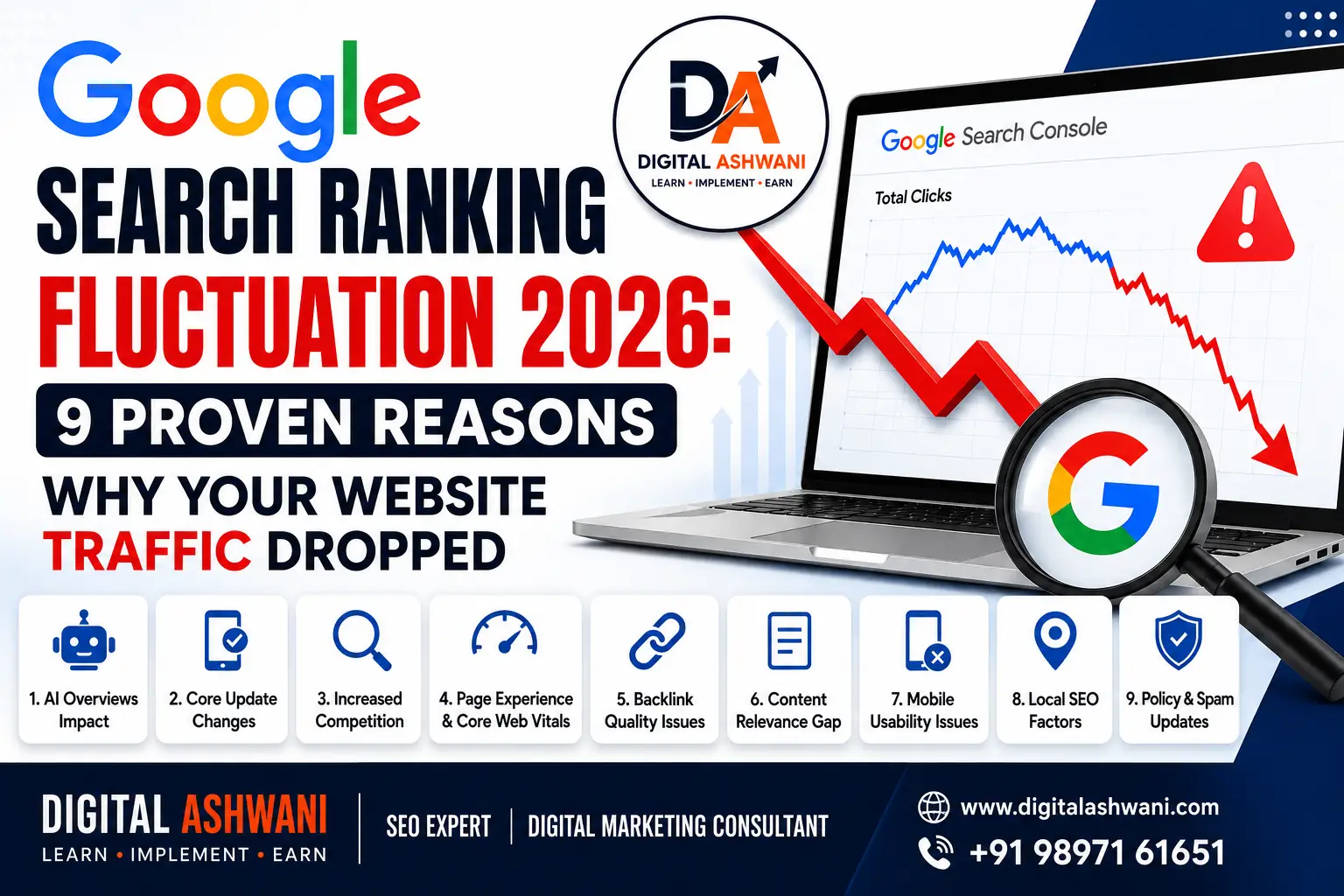
Have you noticed a sudden decline in your website traffic over the past few weeks? You’re not alone. Thousands of website owners, bloggers, affiliate marketers, and businesses have reported unexpected ranking changes following recent Google Search ranking fluctuations.
If your organic traffic has decreased, it doesn’t always mean your website has been penalized. In many cases, search rankings fluctuate naturally due to algorithm updates, increased competition, content freshness, and technical SEO issues.
In this comprehensive guide by Digital Ashwani, we’ll explain the major reasons behind the Google Ranking Drop 2026, how to diagnose the problem, and the practical steps you can take to recover your lost rankings.
Table of Contents
- What is Google Ranking Drop 2026?
- Why Are Google Rankings Fluctuating in 2026?
- Top Reasons Your Website Traffic Dropped
- How to Check Whether Your Site Was Affected
- Google Ranking Recovery Checklist
- SEO Best Practices to Regain Rankings
- Common Mistakes Website Owners Make
- Frequently Asked Questions
- Final Thoughts
What is Google Ranking Drop 2026?
The term Google Ranking Drop 2026 refers to a sudden decrease in your website’s search engine rankings, resulting in fewer impressions, clicks, and organic visitors.
A ranking drop can happen because of:
- Google algorithm updates
- Spam updates
- Core updates
- Technical SEO issues
- Poor-quality content
- Stronger competitors
- Manual actions
- Website performance problems
Not every ranking fluctuation indicates a penalty. Sometimes Google simply re-evaluates search results to provide users with more relevant content.
Why Are Google Rankings Fluctuating in 2026?
Google updates its search algorithm thousands of times each year. While most changes are minor, some updates significantly impact search rankings.
The biggest reasons behind Google Ranking Drop 2026 include:
- Recent Google Core Updates
- Google Spam Updates
- Helpful Content improvements
- AI-generated content evaluation
- Link spam detection
- User experience signals
- EEAT improvements
- Search intent changes
As Google continues improving search quality, websites with valuable and trustworthy content are more likely to gain visibility.
9 Proven Reasons Your Website Traffic Dropped
1. Google Algorithm Updates
Whenever Google launches a major update, rankings often fluctuate for several days or weeks.
If your traffic dropped immediately after an update, compare the timeline using Google Search Console.
Recovery Tip
Avoid making drastic changes during the rollout. Wait until rankings stabilize before making significant edits.
2. Low-Quality Content
Pages with outdated, thin, or duplicated content are less likely to perform well in search results.
Google now rewards:
- Original research
- Expert insights
- Helpful tutorials
- Updated statistics
- Real-life examples
Recovery Tip
Refresh old articles by adding new information, screenshots, FAQs, and practical examples.
3. Weak EEAT Signals
Google increasingly values Experience, Expertise, Authoritativeness, and Trustworthiness (EEAT).
If your content lacks author information, references, or real expertise, rankings may decline.
Recovery Tip
- Add author bios
- Include citations from trusted sources
- Share personal experience where relevant
- Keep content factually accurate
4. Technical SEO Problems
Technical issues can prevent Google from properly crawling and indexing your website.
Common problems include:
- Broken internal links
- Crawl errors
- Slow page speed
- Mobile usability issues
- Incorrect canonical tags
- Robots.txt mistakes
Recovery Tip
Perform a technical SEO audit and fix errors as quickly as possible.
5. Keyword Cannibalization
Publishing multiple pages targeting the same keyword can confuse Google about which page should rank.
Recovery Tip
Merge similar articles and optimize one comprehensive page for the target keyword.
6. Stronger Competitors
Your competitors may have:
- Published better content
- Built stronger backlinks
- Improved page experience
- Updated their articles
Even if your website hasn’t changed, competitors can outrank you by offering more value.
7. Poor User Experience
Google considers user experience when evaluating websites.
Negative signals include:
- High bounce rate
- Slow loading pages
- Intrusive pop-ups
- Poor mobile design
- Difficult navigation
Recovery Tip
Improve website speed, readability, and overall usability.
8. Lost Backlinks
If your website loses high-quality backlinks, your authority may decline, affecting rankings.
Recovery Tip
Monitor backlinks regularly and continue earning links through valuable content and outreach.
9. Search Intent Has Changed
Sometimes Google changes what type of content it prefers for a query.
For example, a keyword that once favored blog posts may now show videos, product pages, or comparison articles.
Recovery Tip
Analyze the current search results and update your content to better match user intent.
How to Check Whether Your Site Was Affected
If you suspect a Google Ranking Drop 2026, follow these steps:
Check Google Search Console
Look for:
- Drop in impressions
- Fewer clicks
- Lower average position
- Indexing issues
Review Google Analytics
Compare:
- Organic traffic
- Landing pages
- User engagement
- Conversion rates
Monitor Keyword Rankings
Track your primary keywords to identify which pages lost visibility.
Google Ranking Recovery Checklist
Use this checklist to improve your chances of recovery:
✅ Update outdated content
✅ Improve article quality
✅ Add unique images and screenshots
✅ Fix technical SEO issues
✅ Improve Core Web Vitals
✅ Strengthen internal linking
✅ Remove duplicate content
✅ Build high-quality backlinks
✅ Update title tags and meta descriptions
✅ Match current search intent
Internal Linking Suggestions (Digital Ashwani)
To strengthen your site’s topical authority, link this article with related posts such as:
- Google June 2026 Spam Update: Winners & Losers
- Complete Technical SEO Checklist
- Beginner’s Guide to Google Search Console
- On-Page SEO Checklist
- Keyword Research Guide for Beginners
External Resources
For official guidance and updates, refer to:
- Google Search Central
- Google Search Status Dashboard
- Google Search Console Help
- PageSpeed Insights
- Google Search Central Blog
These trusted resources can help you stay informed about algorithm updates and SEO best practices.
SEO Best Practices After Google Ranking Drop 2026
To maintain long-term rankings:
- Write for users before search engines.
- Publish original, in-depth content.
- Keep articles updated.
- Improve page speed.
- Optimize for mobile devices.
- Use descriptive headings.
- Add relevant internal links.
- Earn natural backlinks.
- Avoid keyword stuffing.
- Focus on solving user problems.
Consistency is the key to sustainable SEO success.
Frequently Asked Questions
What is Google Ranking Drop 2026?
It refers to a noticeable decline in search rankings and organic traffic due to algorithm updates, technical issues, or increased competition.
How long does ranking recovery take?
Recovery varies depending on the cause. Minor issues may recover within weeks, while algorithm-related recoveries can take longer after improvements are made.
Should I immediately change all my content?
No. First identify the actual cause of the traffic drop. Making unnecessary changes during an active algorithm rollout can sometimes make things worse.
Can AI-written content cause ranking drops?
AI-assisted content itself is not the problem. Content that is inaccurate, unhelpful, or created only to manipulate rankings is more likely to underperform.
How often should I audit my website?
A monthly SEO audit and a comprehensive quarterly review are good practices for most websites.
Final Thoughts
Experiencing a Google Ranking Drop 2026 can be frustrating, but it is also an opportunity to improve your website. Focus on creating valuable content, strengthening your technical SEO, and delivering the best possible experience for your visitors.
Instead of chasing quick fixes, invest in long-term SEO strategies based on quality, expertise, and user satisfaction. Websites that consistently provide helpful information are more likely to recover and remain resilient against future algorithm updates.
At Digital Ashwani, we continuously monitor Google Search changes and publish actionable SEO insights to help website owners and bloggers grow their organic traffic with confidence.
