
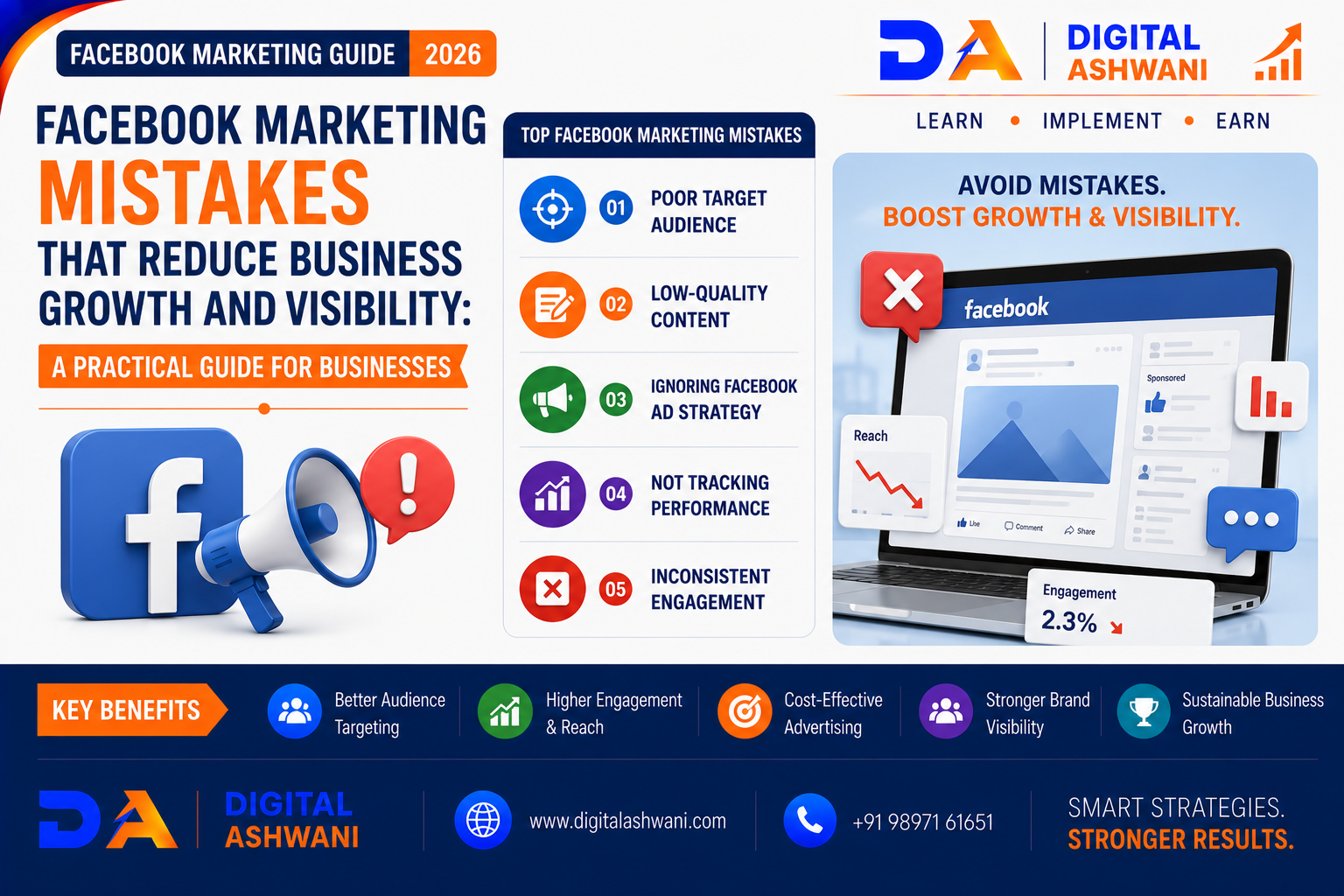
Facebook Marketing Mistakes That Reduce Business Growth and Visibility: A Practical Guide for Businesses
Focus Keyword: Facebook Marketing Mistakes
Secondary Keywords: Facebook Marketing Mistakes, Facebook Marketing Strategy, Facebook Business Marketing, Facebook Organic Marketing, Facebook Engagement, Facebook Reach, Social Media Marketing Mistakes
SEO Title:
Facebook Marketing Mistakes That Reduce Business Growth and Visibility: A Practical Guide
SEO URL Slug:
facebook-marketing-mistakes-business-growth-visibility
Meta Description:
Discover the most common Facebook Marketing Mistakes that reduce business growth, reach, engagement, and leads. Learn practical ways to improve your Facebook marketing strategy.
Facebook Marketing Mistakes That Reduce Business Growth and Visibility
Facebook remains an important marketing platform for businesses that want to build brand awareness, communicate with customers, generate leads, and drive website traffic.
However, simply creating a Facebook Business Page and publishing posts doesn’t guarantee results.
Many businesses invest significant time in Facebook marketing but struggle with low reach, weak engagement, poor-quality leads, or declining visibility. In many cases, the problem isn’t Facebook itself—it’s the strategy being used.
Common mistakes such as posting only promotional content, targeting the wrong audience, ignoring comments, using poor-quality creatives, failing to track results, and relying entirely on organic reach can limit business growth.
A successful Facebook marketing strategy requires consistent content, audience understanding, meaningful engagement, proper analytics, and continuous optimization.
In this practical guide by Digital Ashwani, you’ll learn the most common Facebook Marketing Mistakes businesses should avoid and what to do instead to improve visibility, engagement, leads, and long-term growth.
Table of Contents
- Why Facebook Marketing Mistakes Matter
- Common Facebook Marketing Mistakes
- How These Mistakes Affect Business Growth
- How to Improve Facebook Marketing
- Facebook Marketing Checklist
- Frequently Asked Questions
- Final Thoughts
Why Facebook Marketing Mistakes Matter
Facebook marketing works best when businesses understand their audience and create content that provides genuine value.
Poor strategies can result in:
- Low Organic Reach
- Weak Engagement
- Fewer Leads
- Poor Brand Visibility
- Wasted Advertising Budget
- Low Website Traffic
- Weak Customer Relationships
The good news is that most Facebook marketing problems can be identified and improved.
Common Facebook Marketing Mistakes
1. Posting Only Promotional Content
One of the biggest mistakes businesses make is turning their Facebook Page into a constant sales channel.
Posting messages such as:
- Buy Now
- Contact Us
- Limited Offer
- Call Today
on every post can quickly become repetitive.
Instead, balance promotional content with:
- Educational Posts
- Tips
- Tutorials
- Customer Stories
- Behind-the-Scenes Content
- Industry Insights
- Questions and Discussions
The goal is to provide value before asking for a sale.
2. Not Defining a Target Audience
Trying to reach everyone usually makes Facebook marketing less effective.
Before creating content, define:
- Age Group
- Location
- Interests
- Profession
- Customer Needs
- Buying Behavior
- Common Problems
A clearly defined audience helps you create more relevant content.
3. Ignoring the Facebook Business Page
Some businesses create a Page but leave important information incomplete.
Your Page should clearly include:
- Business Name
- Category
- Description
- Website
- Phone Number
- Address Where Applicable
- Business Hours
- Services
An incomplete Page can make the business appear less professional.
4. Using Poor-Quality Images and Videos
Visual quality has a major impact on how people perceive a business.
Avoid:
- Blurry Images
- Excessive Text
- Low-Resolution Graphics
- Unrelated Stock Photos
- Poor Lighting
- Inconsistent Branding
Use clear visuals that represent your actual products, services, people, or business.
5. Posting Without a Content Strategy
Random posting makes it difficult to build a recognizable brand.
Create content categories such as:
- Educational
- Promotional
- Inspirational
- Engagement
- Product or Service
- Customer Success
- Behind the Scenes
A content calendar helps maintain consistency.
6. Focusing Only on Likes
Likes are useful, but they aren’t the ultimate measure of business success.
Track more meaningful metrics such as:
- Leads
- Website Clicks
- Messages
- Engagement Rate
- Video Views
- Conversions
- Revenue
A post with fewer likes can still generate more customers.
7. Ignoring Comments and Messages
Social media is supposed to be social.
When customers ask questions or send messages, delayed responses can result in lost opportunities.
Respond to:
- Comments
- Messages
- Product Questions
- Service Enquiries
- Complaints
Professional communication can improve customer trust.
8. Posting at Random Times
Posting without understanding when your audience is active can reduce the initial opportunity for engagement.
Use Facebook’s available audience and content insights to understand when your audience is most responsive.
However, don’t rely on a universal “best time to post.” Test different publishing times for your own audience.
9. Not Using Video Content
Video can be an effective format for demonstrating products, explaining services, answering questions, and building familiarity.
Businesses can experiment with:
- Short Videos
- Tutorials
- Product Demonstrations
- Customer Stories
- Educational Videos
- Behind-the-Scenes Videos
Choose video topics based on customer needs rather than simply following trends.
10. Ignoring Facebook Reels
Short-form vertical video can provide an additional way to reach people on Facebook.
Use Reels for:
- Quick Tips
- Product Demonstrations
- FAQs
- Industry Insights
- Before-and-After Content Where Appropriate
- Behind-the-Scenes Content
Keep the content relevant to your business and audience.
11. Not Testing Different Content Formats
Using only one type of content can limit your ability to discover what your audience prefers.
Test:
- Images
- Videos
- Reels
- Text Posts
- Questions
- Carousels
- Customer Stories
- Educational Posts
Compare the results and prioritize formats that support your business goals.
12. Buying Fake Followers or Engagement
Buying followers may make a Page look larger temporarily, but it doesn’t create genuine customers.
Fake engagement can result in:
- Poor Audience Quality
- Low Engagement Rates
- Misleading Analytics
- Weak Customer Relationships
Focus on building a real audience.
13. Ignoring Negative Feedback
Deleting every negative comment isn’t always the right solution.
First determine whether the complaint is genuine.
Respond professionally and:
- Acknowledge the Problem
- Provide Relevant Information
- Offer Help
- Move Sensitive Conversations to Private Channels When Appropriate
A thoughtful response can demonstrate professionalism.
14. Running Ads Without Conversion Tracking
Businesses sometimes launch Facebook advertising campaigns without properly measuring what happens after the click.
Before scaling campaigns, establish appropriate tracking for actions such as:
- Lead Forms
- Website Enquiries
- Purchases
- Calls
- Registrations
- Bookings
Without reliable measurement, it becomes difficult to determine whether advertising is generating real business value.
15. Scaling Ads Too Quickly
Increasing an advertising budget dramatically without understanding campaign performance can waste money.
Before scaling, review:
- Cost Per Lead
- Conversion Rate
- Audience Quality
- Creative Performance
- Landing Page Performance
- Lead Quality
- Customer Acquisition Cost
Scale based on evidence rather than assumptions.
How Facebook Marketing Mistakes Affect Business Growth
Lower Brand Visibility
Poor content and inconsistent activity can make it harder to maintain audience attention.
Fewer Customer Interactions
Ignoring comments and messages can reduce opportunities to develop relationships.
Higher Advertising Costs
Weak targeting, poor creatives, and ineffective conversion processes can make paid campaigns less efficient.
Lower Lead Quality
Reaching the wrong audience may generate clicks without producing valuable prospects.
Reduced Customer Trust
Incomplete information, poor visuals, slow responses, and unprofessional communication can negatively affect credibility.
How to Improve Your Facebook Marketing Strategy
Create a Clear Content Plan
Plan content around customer problems and business objectives.
A balanced monthly strategy can include:
- Educational Content
- Engagement Content
- Product or Service Content
- Customer Stories
- Promotional Content
- Video Content
Understand Your Audience
Use available insights and performance data to understand what your audience responds to.
Look at:
- Demographics
- Content Engagement
- Video Performance
- Website Traffic
- Leads
- Conversion Data
Focus on Business Outcomes
Don’t optimize your entire strategy around vanity metrics.
Connect Facebook activity to:
Reach → Engagement → Website Visit → Lead → Customer
This gives you a clearer view of how Facebook contributes to growth.
Test and Improve Continuously
Test different:
- Headlines
- Creatives
- Video Hooks
- CTAs
- Audiences
- Content Topics
Keep what works and improve what doesn’t.
Facebook Marketing Checklist
Before publishing or running campaigns, check:
- Complete Business Page
- Clear Target Audience
- Consistent Branding
- Content Calendar
- High-Quality Visuals
- Educational Content
- Promotional Content
- Video Strategy
- Regular Engagement
- Comment Management
- Message Management
- Conversion Tracking
- Performance Monitoring
- Lead Quality Analysis
- Regular Optimization
Internal Linking Suggestions (Digital Ashwani)
Strengthen the Facebook and social media marketing content cluster by linking this article with:
- Facebook Organic Marketing Tips to Grow Your Business Without Paid Ads
- Facebook Lead Ads Strategy That Converts Visitors Into Paying Customers
- Meta Ads Optimization Tips for Lower Cost Per Lead
- Social Media Marketing vs Digital Marketing: Key Differences Explained Clearly
- Social Media Marketing Trends Every Business Owner Should Know This Year
- How to Write Social Media Captions That Increase Engagement and Sales
- How LinkedIn Helps Businesses Generate High-Quality Leads and Build Valuable Partnerships
- Complete YouTube Marketing Guide for Business Growth and Brand Awareness
These internal links connect Facebook marketing mistakes with organic marketing, paid advertising, lead generation, social media strategy, LinkedIn, and YouTube marketing.
External Resources
For current Facebook and Meta marketing information, businesses should refer to official resources such as:
- Meta Business Help Center
- Meta Business
- Meta Ads Guide
Platform features, advertising options, targeting capabilities, and policies can change over time, so always check the latest official documentation before launching campaigns.
Frequently Asked Questions
What are the biggest Facebook marketing mistakes?
Common mistakes include posting only promotional content, targeting the wrong audience, ignoring comments, using poor-quality visuals, buying fake engagement, failing to track conversions, and not having a clear content strategy.
Why is my Facebook Page getting low reach?
Low reach can have multiple causes, including weak content relevance, limited audience interaction, inconsistent publishing, and changing platform distribution. Review your content performance and audience insights rather than assuming there is one universal cause.
Should businesses post every day on Facebook?
Not necessarily. A sustainable publishing schedule with valuable content is generally more useful than posting frequently just to meet a daily quota.
Is Facebook still useful for business marketing?
Yes. Facebook can support brand awareness, customer communication, community building, lead generation, website traffic, and paid advertising. Results depend heavily on the audience, industry, offer, and execution.
Should I buy Facebook followers?
No. Purchased followers usually don’t provide genuine business value and can make your audience and performance data less reliable.
Should small businesses use Facebook Ads?
Facebook Ads can be useful for businesses with a clearly defined audience, suitable offer, strong creative, landing or lead-capture experience, and reliable conversion tracking.
Final Thoughts
Avoiding common Facebook Marketing Mistakes can significantly improve the effectiveness of your social media strategy.
The goal isn’t simply to publish more posts or collect more likes.
Successful Facebook marketing combines:
Relevant Content + Right Audience + Consistent Engagement + Accurate Tracking + Continuous Optimization
Businesses should focus on creating useful content, understanding their customers, responding professionally, testing different formats, and measuring results that actually matter.
Facebook can become a valuable part of your digital marketing strategy when it is treated as a platform for building relationships and generating measurable business outcomes—not simply as a place to post advertisements.
At Digital Ashwani, we regularly publish practical guides on SEO, Google Ads, Meta Ads, Social Media Marketing, AI Marketing, Local SEO, and Digital Marketing to help businesses improve their online visibility and generate sustainable growth.
