

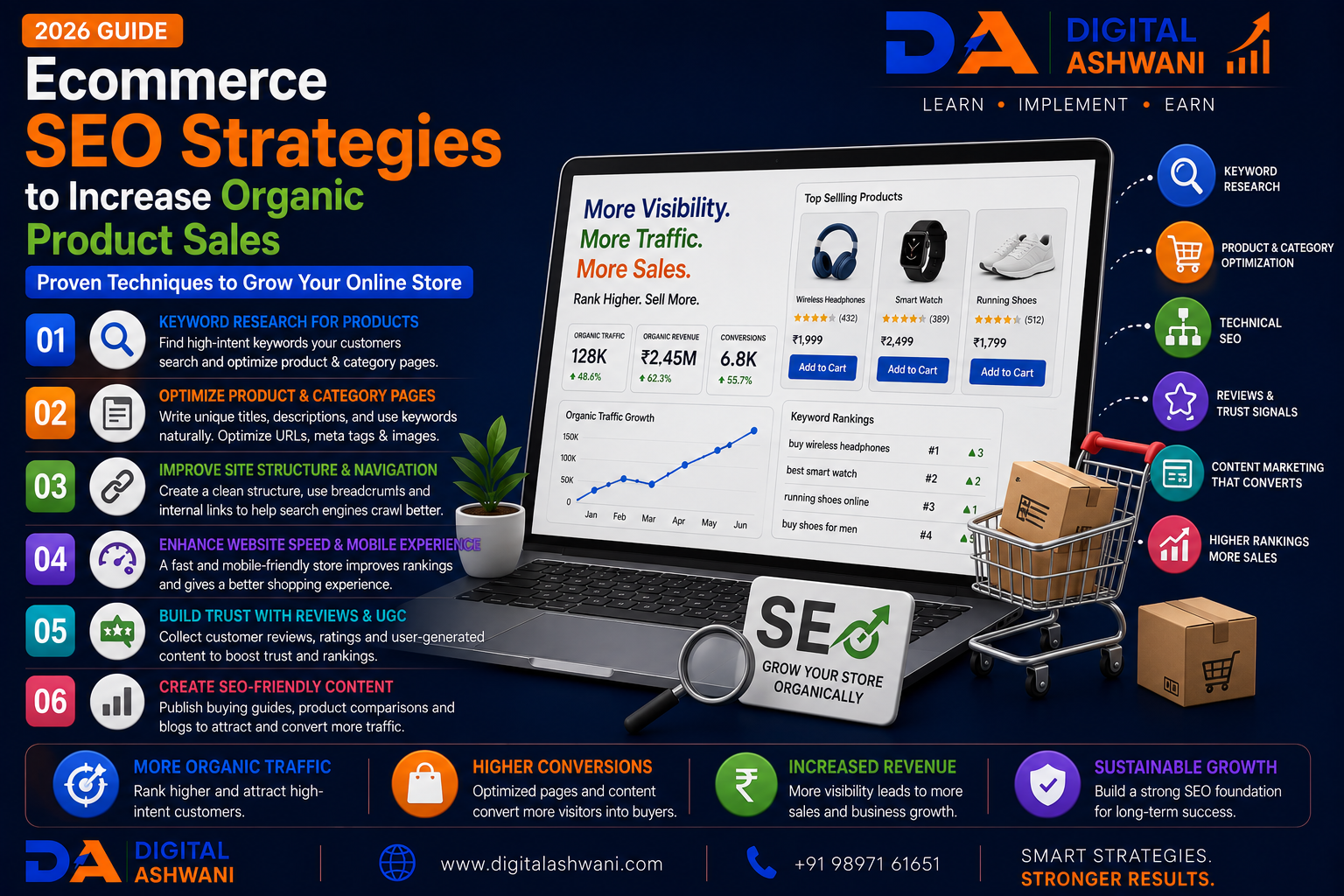
Ecommerce SEO Strategies to Increase Organic Product Sales
The eCommerce industry is more competitive than ever. Thousands of online stores compete for the same customers, making it increasingly difficult to attract visitors through paid advertising alone. While Google Ads and social media campaigns can generate immediate traffic, long-term success depends on building consistent organic visibility through Search Engine Optimization (SEO).
A well-optimized eCommerce website helps potential customers discover your products exactly when they are searching for them. Whether you sell fashion, electronics, beauty products, furniture, groceries, sports equipment, or digital products, effective SEO can drive highly targeted traffic that converts into sales without paying for every click.
Modern eCommerce SEO goes far beyond adding keywords to product pages. Search engines now evaluate user experience, page speed, product information, structured data, reviews, EEAT signals, and AI-friendly content before ranking online stores. Businesses that invest in comprehensive SEO strategies are better positioned to generate sustainable organic sales and reduce customer acquisition costs.
In this complete guide by Digital Ashwani, you’ll learn 15 proven Ecommerce SEO Strategies that help online stores increase organic traffic, improve search rankings, and boost product sales in 2026.
What Is Ecommerce SEO?
Ecommerce SEO is the process of optimizing an online store so that product pages, category pages, and other website content rank higher in search engines like Google and AI-powered search platforms.
The goal is to:
- Increase Organic Traffic
- Improve Product Visibility
- Generate Qualified Buyers
- Boost Product Sales
- Reduce Paid Advertising Costs
- Build Brand Authority
SEO helps customers discover products naturally during their buying journey.
Why SEO Matters for Ecommerce Businesses
Most online shoppers begin their buying journey with a search engine.
Examples include:
- Best Running Shoes
- Buy Wireless Earbuds Online
- Men’s Formal Shirts
- Organic Skin Care Products
- Laptop Under ₹50,000
Appearing in search results for these keywords increases the chances of attracting customers with strong purchase intent.
Benefits of Ecommerce SEO
A successful Ecommerce SEO strategy helps businesses:
- Increase Organic Sales
- Improve Search Rankings
- Reduce Customer Acquisition Cost
- Build Brand Trust
- Generate Long-Term Traffic
- Improve Conversion Rates
- Increase Repeat Customers
- Support AI Search Visibility
Unlike paid ads, SEO continues delivering value long after optimization work is completed.
15 Proven Ecommerce SEO Strategies
1. Perform Comprehensive Keyword Research
Every successful Ecommerce SEO campaign starts with identifying keywords that customers actually search for.
Target keywords such as:
- Product Keywords
- Category Keywords
- Long-Tail Keywords
- Brand Keywords
- Comparison Keywords
- Transactional Keywords
Focus on keywords with commercial intent rather than only high search volume.
2. Optimize Product Pages
Every product page should provide complete and valuable information.
Include:
- Unique Product Titles
- SEO-Friendly URLs
- Detailed Product Descriptions
- Product Specifications
- High-Quality Images
- Product Videos
- Customer Reviews
- Frequently Asked Questions
Well-optimized product pages improve rankings and conversions.
3. Optimize Category Pages
Category pages often target broader, high-volume keywords.
Include:
- Category Descriptions
- Internal Links
- Featured Products
- Buying Guides
- Filters
- FAQs
Strong category pages improve both SEO and user experience.
4. Write Unique Product Descriptions
Avoid copying manufacturer descriptions.
Instead:
- Highlight Benefits
- Explain Features
- Answer Customer Questions
- Include Keywords Naturally
- Focus on User Intent
Original content helps search engines better understand your products.
5. Improve Website Speed
Fast-loading websites improve both rankings and sales.
Optimize:
- Images
- Code
- Browser Caching
- Hosting
- Core Web Vitals
Speed directly affects customer experience and conversions.
6. Implement Structured Data
Schema Markup helps search engines understand product information.
Useful schema includes:
- Product Schema
- Review Schema
- Offer Schema
- Breadcrumb Schema
- Organization Schema
- FAQ Schema
Rich results improve click-through rates.
7. Build Strong Internal Linking
Connect related pages through internal links.
Examples include:
- Product to Category
- Related Products
- Buying Guides
- Blog Articles
- Best Sellers
- New Arrivals
Internal linking improves crawlability and keeps visitors engaged.
8. Optimize for AI Search
Modern search experiences increasingly use AI-generated answers.
Create content that clearly explains:
- Product Features
- Buying Advice
- Product Comparisons
- Frequently Asked Questions
- User Problems and Solutions
AI-friendly content improves visibility across Google AI, ChatGPT, Gemini, and other AI-powered search experiences.
9. Strengthen Technical Ecommerce SEO
Technical SEO ensures that search engines can crawl, index, and understand your online store efficiently.
Technical SEO Checklist
- HTTPS Security
- XML Sitemap
- Robots.txt Optimization
- Canonical Tags
- Mobile-Friendly Design
- Core Web Vitals
- Clean URL Structure
- Breadcrumb Navigation
- Fix Broken Links
- Optimize Crawl Budget
A technically optimized store improves rankings and provides a better shopping experience.
10. Optimize Images for SEO
Product images play a major role in both user experience and Google Image Search.
Best Practices
- Use High-Quality Images
- Compress Images for Faster Loading
- Add Descriptive ALT Text
- Use SEO-Friendly File Names
- Include Multiple Product Angles
- Enable Image Lazy Loading
Optimized images improve page speed and increase visibility in image search results.
11. Encourage Customer Reviews
Reviews improve trust while providing fresh, user-generated content.
Encourage customers to leave genuine reviews that include:
- Product Ratings
- Photos
- Purchase Experience
- Product Quality
- Usage Feedback
Product reviews can improve both click-through rates and conversion rates.
12. Create Helpful Ecommerce Content
Content marketing supports product sales by answering customer questions.
Create articles such as:
- Buying Guides
- Product Comparisons
- How-To Guides
- Product Care Tips
- Industry Trends
- Frequently Asked Questions
Helpful content attracts informational traffic and guides users toward purchasing decisions.
13. Build High-Quality Backlinks
Authoritative backlinks increase your store’s credibility.
Potential backlink sources include:
- Industry Blogs
- News Websites
- Product Review Sites
- Influencer Collaborations
- Business Directories
- Resource Pages
- Digital PR Campaigns
Focus on earning relevant, high-quality links rather than purchasing low-quality backlinks.
14. Optimize for Higher Conversions
Traffic alone doesn’t increase revenue—conversions do.
Improve conversions by adding:
- Clear Call-to-Action Buttons
- Trust Badges
- Secure Payment Icons
- Fast Checkout Process
- Product Videos
- Money-Back Guarantees
- Delivery Information
- Easy Return Policy
A better shopping experience leads to more completed purchases.
15. Monitor SEO Performance Regularly
SEO requires continuous monitoring and improvement.
Use tools such as:
- Google Analytics 4
- Google Search Console
- Merchant Center
- Heatmap Tools
- Ecommerce Dashboard
Important Ecommerce SEO Metrics
- Organic Traffic
- Product Page Rankings
- Click-Through Rate (CTR)
- Conversion Rate
- Revenue from Organic Search
- Bounce Rate
- Average Order Value (AOV)
- Cart Abandonment Rate
Regular analysis helps identify opportunities to improve traffic and sales.
Complete Ecommerce SEO Checklist
Before launching or updating your online store, ensure you’ve completed the following:
- Keyword Research Completed
- Product Pages Optimized
- Category Pages Optimized
- Unique Product Descriptions Written
- Technical SEO Implemented
- Schema Markup Added
- Images Optimized
- Internal Linking Improved
- Customer Reviews Enabled
- Performance Tracking Configured
Following this checklist creates a strong SEO foundation for long-term organic growth.
Common Ecommerce SEO Mistakes
Using Duplicate Product Descriptions
Copying manufacturer descriptions can reduce search visibility.
Always create unique, informative product content.
Ignoring Category Pages
Many stores optimize only product pages.
Well-optimized category pages can rank for competitive, high-volume keywords and drive significant traffic.
Poor Website Speed
Slow-loading stores increase bounce rates and reduce conversions.
Optimize performance regularly for desktop and mobile users.
Weak Internal Linking
Poor navigation makes it difficult for both users and search engines to discover products.
Link related products, categories, and educational content strategically.
Not Optimizing for Mobile Users
Most online shoppers browse and purchase from smartphones.
Ensure your website is responsive, fast, and easy to navigate on mobile devices.
Internal Linking Suggestions (Digital Ashwani)
Strengthen your Ecommerce SEO content cluster by linking this article with:
- What Is Search Engine Optimization and Why Does Every Business Need SEO?
- Complete Beginner’s Guide to Understanding How Google Search Ranking Really Works
- How Search Engines Crawl, Index and Rank Websites for Better Visibility
- Entity SEO Strategies for AI-Powered Search Engines
- ChatGPT for SEO: How to Create High-Quality Content That Ranks
- How To Measure AI Search Visibility
- What Is Google Analytics 4 and Why Every Business Should Use It
- How to Increase Website Conversion Rates Using Data-Driven Optimization Methods
- Complete Meta Ads Guide for Small Businesses and Local Brands
- Digital Marketing Trends 2026
These internal links strengthen topical authority, improve semantic relevance, and help search engines understand your Ecommerce, SEO, and Digital Marketing content ecosystem.
External Resources
For official Ecommerce SEO guidance, explore:
- Google Search Central
- Google Merchant Center Help
- Google Search Console Help
- Google Analytics Help Center
- Schema.org
These trusted resources provide the latest recommendations for technical SEO, structured data, product visibility, and search performance.
Frequently Asked Questions
What is Ecommerce SEO?
Ecommerce SEO is the process of optimizing an online store, product pages, category pages, and technical elements to improve search engine rankings and increase organic product sales.
Why is SEO important for ecommerce websites?
SEO helps online stores attract highly targeted customers from search engines, reduce dependence on paid advertising, improve brand visibility, and generate long-term organic revenue.
How long does Ecommerce SEO take to show results?
Most ecommerce websites begin seeing measurable improvements within 3–6 months, while highly competitive industries may require a longer-term SEO strategy.
Can AI improve Ecommerce SEO?
Yes. AI can assist with keyword research, content optimization, product descriptions, search intent analysis, internal linking, and performance reporting. Human review remains essential for quality and accuracy.
Which pages should be optimized first?
Start with your highest-value pages, including category pages, best-selling product pages, homepage, and key informational content that supports purchasing decisions.
Final Thoughts
Successful Ecommerce SEO Strategies go beyond ranking product pages—they create a seamless shopping experience that helps customers discover, evaluate, and purchase products with confidence. By combining technical SEO, keyword optimization, structured data, high-quality content, AI-friendly pages, customer reviews, and conversion optimization, online stores can generate sustainable organic traffic and increase product sales.
As search engines continue to evolve with AI-powered experiences, ecommerce businesses that focus on user intent, trust, and valuable content will be better positioned to achieve long-term growth. Rather than relying solely on paid advertising, invest in a comprehensive SEO strategy that builds lasting visibility and profitability.
At Digital Ashwani, we regularly publish practical guides on Ecommerce SEO, AI SEO, Google Ads, Social Media Marketing, Technical SEO, and Digital Marketing to help businesses grow their online presence and maximize organic revenue.
