
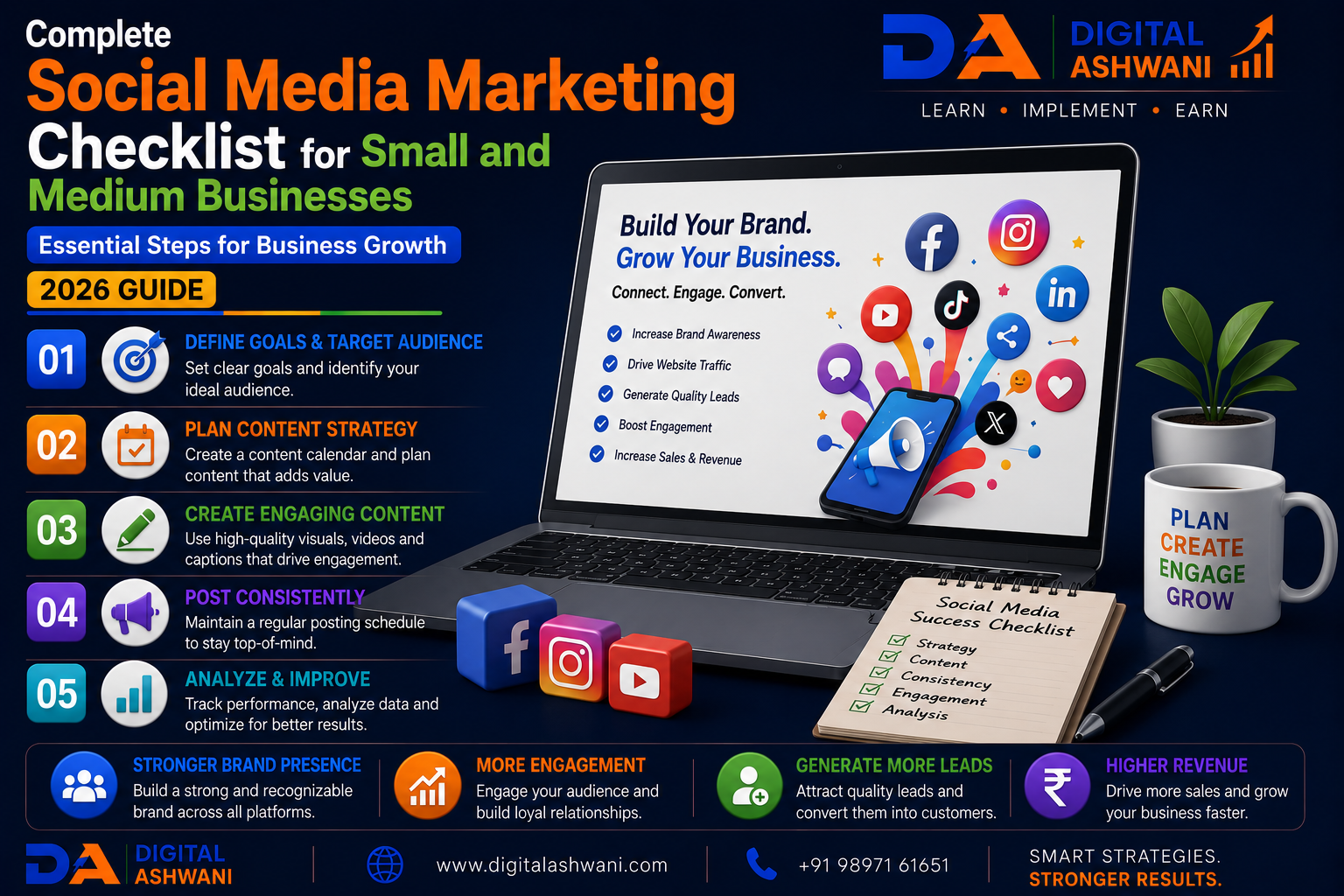
Complete Social Media Marketing Checklist for Small and Medium Businesses
Social media has become one of the most powerful digital marketing channels for businesses of every size. Whether you own a local business, startup, eCommerce store, restaurant, healthcare clinic, educational institute, travel agency, or service-based company, your customers are already spending hours every day on platforms like Instagram, Facebook, LinkedIn, YouTube, and X.
However, simply posting random content isn’t enough. Successful businesses follow a structured social media marketing strategy that aligns with their business goals, target audience, and brand identity.
A complete social media checklist ensures that every post, campaign, and interaction contributes toward increasing brand awareness, generating qualified leads, improving customer engagement, and driving business growth.
In this comprehensive guide by Digital Ashwani, you’ll learn a practical Social Media Marketing Checklist that every small and medium business should follow to build a strong online presence and achieve consistent marketing success in 2026.
Why Social Media Marketing Matters
Modern customers often discover brands through social media before visiting their websites.
Common user activities include:
- Discovering new brands
- Watching product videos
- Reading customer reviews
- Comparing services
- Messaging businesses
- Following industry experts
Businesses with an active and professional social media presence are more likely to gain trust and attract new customers.
Benefits of Social Media Marketing
A strong social media strategy helps businesses:
- Increase brand awareness
- Generate qualified leads
- Build customer relationships
- Improve website traffic
- Increase sales opportunities
- Strengthen customer loyalty
- Support SEO and content marketing
- Improve brand credibility
Social media also provides valuable customer insights through analytics and engagement data.
How Customers Interact with Businesses
Today’s buying journey often looks like this:
- Discover a brand.
- Visit the social media profile.
- View posts and videos.
- Read reviews.
- Visit the website.
- Contact the business.
- Make a purchase.
Optimizing every stage improves conversions and customer trust.
Complete Social Media Marketing Checklist
1. Define Clear Marketing Goals
Every campaign should have measurable objectives.
Examples include:
- Brand Awareness
- Lead Generation
- Website Traffic
- Product Sales
- Customer Support
- Community Growth
Clear goals help measure success.
2. Identify Your Target Audience
Understand your ideal customers by considering:
- Age
- Location
- Interests
- Occupation
- Buying behavior
- Preferred social platforms
Knowing your audience helps create more relevant content.
3. Choose the Right Social Media Platforms
Not every platform is suitable for every business.
Examples:
- Instagram for visual brands
- Facebook for local businesses
- LinkedIn for B2B companies
- YouTube for educational content
- X for industry updates
- Pinterest for lifestyle brands
Focus your efforts where your audience is most active.
4. Optimize Every Social Media Profile
Your profile should include:
- Business Name
- Logo
- Professional Cover Image
- Keyword-Rich Bio
- Website Link
- Contact Information
- Business Hours
- Call-to-Action Button
A complete profile builds trust and improves discoverability.
5. Create a Monthly Content Calendar
Plan content in advance instead of posting randomly.
Include:
- Educational Posts
- Promotional Posts
- Customer Testimonials
- Industry News
- Behind-the-Scenes Content
- Reels & Shorts
- Polls
- FAQs
A content calendar ensures consistency.
6. Publish High-Quality Visual Content
Visual content attracts more attention than text-only posts.
Create:
- Infographics
- Reels
- Short Videos
- Product Photos
- Carousels
- Stories
- Live Videos
Professional visuals improve engagement.
7. Maintain Consistent Branding
Use consistent:
- Brand Colors
- Fonts
- Logo Placement
- Tone of Voice
- Design Style
Consistent branding improves recognition and trust.
8. Engage with Your Audience Daily
Social media is a two-way communication channel.
Respond to:
- Comments
- Messages
- Reviews
- Mentions
- Questions
Fast responses improve customer relationships and engagement.
9. Use Paid Social Media Advertising
Organic reach is valuable, but paid advertising helps businesses reach a larger and more targeted audience.
Run campaigns for:
- Brand Awareness
- Lead Generation
- Website Traffic
- Product Sales
- Event Promotion
- App Downloads
- Remarketing
Platforms like Facebook, Instagram, LinkedIn, and YouTube allow businesses to target users based on demographics, interests, behaviors, and location.
10. Leverage AI for Social Media Marketing
Artificial Intelligence helps businesses create better content while saving time.
AI Can Help With
- Content Ideas
- Caption Writing
- Hashtag Suggestions
- Video Scripts
- Image Generation
- Content Scheduling
- Audience Analysis
- Performance Reporting
Use AI as a productivity tool while ensuring every post reflects your brand voice and expertise.
11. Encourage User-Generated Content (UGC)
Content created by real customers builds trust and authenticity.
Examples include:
- Customer Photos
- Video Testimonials
- Product Reviews
- Success Stories
- Unboxing Videos
- Before-and-After Results
User-generated content often performs better than traditional promotional posts.
12. Monitor Analytics Regularly
Tracking performance helps improve future campaigns.
Use built-in analytics tools provided by each platform.
Monitor Important KPIs
- Reach
- Impressions
- Engagement Rate
- Followers Growth
- Website Clicks
- Leads Generated
- Video Views
- Conversion Rate
Review reports every month to identify your best-performing content.
13. Collaborate with Influencers and Industry Experts
Partnerships help businesses reach new audiences.
Collaborate with:
- Local Influencers
- Industry Experts
- Content Creators
- Brand Ambassadors
- Business Partners
Choose creators whose audience matches your target market instead of focusing only on follower count.
14. Repurpose Content Across Platforms
Maximize your content by adapting it for different platforms.
Examples:
- Convert blogs into carousels.
- Turn long videos into Reels and Shorts.
- Transform webinars into short clips.
- Create quote graphics from interviews.
- Turn FAQs into Stories.
Repurposing saves time while increasing content reach.
15. Review and Update Your Strategy Every Month
Social media trends, algorithms, and customer preferences change regularly.
Review:
- Content Performance
- Audience Growth
- Campaign ROI
- Engagement Trends
- Competitor Activity
- Business Goals
Continuous improvement helps maintain long-term growth.
Complete Social Media Marketing Checklist
Before publishing, ensure you’ve completed the following:
- Business Goals Defined
- Target Audience Identified
- Profiles Fully Optimized
- Content Calendar Prepared
- Professional Visuals Created
- Consistent Branding Applied
- Daily Engagement Maintained
- Paid Campaigns Planned
- Analytics Tracking Enabled
- Monthly Strategy Review Scheduled
Following this checklist helps businesses stay organized and achieve better marketing results.
Common Social Media Marketing Mistakes
Posting Without a Strategy
Random posting rarely produces consistent results.
Plan content around clear business objectives and audience needs.
Ignoring Customer Messages
Delayed responses reduce trust and may result in lost sales.
Respond promptly to comments, direct messages, and enquiries.
Publishing Only Promotional Content
Constantly promoting products can reduce engagement.
Balance promotional posts with educational, entertaining, and community-focused content.
Using Low-Quality Images and Videos
Poor visuals negatively affect brand perception.
Invest in high-quality graphics, photography, and video content.
Ignoring Analytics
Without tracking performance, it’s difficult to understand what works.
Use analytics to improve future campaigns and allocate your marketing budget effectively.
Internal Linking Suggestions (Digital Ashwani)
Strengthen your Social Media Marketing content cluster by linking this article with:
- What Is Social Media Marketing and Why Does Every Business Need It?
- Instagram Reels Strategy That Increases Reach and Brand Engagement Quickly
- Complete YouTube Marketing Guide for Business Growth and Brand Awareness
- How to Create an Effective Social Media Marketing Strategy From Scratch
- ChatGPT for SEO: How to Create High-Quality Content That Ranks
- Digital Marketing Trends 2026
- Google Analytics 4 Complete Guide
- How to Increase Website Conversion Rates Using Data-Driven Optimization Methods
- Entity SEO Strategies for AI-Powered Search Engines
- What Is Google Ads and How Does It Work?
These internal links improve topical authority, strengthen semantic relationships, and encourage visitors to explore more valuable content across your Digital Ashwani website.
External Resources
For official guidance and platform best practices, explore:
- Meta Business Help Center
- LinkedIn Marketing Solutions
- YouTube Creator Academy
- Google Analytics Help Center
- Google Ads Help Center
These trusted resources help businesses improve campaign performance, audience engagement, and digital marketing success.
Frequently Asked Questions
Why is social media marketing important for small businesses?
Social media marketing helps small businesses increase brand awareness, generate qualified leads, engage customers, build trust, and compete with larger brands using cost-effective marketing strategies.
How often should businesses post on social media?
Consistency is more important than frequency. Most businesses benefit from posting 3–5 times per week while maintaining a regular schedule for Stories, Reels, and short-form videos.
Which social media platform is best for business?
The best platform depends on your target audience. Instagram and Facebook work well for B2C businesses, LinkedIn is ideal for B2B companies, while YouTube supports long-term educational and evergreen content.
Can AI improve social media marketing?
Yes. AI assists with content planning, captions, image generation, scheduling, analytics, and performance optimization. Human creativity and strategic oversight remain essential.
How do I measure social media success?
Track key metrics such as engagement rate, reach, impressions, website traffic, leads, conversions, follower growth, and return on investment (ROI) to evaluate performance.
Final Thoughts
A successful Social Media Marketing Checklist helps small and medium businesses move beyond random posting and build a structured marketing system that delivers measurable business results. By combining clear goals, audience research, high-quality content, paid advertising, AI-powered tools, analytics, and continuous optimization, businesses can strengthen their online presence and build lasting customer relationships.
As social media platforms continue to evolve, the businesses that consistently educate, engage, and provide value will stand out from the competition. Focus on creating helpful, authentic, and visually appealing content that addresses your audience’s needs while supporting your long-term marketing objectives.
At Digital Ashwani, we regularly publish practical guides on SEO, Social Media Marketing, Google Ads, AI Marketing, Content Marketing, and Digital Marketing to help businesses grow their online visibility and achieve sustainable success.
