

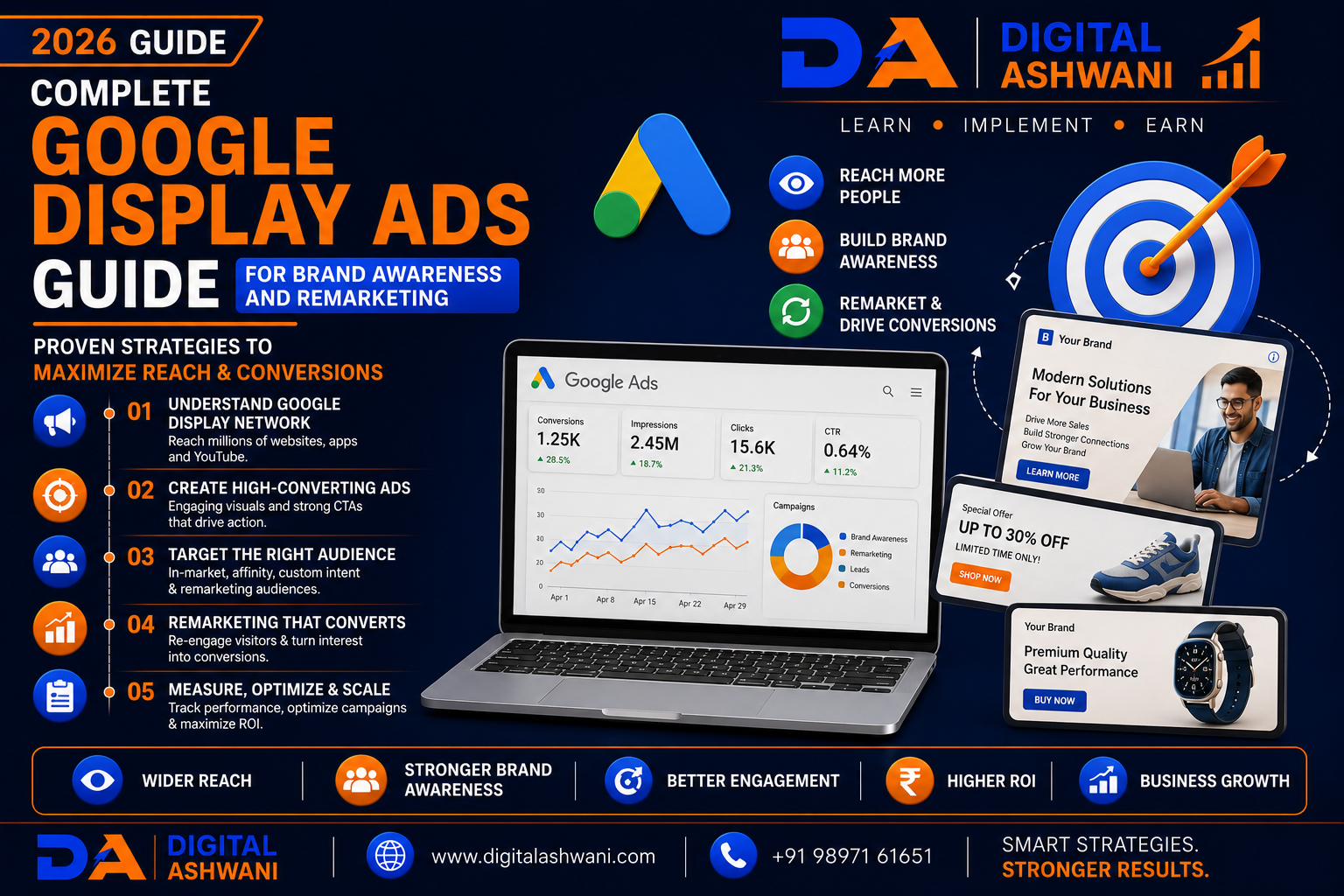
Complete Google Display Ads Guide for Brand Awareness and Remarketing
While Google Search Ads help businesses reach customers actively searching for products or services, Google Display Ads help brands reach potential customers before they search by showing visually engaging advertisements across millions of websites, mobile apps, YouTube, and Gmail.
Whether you’re launching a new business, promoting an eCommerce store, generating real estate leads, marketing healthcare services, or growing a local business, Display Ads can significantly increase brand awareness while supporting future conversions through remarketing.
The Google Display Network (GDN) reaches billions of users worldwide, making it one of the largest digital advertising networks available. Combined with AI-powered audience targeting and automated bidding, Display Ads allow businesses to reach the right audience at the right time.
In this comprehensive guide by Digital Ashwani, you’ll learn 15 proven Google Display Ads strategies to build brand awareness, improve remarketing performance, and increase conversions in 2026.
What Are Google Display Ads?
Google Display Ads are image-based or responsive advertisements that appear across the Google Display Network, including:
- News Websites
- Blogs
- Mobile Apps
- YouTube
- Gmail
- Partner Websites
Unlike Search Ads, Display Ads target audiences based on interests, browsing behavior, demographics, topics, placements, and previous interactions with your website.
Why Businesses Should Use Google Display Ads
Display campaigns help businesses:
- Increase Brand Awareness
- Reach New Customers
- Stay Visible Throughout the Buying Journey
- Re-engage Previous Website Visitors
- Promote New Products
- Support Sales Campaigns
- Improve Brand Recall
Display Ads complement Search Ads by creating awareness before customers are ready to purchase.
Benefits of Google Display Ads
An effective Display campaign helps businesses:
- Reach Millions of Potential Customers
- Increase Brand Recognition
- Improve Website Traffic
- Generate More Leads
- Support Remarketing Campaigns
- Increase Product Visibility
- Improve Customer Engagement
- Strengthen Overall Marketing Performance
15 Proven Google Display Ads Strategies
1. Define Clear Campaign Objectives
Before creating a campaign, identify your primary goal.
Examples include:
- Brand Awareness
- Website Traffic
- Lead Generation
- Product Promotion
- Remarketing
- App Downloads
Clear objectives help guide targeting, creatives, and bidding strategies.
2. Create High-Quality Visual Ads
Display Ads rely heavily on visuals.
Use:
- Professional Images
- High-Resolution Graphics
- Consistent Branding
- Clear Headlines
- Strong Calls-to-Action
- Minimal Text
High-quality creatives attract more attention and improve engagement.
3. Target the Right Audience
Google offers multiple audience targeting options.
Target by:
- Interests
- In-Market Audiences
- Custom Audiences
- Demographics
- Topics
- Placements
- Customer Lists
Relevant targeting improves campaign efficiency.
4. Use Remarketing Campaigns
Remarketing helps reconnect with users who previously interacted with your website.
Show personalized ads to visitors who:
- Viewed Products
- Abandoned Forms
- Left Without Purchasing
- Visited Important Pages
- Added Products to Cart
Remarketing often improves conversion rates because it targets warm audiences.
5. Create Responsive Display Ads
Responsive Display Ads automatically adjust their size and appearance across different placements.
Upload:
- Images
- Logos
- Headlines
- Descriptions
Google combines these assets to create optimized ad variations.
6. Optimize Landing Pages
A great ad should lead to an equally effective landing page.
Include:
- Clear Headline
- Relevant Offer
- Fast Loading Speed
- Mobile-Friendly Design
- Strong CTA
- Trust Signals
- Contact Form
Relevant landing pages improve conversion rates.
7. Use AI-Powered Smart Bidding
Google AI helps optimize bidding strategies based on campaign goals.
Depending on your objectives, AI can optimize for:
- Conversions
- Conversion Value
- Clicks
- Impression Share
Monitor performance regularly and adjust strategies as needed.
8. Refresh Ad Creatives Regularly
Ad fatigue reduces engagement over time.
Update:
- Images
- Headlines
- CTAs
- Promotional Offers
- Seasonal Campaigns
Fresh creatives help maintain strong campaign performance.
9. Control Ad Frequency
Showing the same ad too often can lead to ad fatigue and lower engagement.
Use frequency capping to limit how many times an individual user sees your ads within a specific time period.
Benefits include:
- Better User Experience
- Reduced Ad Fatigue
- Improved Brand Perception
- More Efficient Budget Utilization
10. Exclude Irrelevant Audiences & Placements
Not every website or audience is suitable for your campaign.
Review and exclude:
- Low-Quality Placements
- Irrelevant Mobile Apps
- Unrelated Topics
- Existing Customers (when appropriate)
- Poor-Performing Audiences
Regular exclusions help improve campaign efficiency and return on ad spend.
11. Test Multiple Ad Variations
Never rely on a single creative.
Test different combinations of:
- Headlines
- Images
- Logos
- Descriptions
- Calls-to-Action
- Colors
- Promotional Messages
A/B testing helps identify which combinations generate the highest engagement and conversions.
12. Monitor Campaign Performance
Track important KPIs regularly.
Monitor:
- Impressions
- Reach
- Click-Through Rate (CTR)
- Cost Per Click (CPC)
- Conversion Rate
- Cost Per Conversion
- View-Through Conversions
- Return on Ad Spend (ROAS)
Performance analysis helps optimize campaigns continuously.
13. Combine Display Ads with Search Campaigns
Display Ads and Search Ads perform best when used together.
For example:
- Display Ads build awareness.
- Search Ads capture users actively searching later.
- Remarketing brings previous visitors back.
- Branded searches often increase after successful Display campaigns.
An integrated strategy strengthens the entire customer journey.
14. Use AI for Campaign Optimization
Google AI continues to improve Display campaign performance.
AI can help optimize:
- Audience Expansion
- Smart Bidding
- Responsive Ad Combinations
- Creative Selection
- Budget Allocation
- Conversion Prediction
Review AI recommendations regularly and ensure they align with your business goals.
15. Continuously Optimize Your Display Campaigns
Display advertising is not a “set and forget” strategy.
Regularly review:
- Audience Performance
- Placement Reports
- Device Performance
- Geographic Performance
- Ad Creatives
- Landing Pages
- Conversion Tracking
- Budget Allocation
Continuous optimization helps improve results while reducing wasted ad spend.
Google Display Ads Campaign Checklist
Before launching your campaign, ensure you’ve completed the following:
- Campaign Objective Defined
- Audience Targeting Configured
- High-Quality Images Uploaded
- Responsive Display Ads Created
- Brand Logo Added
- Landing Page Optimized
- Conversion Tracking Enabled
- Remarketing Audience Created
- Frequency Cap Configured
- Performance Monitoring Scheduled
Following this checklist helps maximize campaign effectiveness and long-term ROI.
Common Google Display Ads Mistakes
Using Low-Quality Images
Poor visuals reduce engagement.
Always use professional, high-resolution creatives that represent your brand.
Sending Traffic to the Homepage
Instead of directing users to a generic homepage, send them to a dedicated landing page that matches the ad message and encourages conversions.
Ignoring Placement Reports
Some websites or apps may generate impressions without meaningful engagement.
Review placement reports regularly and exclude underperforming placements.
Not Using Remarketing
Many users don’t convert on their first visit.
Remarketing helps bring interested visitors back and often increases conversion rates.
Skipping Conversion Tracking
Without proper tracking, you cannot accurately measure leads, sales, or campaign performance.
Configure conversion tracking before launching your campaign.
Internal Linking Suggestions (Digital Ashwani)
Strengthen your Google Ads content cluster by linking this article with:
- What Is Google Ads and How Does It Work?
- What Is Google Ads and How Does It Help Businesses Generate More Leads?
- Complete Google Search Ads Campaign Setup Guide for Better Lead Generation
- What Is Cost Per Click (CPC)?
- What Are Negative Keywords?
- How to Increase Website Conversion Rates Using Data-Driven Optimization Methods
- Ultimate Analytics and Tracking Guide for Long-Term Business Growth
- What Is Google Analytics 4 and Why Every Business Should Use It?
- What Is Artificial Intelligence (AI) in Digital Marketing?
- What Is First-Party Data? Why It Matters for Modern Marketing
These internal links strengthen topical authority while helping readers explore related Google Ads, analytics, AI marketing, and conversion optimization content.
External Resources
For trusted Google Ads guidance, explore:
- Google Ads Help Center
- Google Ads Policy Center
- Google Analytics Help Center
- Google Search Central
- Google Skillshop
These official resources provide the latest best practices for Display campaigns, remarketing, measurement, and advertising optimization.
Frequently Asked Questions
What are Google Display Ads?
Google Display Ads are visual advertisements that appear across the Google Display Network, including websites, mobile apps, YouTube, and Gmail. They help businesses build brand awareness and reach potential customers throughout the buying journey.
What is remarketing in Google Display Ads?
Remarketing allows you to show ads to people who have previously visited your website or interacted with your business, helping bring interested users back to complete a desired action.
Are Google Display Ads good for small businesses?
Yes. Display Ads can help small businesses increase brand visibility, generate website traffic, support remarketing, and complement Search Ads when campaigns are properly targeted.
How do Responsive Display Ads work?
Responsive Display Ads automatically combine your uploaded images, logos, headlines, and descriptions to create optimized ad variations for different placements across the Google Display Network.
How can I improve the performance of Display Ads?
Improve performance by using high-quality creatives, accurate audience targeting, remarketing, optimized landing pages, conversion tracking, A/B testing, and continuous campaign optimization.
Final Thoughts
A successful Google Display Ads Guide is about much more than creating attractive banner ads. Effective campaigns combine compelling visuals, precise audience targeting, AI-powered optimization, responsive creatives, high-converting landing pages, and ongoing performance analysis to build brand awareness and generate meaningful business results.
Display Ads are especially powerful when paired with Search Ads and remarketing. While Search campaigns capture existing demand, Display campaigns help create demand, strengthen brand recall, and reconnect with users who have already shown interest in your products or services.
By consistently testing creatives, monitoring campaign data, refining audiences, and optimizing landing pages, businesses can maximize the value of the Google Display Network and achieve sustainable long-term growth.
At Digital Ashwani, we regularly publish practical guides on Google Ads, SEO, AI Marketing, Analytics, Conversion Rate Optimization, Social Media Marketing, and Digital Marketing to help businesses generate more qualified leads and grow more efficiently.
