

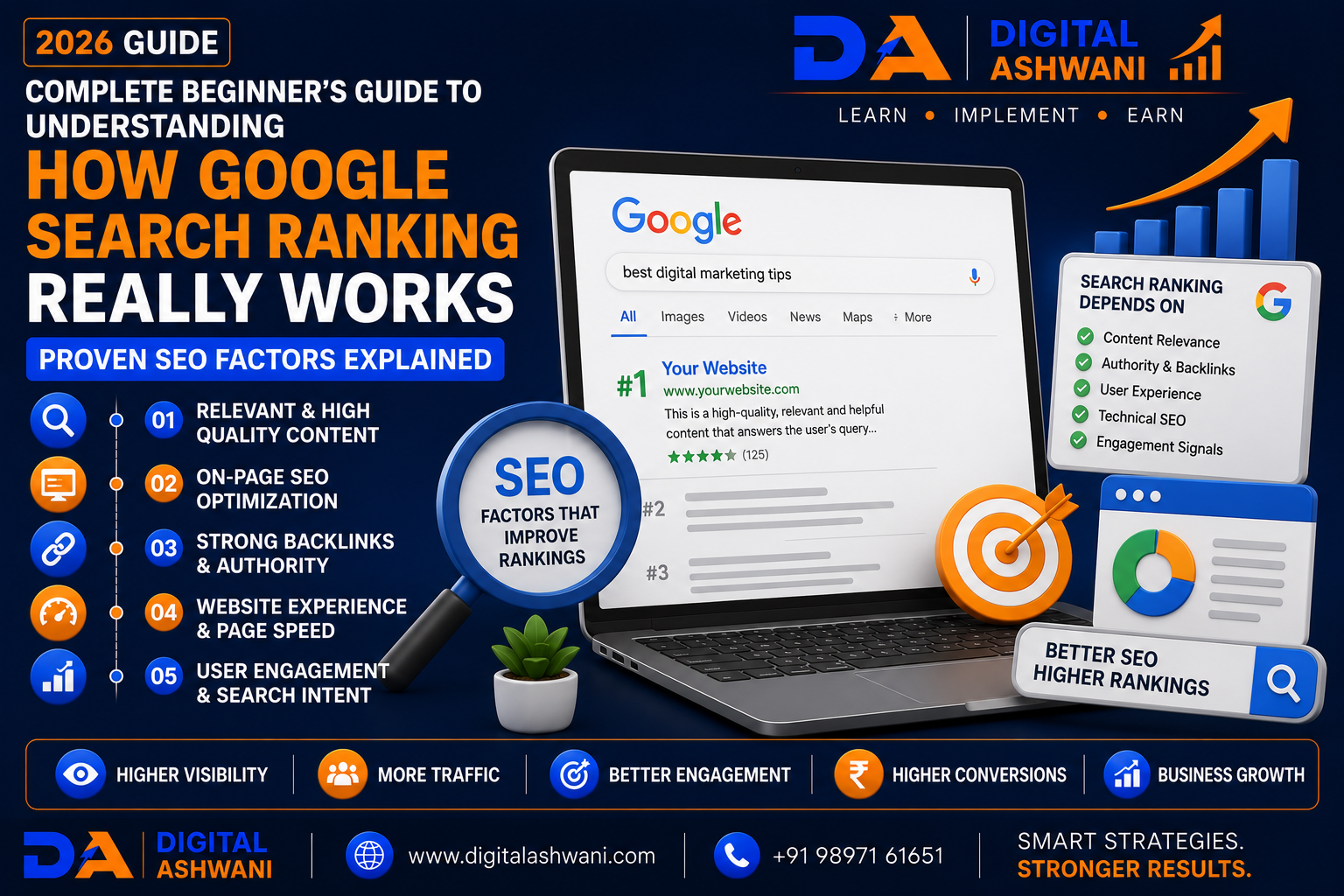
Complete Beginner’s Guide to Understanding How Google Search Ranking Really Works
Every second, Google processes millions of searches from people looking for products, services, answers, businesses, and information. Yet only a handful of websites appear on the first page for any search query.
Many beginners believe Google ranks websites simply by counting keywords. In reality, Google’s ranking systems evaluate hundreds of signals to determine which pages are most relevant, helpful, trustworthy, and useful for each search.
Today’s Google Search also uses Artificial Intelligence, machine learning, entity understanding, and user intent analysis to deliver better results. This means successful SEO is no longer about manipulating rankings—it is about creating genuinely valuable content supported by a technically strong website.
Whether you’re a blogger, business owner, digital marketer, SEO professional, or student, understanding how Google Search ranking works is the foundation of long-term organic growth.
In this comprehensive guide by Digital Ashwani, you’ll learn 15 proven ranking factors that influence Google Search and discover practical SEO strategies to improve your website’s visibility in 2026.
What Is Google Search Ranking?
Google Search Ranking is the process of determining the order in which webpages appear after someone performs a search.
Instead of displaying random webpages, Google attempts to show the most relevant and helpful results based on the user’s search intent.
Ranking is influenced by many factors rather than a single algorithm.
Why Google Rankings Matter
Higher rankings can help businesses:
- Increase Organic Traffic
- Generate More Leads
- Improve Brand Visibility
- Build Customer Trust
- Increase Sales
- Reduce Advertising Dependence
- Improve Website Authority
- Support Long-Term Growth
Appearing on the first page often results in significantly greater visibility than lower-ranked pages.
How Google Evaluates Websites
Before a page can rank, Google generally goes through three key stages:
- Crawling
- Indexing
- Ranking
After indexing, Google’s ranking systems evaluate the page using many quality and relevance signals before deciding where it should appear in search results.
15 Proven Google Ranking Factors
1. Search Intent
Google aims to understand why someone performed a search.
Examples include:
- Informational Searches
- Commercial Searches
- Transactional Searches
- Local Searches
- Navigational Searches
Content that matches user intent is more likely to rank well.
2. High-Quality Content
Helpful, original, and well-structured content remains one of the strongest SEO foundations.
Create content that is:
- Accurate
- Comprehensive
- Easy to Read
- Well Organized
- Updated Regularly
Quality content helps satisfy user needs.
3. EEAT Signals
Google values content that demonstrates:
- Experience
- Expertise
- Authoritativeness
- Trustworthiness
Strong EEAT signals improve credibility for users and search engines.
4. Keyword Relevance
Keywords still matter, but natural usage is more important than repetition.
Include relevant keywords in:
- SEO Title
- Headings
- Introduction
- URL
- Meta Description
- Image ALT Text
Avoid keyword stuffing.
5. Technical SEO
A technically healthy website helps Google understand and crawl your content efficiently.
Focus on:
- Fast Loading Speed
- Mobile Friendliness
- HTTPS Security
- XML Sitemap
- Clean URLs
- Internal Linking
Technical SEO supports better indexing and rankings.
6. Page Experience
Google considers how users interact with your website.
Important factors include:
- Mobile Usability
- Core Web Vitals
- Navigation
- Readability
- Accessibility
A better experience often leads to stronger engagement.
7. Backlinks
High-quality backlinks from reputable websites remain an important trust signal.
Focus on earning links through:
- Helpful Content
- Research
- Case Studies
- Industry Resources
Quality is far more valuable than quantity.
8. Freshness of Content
Some topics benefit from regular updates.
Refresh your content by:
- Updating Statistics
- Improving Examples
- Adding New Sections
- Removing Outdated Information
Fresh content helps maintain relevance over time.
9. Internal Linking
Internal links help Google discover and understand your website.
A strong internal linking strategy:
- Connects Related Content
- Distributes Page Authority
- Improves Crawlability
- Helps Users Navigate
- Builds Topic Clusters
Well-planned internal links strengthen your overall SEO performance.
10. Structured Data (Schema Markup)
Structured data provides additional context about your content.
Implement schema for:
- Articles
- FAQs
- Organization
- Local Business
- Products
- Services
- Reviews
Schema helps Google better understand your webpages and can improve eligibility for rich results.
11. AI and Entity Understanding
Modern Google Search uses AI to understand:
- People
- Places
- Brands
- Products
- Organizations
- Relationships Between Topics
Instead of relying only on keywords, Google increasingly evaluates entities and topical context to deliver more relevant search results.
12. User Engagement Signals
Although Google does not publish every ranking signal, creating a positive user experience is important.
Focus on improving:
- Helpful Content
- Clear Navigation
- Readability
- Fast Loading
- Mobile Experience
- Relevant Internal Links
Content that satisfies users is more likely to earn repeat visits, backlinks, and positive engagement.
13. Website Authority
Authority develops over time through consistent quality.
Build authority by:
- Publishing Expert Content
- Earning Quality Backlinks
- Updating Existing Articles
- Covering Topics Comprehensively
- Demonstrating Real Experience
Strong topical authority helps improve long-term search visibility.
14. Local SEO Signals
Businesses serving specific locations should optimize for local search.
Important local signals include:
- Google Business Profile
- Consistent NAP Information
- Local Keywords
- Customer Reviews
- Local Citations
- Location Pages
These factors help improve visibility in Google Maps and local search results.
15. Continuous SEO Improvement
SEO is an ongoing process.
Regularly:
- Publish New Content
- Refresh Existing Pages
- Monitor Rankings
- Improve Technical SEO
- Analyze User Behavior
- Follow Google Updates
Consistent optimization produces stronger long-term results than one-time changes.
Google Search Ranking Checklist
Before publishing content, verify the following:
- Search Intent Matched
- High-Quality Content Written
- Focus Keyword Optimized
- EEAT Signals Included
- Technical SEO Completed
- Internal Links Added
- External Authoritative References Included
- Structured Data Implemented
- Mobile Experience Optimized
- Content Reviewed and Updated Regularly
Following this checklist creates a strong SEO foundation.
Common SEO Mistakes
Focusing Only on Keywords
Modern SEO prioritizes solving user problems rather than repeating keywords.
Publishing Thin Content
Short, low-value pages rarely compete against comprehensive, helpful resources.
Ignoring Technical SEO
Broken links, crawl issues, slow loading speeds, and indexing problems can reduce visibility even if your content is excellent.
Buying Low-Quality Backlinks
Artificial link-building schemes can damage long-term SEO performance.
Focus on earning relevant, high-quality backlinks naturally.
Neglecting Content Updates
Outdated information reduces usefulness over time.
Refresh evergreen content regularly to maintain relevance and accuracy.
Internal Linking Suggestions (Digital Ashwani)
Strengthen your Google Search and SEO content cluster by linking this article with:
- How Search Engines Crawl, Index, and Rank Websites for Better Visibility
- What Is AI SEO and How Can It Improve Your Search Engine Rankings?
- How Structured Data Helps AI Understand Your Website Better
- Why Organic Traffic Is Dropping Even When Rankings Stay the Same
- What Is Local SEO and Why Is It Important for Small Businesses?
- SEO Checklist for 2026: Things You Must Do Before Publishing Any Blog
- How to Rank in ChatGPT, Gemini & AI Search Results (AEO Guide)
- AI SEO vs Traditional SEO
- What Is Google Search Console and How to Use It Effectively?
- Complete Technical SEO Guide for Better Website Performance
These internal links strengthen topical authority while helping readers explore related SEO, AI Search, technical SEO, and Google Search optimization topics.
External Resources
For trusted SEO guidance, refer to:
- Google Search Central
- Google Search Central Documentation
- Google Search Console Help
- Google PageSpeed Insights
- Schema.org Documentation
These official resources provide current recommendations for search optimization, technical SEO, structured data, and website performance.
Frequently Asked Questions
How does Google decide which website ranks first?
Google evaluates many signals, including relevance, search intent, content quality, EEAT, technical SEO, page experience, backlinks, and other ranking systems to determine which pages are most helpful for a specific query.
Are keywords still important for SEO?
Yes. Keywords remain important, but they should be used naturally within high-quality content that satisfies user intent.
Does AI affect Google Search rankings?
AI helps Google better understand search queries, entities, and webpage content. However, rankings still depend on overall content quality, relevance, technical SEO, and user experience.
Can I rank without backlinks?
Some low-competition topics can rank without many backlinks, but in competitive industries, earning relevant, high-quality backlinks generally strengthens authority and visibility.
How long does it take to improve Google rankings?
SEO is a long-term process. Depending on your website, competition, and optimization efforts, noticeable improvements often take several months rather than days or weeks.
Final Thoughts
Understanding the Complete Beginner’s Guide to Understanding How Google Search Ranking Really Works provides the foundation for every successful SEO strategy. Google’s ranking systems are designed to reward websites that genuinely help users by providing relevant, trustworthy, and well-organized information rather than attempting to manipulate search results.
Long-term success comes from combining helpful content, strong EEAT signals, technical SEO, internal linking, structured data, positive user experience, and continuous website improvements. As Google continues integrating AI into Search, these fundamentals remain essential for sustainable organic growth.
Instead of chasing shortcuts or algorithm myths, focus on building a website that answers users’ questions better than competing pages. Websites that consistently deliver value are better positioned to earn higher visibility in both traditional search results and AI-powered search experiences.
At Digital Ashwani, we regularly publish practical guides on SEO, AI SEO, Google Search, Google Ads, Analytics, Technical SEO, and Digital Marketing to help businesses achieve sustainable long-term online growth.
