

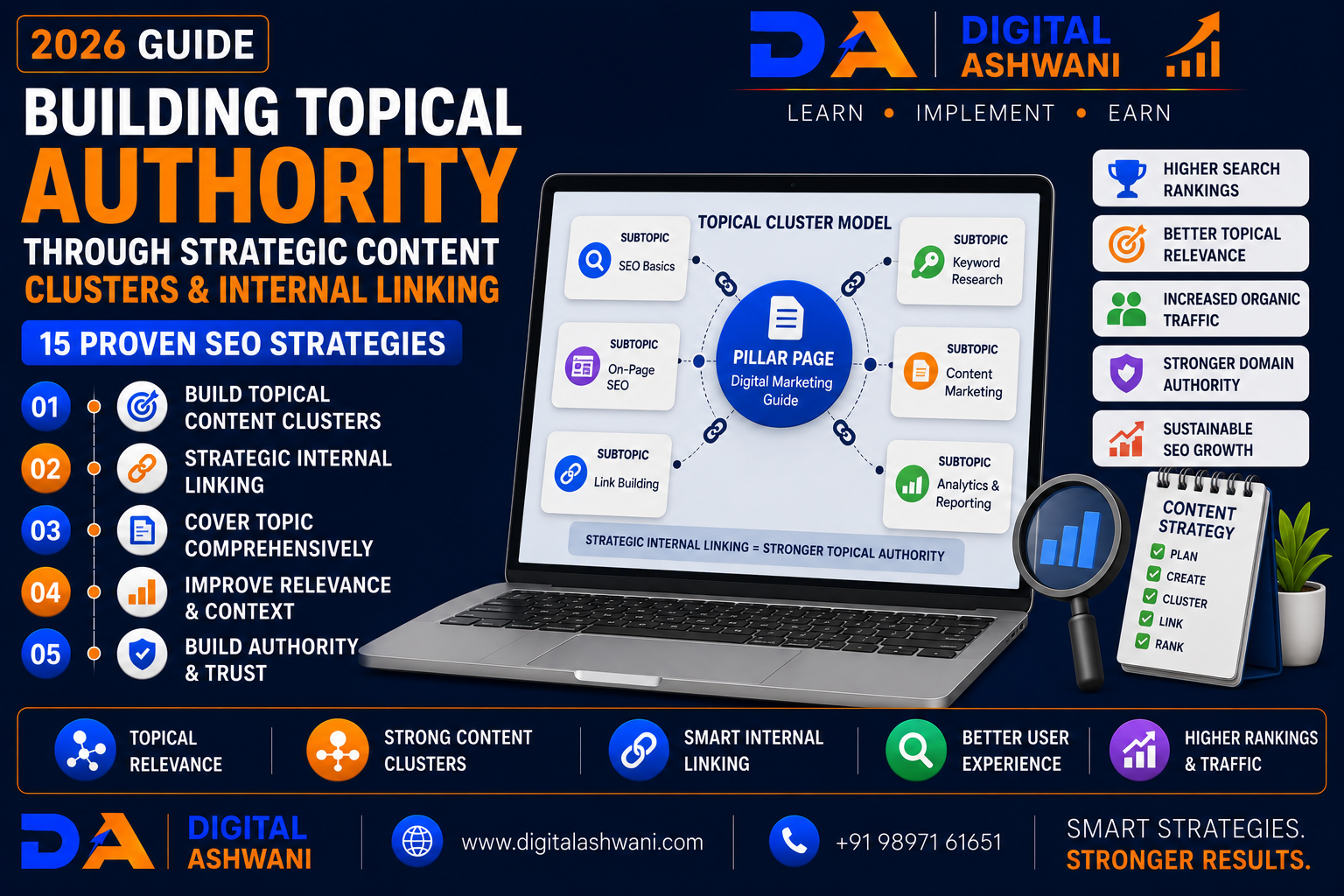
Building Topical Authority Through Strategic Content Clusters and Internal Linking
Search engines no longer evaluate webpages in isolation. Modern SEO focuses on how well your entire website demonstrates expertise around a subject. Google’s ranking systems and AI-powered search experiences increasingly reward websites that comprehensively cover topics rather than publishing isolated articles.
This is where topical authority, content clusters, and internal linking become essential.
Instead of creating random blog posts, successful websites organize their content into interconnected topic clusters that help both users and search engines understand their expertise.
For example, a digital marketing website may create comprehensive clusters covering:
- SEO
- Google Ads
- Local SEO
- AI SEO
- Content Marketing
- Social Media Marketing
- Analytics
- Website Optimization
Each supporting article strengthens the authority of the main pillar page while improving crawlability, user experience, and search visibility.
In this comprehensive guide by Digital Ashwani, you’ll learn 15 proven strategies to build topical authority through strategic content clusters and internal linking for higher rankings in both Google Search and AI-powered search experiences.
What Is Topical Authority?
Topical authority is the level of expertise your website demonstrates on a specific subject.
Rather than ranking because of a single optimized page, websites build authority by publishing comprehensive, interconnected content covering every important aspect of a topic.
What Are Content Clusters?
A content cluster consists of:
- One Pillar Page
- Multiple Supporting Articles
- Strong Internal Links
Every supporting article explores one specific subtopic while linking back to the main pillar page.
Why Internal Linking Matters
Internal links help search engines:
- Discover New Pages
- Understand Relationships Between Topics
- Distribute Authority
- Improve Crawling
- Strengthen Website Structure
They also help users navigate related content more efficiently.
Benefits of Topic Cluster SEO
A well-planned topic cluster strategy helps:
- Increase Organic Rankings
- Improve Crawlability
- Build Topical Authority
- Support AI Search
- Increase Page Views
- Improve User Experience
- Reduce Bounce Rate
- Strengthen Internal SEO
15 Proven Strategies for Building Topical Authority
1. Create Comprehensive Pillar Pages
Develop detailed cornerstone content covering an entire topic.
Examples include:
- Complete SEO Guide
- Google Ads Guide
- Local SEO Guide
- AI SEO Guide
Pillar pages become the central resource for related content.
2. Identify Supporting Topics
Break large subjects into focused articles.
For an SEO cluster, examples include:
- Keyword Research
- On-Page SEO
- Technical SEO
- Link Building
- Local SEO
- Schema Markup
- AI SEO
- Google Search Console
Each article should answer one specific search intent.
3. Map Search Intent
Every article should target a unique intent.
Examples include:
- Informational
- Commercial
- Transactional
- Navigational
Avoid publishing multiple pages targeting the same intent.
4. Build Logical Internal Links
Connect:
- Pillar → Supporting Articles
- Supporting Articles → Pillar
- Supporting Article → Related Supporting Article
This creates a strong topical network.
5. Use Descriptive Anchor Text
Anchor text should clearly describe the destination page.
Avoid generic phrases such as:
- Click Here
- Read More
Instead, use relevant keyword-focused anchors naturally.
6. Organize Content by Topic
Group related articles into logical categories.
Examples:
- SEO
- Google Ads
- AI Marketing
- Analytics
- Social Media Marketing
Well-organized architecture improves navigation.
7. Cover Topics Completely
Answer the most important questions users have.
Include:
- Definitions
- Examples
- Best Practices
- Common Mistakes
- FAQs
- Step-by-Step Guides
Comprehensive coverage strengthens topical authority.
8. Keep Content Updated
Refresh important articles by updating:
- Statistics
- Google Updates
- AI Search Changes
- Internal Links
- Screenshots
- Examples
Fresh content maintains long-term relevance.
9. Build Topic Clusters Instead of Isolated Articles
Avoid publishing unrelated blog posts.
Instead, organize content into topic clusters such as:
SEO Cluster
- Keyword Research
- On-Page SEO
- Technical SEO
- Link Building
- Local SEO
- AI SEO
- Entity SEO
Google Ads Cluster
- Search Ads
- Display Ads
- Shopping Ads
- Performance Max
- Conversion Tracking
- Remarketing
Strong topic clusters improve topical authority and make your website easier for both users and search engines to navigate.
10. Improve Crawlability with Internal Links
Every important article should be reachable through internal links.
Link from:
- Category Pages
- Pillar Pages
- Related Blog Posts
- Resource Pages
- Navigation Menus
Good internal linking helps search engines discover and index content more efficiently.
11. Avoid Keyword Cannibalization
Do not create multiple articles targeting the same search intent.
Instead:
- Expand Existing Articles
- Merge Similar Content
- Differentiate Search Intent
- Build Supporting Articles
Each page should have a clear and unique purpose.
12. Demonstrate EEAT Across the Cluster
Strengthen Experience, Expertise, Authoritativeness, and Trustworthiness (EEAT) by including:
- Original Insights
- Practical Examples
- Case Studies
- Expert Opinions
- Updated Information
- Credible References
Strong EEAT supports long-term search visibility.
13. Monitor Cluster Performance
Track performance using:
- Google Search Console
- Google Analytics 4
- Looker Studio
Review:
- Organic Traffic
- Keyword Rankings
- Click-Through Rate
- Internal Link Clicks
- Indexed Pages
- User Engagement
Use this data to identify opportunities for improvement.
14. Optimize for AI Search
AI-powered search systems increasingly evaluate websites based on topical depth and semantic relationships.
Improve AI visibility by:
- Covering Topics Comprehensively
- Using Clear Heading Structure
- Answering Common Questions
- Adding FAQ Sections
- Using Structured Data
- Strengthening Internal Links
Well-connected content is easier for AI systems to understand and reference.
15. Continue Expanding Your Content Hub
Topical authority is built over time.
Regularly publish new supporting articles, refresh existing content, and strengthen internal links across your website.
A growing content hub demonstrates ongoing expertise and helps maintain long-term rankings.
Topical Authority Checklist
Before publishing new content, verify the following:
- Pillar Page Created
- Supporting Articles Planned
- Search Intent Defined
- Internal Links Added
- Descriptive Anchor Text Used
- Category Structure Organized
- EEAT Signals Included
- FAQ Section Added
- Content Updated
- Performance Monitored
Following this checklist strengthens topical authority and improves long-term SEO.
Common Topical Authority Mistakes
Publishing Random Topics
Creating unrelated content weakens topical focus.
Build structured topic clusters instead.
Ignoring Internal Linking
Articles without internal links become isolated.
Connect related pages naturally throughout your website.
Creating Thin Supporting Articles
Supporting content should provide real value, not just target keywords.
Publish detailed, useful resources.
Never Updating Existing Content
Outdated content gradually loses relevance.
Refresh important pages regularly.
Overusing Exact-Match Anchor Text
Use natural and descriptive anchor text instead of repeatedly using the same keyword.
A varied internal linking strategy improves readability and user experience.
Internal Linking Suggestions (Digital Ashwani)
Strengthen your SEO content hub by linking this article with:
- How Search Engines Crawl, Index, and Rank Websites for Better Visibility
- Top On-Page SEO Techniques to Improve Rankings and Organic Website Traffic
- AI SEO vs Traditional SEO
- How Structured Data Helps AI Understand Your Website Better
- Entity SEO Strategies for AI-Powered Search Engines
- Why Organic Traffic Is Dropping Even When Rankings Stay the Same
- SEO Checklist for 2026
- Keyword Research Guide
- Website Conversion Rate Optimization Guide
- Complete Beginner’s Guide to Local SEO
These internal links create a comprehensive SEO ecosystem that strengthens topical authority while improving crawlability, user experience, and AI search visibility.
External Resources
For trusted SEO guidance, refer to:
- Google Search Central
- Google Search Console Help
- Google Analytics Help Center
- Schema.org Documentation
- PageSpeed Insights
These official resources provide current recommendations for crawling, indexing, structured data, technical SEO, and website optimization.
Frequently Asked Questions
What is topical authority in SEO?
Topical authority is the level of expertise a website demonstrates by publishing comprehensive, interconnected content covering an entire subject rather than relying on isolated articles.
What is a content cluster?
A content cluster consists of one comprehensive pillar page supported by multiple related articles that are connected through strategic internal links.
Why are internal links important for SEO?
Internal links help search engines discover pages, understand relationships between topics, distribute authority across your website, and improve user navigation.
Does topical authority help AI-powered search?
Yes. AI search systems are designed to understand topic relationships and comprehensive subject coverage. Well-structured content clusters can improve visibility in AI-powered search experiences.
How long does it take to build topical authority?
Building topical authority is an ongoing process. Consistently publishing high-quality content, strengthening internal links, and updating existing articles over several months typically produces the strongest long-term results.
Final Thoughts
Building Topical Authority Through Strategic Content Clusters and Internal Linking is one of the most effective long-term SEO strategies for improving search visibility, earning user trust, and strengthening AI search performance. Instead of creating isolated blog posts, organize your content into interconnected topic clusters that comprehensively cover every aspect of a subject.
A successful topical authority strategy combines detailed pillar pages, valuable supporting articles, logical internal linking, strong EEAT signals, and regular content updates. This not only improves crawlability and user experience but also helps search engines and AI systems recognize your website as a trusted source of expertise.
Rather than chasing individual keyword rankings, focus on building complete knowledge hubs around the subjects that matter most to your audience. Over time, this approach creates sustainable organic traffic and long-lasting search authority.
At Digital Ashwani, we regularly publish practical guides on SEO, AI SEO, Local SEO, Google Ads, Analytics, Content Marketing, and Digital Marketing to help businesses build topical authority and achieve sustainable online growth.
