

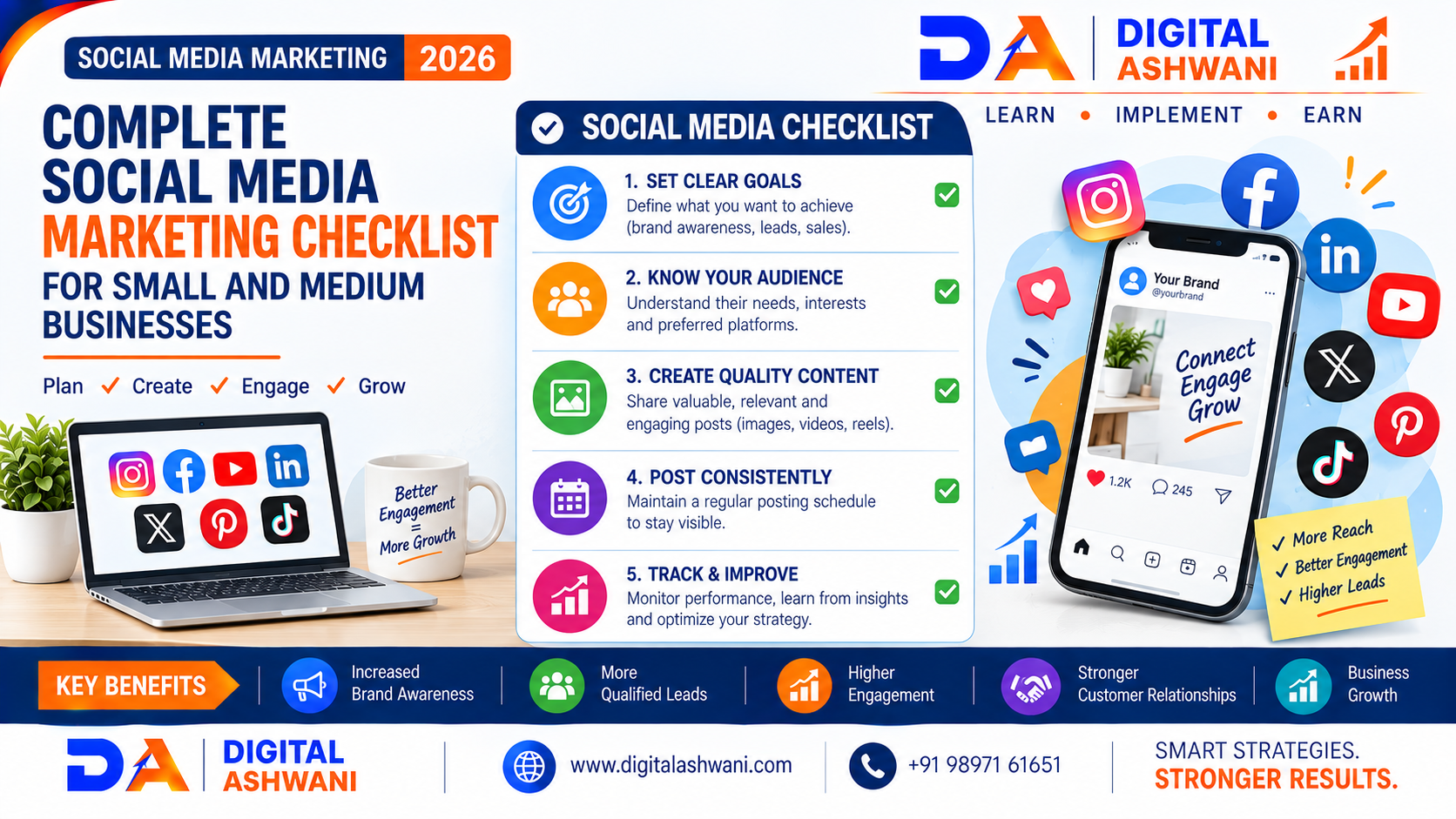
Complete Social Media Marketing Checklist for Small and Medium Businesses
Social media marketing has become an important part of digital marketing for small and medium businesses. Whether you operate a local store, professional service, startup, agency, restaurant, e-commerce business, or B2B company, social media can help you build awareness, communicate with customers, showcase your services, and generate business opportunities.
However, simply creating social media accounts and posting occasionally is not enough. Businesses need a structured approach to profile optimization, content creation, engagement, lead generation, and performance tracking.
This social media marketing checklist covers the essential steps small and medium businesses can follow to create a more organized and effective social media presence in 2026.
What Is a Social Media Marketing Checklist?
A social media marketing checklist is a list of regular tasks that helps businesses manage their social media activities systematically.
Instead of posting randomly, businesses can use a checklist to make sure important activities are completed, including profile optimization, audience research, content planning, customer engagement, and analytics.
For small businesses with limited marketing resources, having a repeatable process can make social media management easier and more consistent.
Social Media Marketing Checklist for Businesses
1. Define Your Social Media Goals
Start by deciding what you want social media to accomplish.
Your goals may include:
- Increasing brand awareness
- Generating leads
- Increasing website traffic
- Promoting products or services
- Building customer relationships
- Increasing inquiries
- Supporting sales
Set Measurable Objectives
Instead of simply targeting more followers, define objectives connected to your business.
For example, you may want to increase qualified inquiries from social media or generate more website visits from your target audience.
2. Identify Your Target Audience
Understand who you want to reach before creating content.
Consider their:
- Location
- Needs
- Interests
- Problems
- Buying behavior
- Preferred platforms
Knowing your audience helps you create content that is more relevant and useful.
3. Select the Right Platforms
You do not need to be active on every social media platform.
Choose platforms based on your audience and business type.
Instagram can be useful for visual businesses, LinkedIn can be valuable for B2B companies, Facebook can support local community engagement, and YouTube can be useful for educational video content.
4. Optimize Your Social Media Profiles
Review every business profile and make sure important information is complete.
Check your:
- Business name
- Username
- Logo
- Bio
- Website
- Contact details
- Location
- Services
- Business category
Make sure visitors can understand what your business offers quickly.
5. Maintain Consistent Branding
Use consistent branding across your social media profiles.
Check:
- Logo
- Brand colors
- Visual style
- Typography
- Tone of voice
- Business information
Consistent branding makes your business easier to recognize.
6. Create Content Pillars
Content pillars are recurring topics that guide your social media content.
For example, a digital marketing company could use:
- SEO tips
- Google Ads
- Social media marketing
- Case studies
- Digital marketing guides
Content pillars help prevent random and repetitive posting.
7. Build a Content Calendar
Plan your content before publishing it.
A simple weekly schedule could include:
| Day | Content |
|---|---|
| Monday | Educational Tip |
| Tuesday | Service/Product |
| Wednesday | Short Video |
| Thursday | Industry Tip |
| Friday | Customer Story |
| Saturday | FAQ |
| Sunday | Business Update |
The exact schedule should depend on your available resources and audience.
8. Use Different Content Formats
Do not depend on only one type of content.
Experiment with:
- Images
- Carousels
- Short videos
- Stories
- FAQs
- Testimonials
- Case studies
- Educational posts
- Behind-the-scenes content
Different formats can help communicate different messages.
Content and Engagement Checklist
9. Create Valuable Content
Your content should solve problems, answer questions, or provide useful information.
Educational posts, practical tips, tutorials, FAQs, and industry insights can help demonstrate expertise.
Avoid turning every post into a sales advertisement.
10. Write Clear Captions
A good caption should make the main message easy to understand.
Where appropriate, include:
- A strong opening
- Useful information
- Supporting details
- A relevant call to action
Keep the language natural and audience-focused.
11. Use Relevant Hashtags
Use hashtags related to your business, industry, topic, and location where appropriate.
Avoid using unrelated hashtags simply to increase the number of hashtags in a post.
12. Add Clear Calls to Action
Tell users what they can do next.
Examples include:
- Visit the website
- Send a message
- Request a quote
- Book an appointment
- Read the complete guide
- Learn more
The CTA should match the objective of the post.
13. Respond to Comments and Messages
Social media is also a communication channel.
Regularly check comments and direct messages and respond professionally to genuine questions and inquiries.
Fast and helpful communication can improve the customer experience.
14. Monitor Customer Feedback
Pay attention to questions, comments, reviews, and discussions related to your business.
Customer feedback can reveal common problems and provide ideas for future content or service improvements.
Lead Generation and Analytics Checklist
15. Optimize Your Profile for Leads
Make it easy for interested customers to contact you.
Check that your profile contains:
- Website link
- Contact details
- Service information
- Relevant CTA
- Correct business location
16. Create Lead-Focused Content
Regularly publish content that can move interested users toward a business inquiry.
Examples include:
- Service explanations
- Product demonstrations
- Case studies
- Testimonials
- FAQs
- Consultation offers
17. Check Your Website Links
Broken links can result in lost traffic and potential leads.
Regularly test links in:
- Social media bios
- Posts
- Campaigns
- Landing pages
Make sure pages also work properly on mobile devices.
18. Track Important Metrics
Do not judge social media only by follower count.
Track metrics such as:
- Reach
- Impressions
- Engagement
- Shares
- Saves
- Profile visits
- Link clicks
- Leads
- Conversions
The most useful metrics depend on your business objectives.
19. Identify Your Best Content
Review your analytics and identify which topics and formats perform well.
Look for patterns in:
- Engagement
- Shares
- Saves
- Website traffic
- Leads
Use these insights when planning future content.
20. Review Your Strategy Regularly
Social media trends, customer behavior, and platform features can change.
Review your strategy periodically and adjust your content, platforms, publishing schedule, and campaigns based on actual performance.
Common Social Media Marketing Mistakes to Avoid
Posting Without a Strategy
Random content makes it difficult to build a consistent brand.
Use content pillars and a content calendar.
Focusing Only on Followers
A large follower count does not automatically mean more customers.
Pay attention to engagement, inquiries, leads, and conversions.
Making Every Post Promotional
Balance promotional content with educational, informative, and engaging content.
Ignoring Comments and Messages
Unanswered questions can result in missed customer opportunities.
Make social media engagement part of your regular workflow.
Using Too Many Platforms
Managing too many platforms can reduce content quality.
Focus on channels that are relevant to your audience and business.
Frequently Asked Questions
What is the most important part of a social media marketing checklist?
Profile optimization, audience research, content planning, regular engagement, and performance tracking are all important parts of an effective checklist.
How often should small businesses post on social media?
There is no universal posting frequency. Businesses should choose a realistic schedule that allows them to publish useful and consistent content without sacrificing quality.
Can social media help small businesses generate leads?
Yes. Businesses can use educational content, service posts, testimonials, case studies, CTAs, direct messages, and paid advertising to support lead generation.
Should every small business use the same social media platforms?
No. Platform selection should depend on the target audience, business type, content format, and marketing objectives.
Final Thoughts
A successful social media strategy requires consistency, planning, and regular improvement. For small and medium businesses, a clear social media marketing checklist can make everyday marketing activities easier to manage and measure.
Start by defining your goals, understanding your audience, optimizing your profiles, and creating useful content. Then focus on engagement, lead generation, and analytics.
Social media should not work as an isolated marketing channel. Connect it with your website, SEO, local SEO, Google Business Profile, content marketing, and other digital marketing activities to create a stronger overall online presence.
