

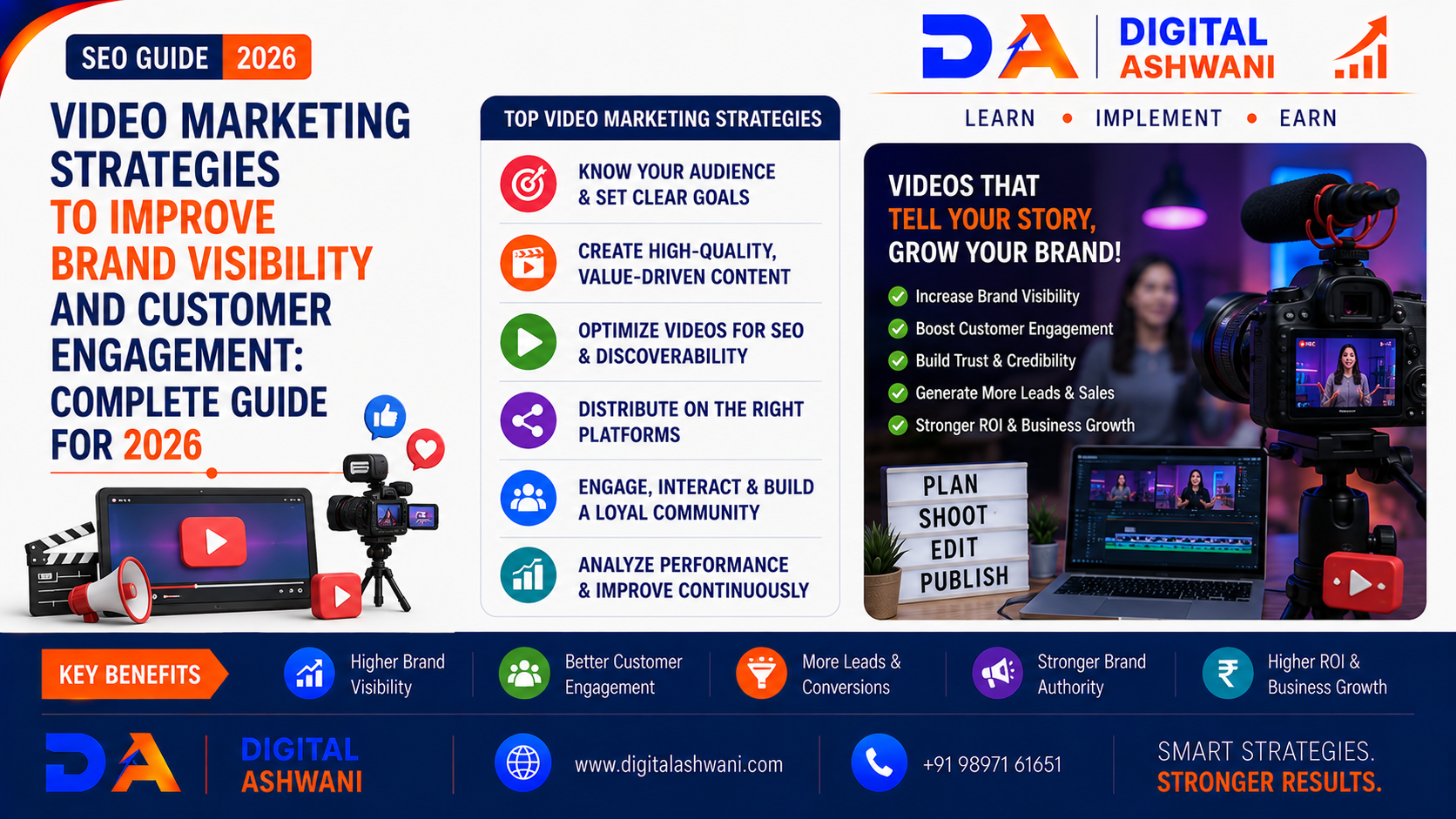
Video Marketing Strategies to Improve Brand Visibility and Customer Engagement
Video has become one of the most effective ways for businesses to communicate with their audiences online.
People watch videos to learn about products, understand services, compare brands, discover new businesses, and make purchasing decisions.
From short-form videos on Instagram and Facebook to YouTube tutorials, product demonstrations, customer testimonials, webinars, and educational videos, businesses can use different video formats at every stage of the customer journey.
However, simply creating videos isn’t enough.
Successful video marketing requires the right combination of:
- Content Strategy
- Audience Research
- Storytelling
- Video SEO
- Consistent Publishing
- Strong Branding
- Customer Engagement
- Analytics
- Conversion Optimization
A well-planned video strategy can help businesses increase visibility, build trust, create stronger customer relationships, and generate qualified leads.
In this comprehensive guide by Digital Ashwani, you’ll learn practical Video Marketing Strategies that businesses can use to improve brand visibility, increase engagement, generate leads, and build long-term digital growth in 2026.
What Is Video Marketing?
Video marketing is the use of video content to promote a business, educate customers, build brand awareness, generate leads, and encourage conversions.
Businesses can create videos for different purposes, including:
- Brand Awareness
- Product Education
- Lead Generation
- Customer Support
- Tutorials
- Product Demonstrations
- Testimonials
- Entertainment
- Community Building
Video marketing can support both organic and paid marketing campaigns.
Why Video Marketing Matters
Modern customers consume video content across multiple platforms.
A potential customer might:
Discover a Brand → Watch a Video → Visit the Website → Compare Products → Read Reviews → Make a Purchase
Video can therefore influence several stages of the buying journey.
For businesses, effective video content can help:
- Increase Brand Visibility
- Build Customer Trust
- Explain Complex Products
- Improve Engagement
- Generate Leads
- Support SEO
- Increase Website Conversions
- Strengthen Brand Recognition
Benefits of Video Marketing for Businesses
A consistent video marketing strategy can provide several benefits.
Increase Brand Awareness
Videos can introduce your products, services, team, expertise, and brand story to new audiences.
Build Customer Trust
Showing real people, products, processes, and customer experiences can make a business feel more authentic.
Explain Products More Effectively
A video demonstration can often communicate product features more clearly than a block of text.
Generate More Engagement
Video encourages viewers to watch, comment, share, save, and interact with your brand.
Support Lead Generation
Strategically placed calls-to-action can encourage viewers to visit your website, request information, or contact your business.
Define Your Video Marketing Goals
Before producing videos, decide what you want to achieve.
Possible objectives include:
- Increase Brand Awareness
- Generate Leads
- Increase Website Traffic
- Improve Product Sales
- Educate Customers
- Build Community
- Increase Engagement
- Improve Customer Retention
Each goal requires a different content approach.
For example, an awareness campaign may focus on educational and entertaining videos, while a lead-generation campaign may focus on demonstrations, case studies, and strong calls-to-action.
Understand Your Target Audience
Effective video content begins with audience research.
Understand:
- Customer Problems
- Search Behavior
- Interests
- Questions
- Buying Motivations
- Objections
- Preferred Platforms
- Preferred Video Formats
Create videos that solve real problems rather than producing content simply because you need to post something.
Choose the Right Video Platforms
Different platforms serve different purposes.
YouTube
Ideal for:
- Tutorials
- Educational Videos
- Product Reviews
- Long-Form Content
- How-to Videos
- Business Guides
Useful for:
- Reels
- Short Tutorials
- Product Showcases
- Behind-the-Scenes Content
- Brand Stories
Useful for:
- Community Content
- Educational Videos
- Product Promotions
- Customer Stories
- Live Sessions
Particularly useful for:
- B2B Videos
- Industry Insights
- Company Updates
- Expert Content
- Case Studies
Don’t try to create identical content for every platform.
Adapt videos to the audience and format of each channel.
Create Educational Video Content
Educational content can help establish expertise and attract customers before they are ready to buy.
Examples include:
- How-to Guides
- Tutorials
- Industry Tips
- FAQs
- Beginner Guides
- Product Education
- Expert Advice
For example, a digital marketing agency could create:
How to Improve Google Ads Conversion Rates
while a beauty business could create:
5 Skincare Mistakes to Avoid
Educational videos provide value before making a sales pitch.
Create Product Demonstration Videos
Product demonstrations show potential customers how a product works.
Include:
- Product Features
- Benefits
- How It Works
- Practical Applications
- Setup Instructions
- Usage Examples
Demonstrations can reduce uncertainty and help customers make informed decisions.
Create Customer Testimonial Videos
Customer stories can be powerful trust signals.
A testimonial video may explain:
- The Customer’s Problem
- Why They Chose the Business
- Their Experience
- The Result
- What They Liked
Always obtain appropriate permission before publishing identifiable customer content.
Avoid scripted or exaggerated testimonials that could mislead viewers.
Use Short-Form Video Content
Short-form videos can help businesses reach audiences quickly.
Content ideas include:
- Quick Tips
- Industry Facts
- Product Features
- Before-and-After Where Appropriate
- FAQs
- Mini Tutorials
- Behind-the-Scenes
- Common Mistakes
- Myth vs Fact
Keep each video focused on one clear idea.
Create Behind-the-Scenes Videos
Customers often want to see the people and processes behind a brand.
Show:
- Team Introductions
- Product Creation
- Office Tours
- Manufacturing Processes
- Packaging
- Daily Operations
- Training
- Event Preparation
Behind-the-scenes content can make brands feel more authentic and relatable.
Tell Better Brand Stories
Storytelling can make videos more memorable.
A simple structure is:
Problem → Challenge → Solution → Outcome
For example, explain a customer problem, show how your product or service addresses it, and demonstrate the resulting experience without making unsupported claims.
Optimize Video Titles
Video titles should clearly communicate what viewers will learn or gain.
Instead of:
Our New Video
use something more descriptive such as:
How to Create a Digital Marketing Strategy for a Small Business
A strong title should be:
- Clear
- Relevant
- Specific
- Benefit-Focused
- Accurate
Avoid misleading clickbait.
Write Useful Video Descriptions
Video descriptions can provide additional context.
Include:
- Video Summary
- Relevant Keywords
- Important Links
- Chapters Where Appropriate
- Product or Service Information
- Call-to-Action
Don’t fill descriptions with repetitive keywords.
Use Video SEO
Video SEO helps your content become easier to discover.
Optimize:
- Titles
- Descriptions
- Thumbnails
- Captions
- Chapters
- Playlists
- Relevant Keywords
- Video Topics
Create content around questions and topics your target audience actually searches for.
Add Captions and Transcripts
Captions improve accessibility and help viewers understand videos when audio is unavailable.
Transcripts can also provide additional text context for platforms that support searchable video content.
Ensure captions accurately represent the spoken content.
Create Strong Video Thumbnails
A thumbnail is often the first visual element viewers notice.
Good thumbnails should be:
- Clear
- Relevant
- Easy to Understand
- Visually Consistent
- Readable on Mobile Devices
Avoid misleading thumbnails that promise something the video doesn’t deliver.
Use Strong Calls-to-Action
Every marketing video should have an appropriate next step.
Examples include:
- Visit Our Website
- Learn More
- Book a Consultation
- Get a Free Quote
- Shop Now
- Download the Guide
- Subscribe
- Contact Our Team
The CTA should match the video’s objective.
Repurpose Video Content
One long video can become multiple pieces of content.
For example:
One YouTube Video
→ Instagram Reel
→ Facebook Video
→ LinkedIn Clip
→ Blog Post
→ Short Video
→ Social Media Carousel
Repurposing helps businesses maintain consistent content without creating everything from scratch.
Build a Consistent Publishing Schedule
Consistency is more sustainable than trying to publish a large number of videos at once.
Create a realistic schedule based on your resources.
For example:
Monday: Educational Short
Wednesday: Product or Service Video
Friday: Customer Story
Sunday: Behind-the-Scenes Video
The exact schedule should be based on audience behavior and performance data.
Encourage Customer Engagement
Don’t treat video as one-way communication.
Encourage viewers to:
- Ask Questions
- Leave Comments
- Share Experiences
- Vote in Polls
- Suggest Future Topics
- Share Videos
Respond to relevant comments and use audience questions as ideas for future content.
Use Live Video Strategically
Live video can create direct interaction with audiences.
Businesses can use live sessions for:
- Product Demonstrations
- Q&A Sessions
- Expert Discussions
- Product Launches
- Tutorials
- Industry Updates
- Customer Education
Prepare an agenda before going live to keep the session focused.
Use Video in Email Marketing
Video content can also support email marketing.
Examples include:
- Product Demonstrations
- Educational Videos
- Customer Stories
- New Product Announcements
- Event Recordings
Use a clear CTA that directs subscribers to the full content or relevant landing page.
Add Video to Important Website Pages
Strategically placed videos can support customer understanding and conversions.
Consider adding videos to:
- Homepage
- Product Pages
- Service Pages
- Landing Pages
- About Page
- FAQ Pages
A video should add useful information rather than simply repeat everything already written on the page.
Use Analytics to Measure Performance
Views alone don’t tell the complete story.
Track metrics such as:
- Views
- Watch Time
- Average View Duration
- Audience Retention
- Engagement
- Shares
- Saves
- Clicks
- Website Visits
- Leads
- Conversions
A video with fewer views but strong conversions may provide more business value than a viral video that produces no meaningful results.
Create Different Videos for Different Buying Stages
Your audience needs different content depending on where they are in the buying journey.
Awareness
Create:
- Educational Videos
- Industry Tips
- Problem-Based Content
- Explainer Videos
Consideration
Create:
- Product Comparisons
- Demonstrations
- Case Studies
- Expert Reviews
Decision
Create:
- Testimonials
- Product Walkthroughs
- FAQs
- Pricing Explanations
- Consultation Videos
This approach makes video marketing more closely connected to business objectives.
Use AI to Improve Video Marketing Workflows
AI tools can assist marketers with:
- Video Topic Ideas
- Content Outlines
- Scripts
- Captions
- Transcripts
- Content Repurposing
- Performance Analysis
However, human review remains important for factual accuracy, originality, brand voice, and customer communication.
Common Video Marketing Mistakes
Creating Videos Without a Goal
Every video should have a clear purpose.
Focusing Only on Viral Content
Virality doesn’t automatically create customers.
Making Every Video Promotional
Educational and useful content often builds stronger long-term engagement.
Ignoring Video SEO
Great videos can remain difficult to discover without relevant titles, descriptions, topics, and supporting optimization.
Using Poor Audio
Viewers may tolerate simple visuals, but poor audio can quickly reduce the quality of the viewing experience.
Making Videos Too Complicated
Focus on one clear message instead of trying to explain everything at once.
Ignoring Analytics
Without performance data, it becomes difficult to understand what content actually works.
Video Marketing Checklist
Before publishing a video, check:
- Clear Marketing Goal
- Target Audience Defined
- Strong Topic
- Useful Content
- Accurate Information
- Clear Title
- Engaging Thumbnail
- Optimized Description
- Captions
- Relevant CTA
- Consistent Branding
- Mobile-Friendly Format
- Performance Tracking
- Conversion Tracking
Internal Linking Suggestions (Digital Ashwani)
Strengthen the video and digital marketing content cluster by linking this article with:
- Complete YouTube Marketing Guide for Business Growth and Brand Awareness
- Best YouTube Content Strategy to Grow Subscribers and Watch Time
- Complete Instagram Marketing Guide for Small Business Owners and Brands
- Social Media Marketing Trends Every Business Owner Should Know This Year
- How to Write Social Media Captions That Increase Engagement and Sales
- Facebook Organic Marketing Tips to Grow Your Business Without Paid Ads
- Website Conversion Rate Optimization
- Complete Ecommerce Growth Strategy for Long-Term Success
These internal links connect video marketing with YouTube, Instagram, Facebook, social media, content marketing, conversion optimization, and ecommerce growth.
External Resources
For current video marketing and platform guidance, refer to official resources such as:
- YouTube Help
- YouTube for Creators
- Meta Business Help Center
- Instagram for Business
- Google Analytics Help
Platform features and algorithms change regularly, so review current official documentation when planning campaigns.
Frequently Asked Questions
What is video marketing?
Video marketing is the use of video content to promote products, educate audiences, increase brand awareness, generate leads, and support customer relationships.
Why is video marketing important for businesses?
Video can help businesses explain products, demonstrate expertise, build trust, increase engagement, and reach customers across multiple digital platforms.
Which platform is best for video marketing?
There is no single best platform for every business. YouTube is useful for searchable long-form content, while Instagram and Facebook can be effective for short-form and social content. B2B businesses may also benefit from LinkedIn.
How often should a business publish videos?
Choose a schedule your team can maintain consistently. Quality, relevance, and audience value are generally more important than publishing large quantities of content.
Can video marketing generate leads?
Yes. Educational content, demonstrations, testimonials, landing-page videos, and clear calls-to-action can help turn viewers into website visitors and potential leads.
Does video marketing help SEO?
Video can support SEO by improving content experiences, attracting engagement and links, and providing additional opportunities for visibility. However, simply adding a video to a page does not guarantee higher rankings.
Should businesses use short videos or long videos?
Both can work. Short videos are useful for discovery and quick engagement, while long-form videos can provide deeper education. Choose the format based on the topic, platform, and audience intent.
Final Thoughts
Effective Video Marketing Strategies are not about creating as many videos as possible.
The goal is to create useful, relevant, and memorable content that moves customers through the buying journey.
A strong strategy combines:
Audience Research → Valuable Content → Video SEO → Consistent Publishing → Engagement → Conversion Tracking
Focus on solving customer problems, demonstrating expertise, showing authentic experiences, and giving viewers a clear next step.
Don’t measure success only through views.
Look at the complete journey:
Views → Engagement → Website Visits → Enquiries → Customers → Repeat Business
Businesses that consistently create valuable video content and use performance data to improve their strategy can build stronger visibility, deeper customer relationships, and sustainable digital growth in 2026.
At Digital Ashwani, we regularly publish practical guides on Video Marketing, YouTube Marketing, Social Media Marketing, SEO, Google Ads, AI Marketing, Content Marketing, and Digital Marketing to help businesses build stronger online visibility and generate real business results.
