

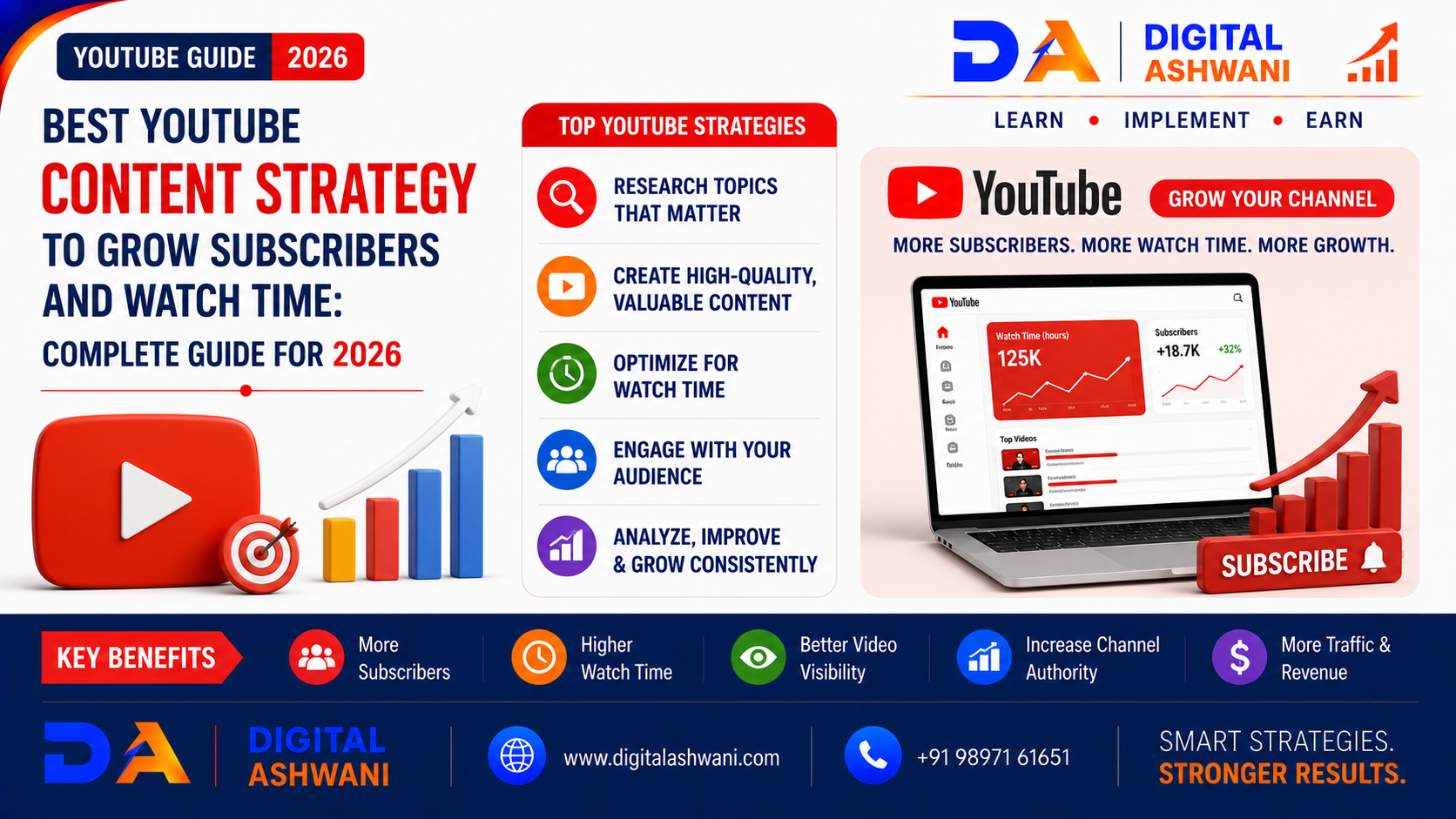
Best YouTube Content Strategy to Grow Subscribers and Watch Time
Growing a YouTube channel requires much more than uploading videos regularly.
Many creators publish dozens of videos but struggle to increase subscribers, watch time, audience retention, and returning viewers. The problem is often not a lack of effort—it is the absence of a clear content strategy.
A successful YouTube Content Strategy connects audience research, content topics, video quality, titles, thumbnails, retention, playlists, Shorts, and analytics.
The goal isn’t simply to get more views.
The goal is to attract the right viewers, keep them watching, encourage them to explore more videos, and eventually turn them into loyal subscribers.
Whether you’re a beginner, creator, business owner, educator, marketer, coach, or personal brand, a strategic YouTube content plan can help you build sustainable channel growth.
In this comprehensive guide by Digital Ashwani, you’ll learn how to create a YouTube content strategy that increases subscribers, improves watch time, strengthens audience retention, and builds a more valuable channel in 2026.
Why YouTube Content Strategy Matters
Without a strategy, creators often upload random videos based on whatever topic comes to mind.
This can create several problems:
- Inconsistent Audience
- Low Returning Viewers
- Weak Watch Time
- Poor Subscriber Growth
- Unclear Channel Positioning
- Difficulty Building Authority
A strong strategy creates a connection between individual videos and your overall channel goal.
Define Your Target Audience
Know Who You Want to Reach
Before creating videos, identify your ideal viewer.
Consider:
- Age Group
- Location
- Profession
- Interests
- Problems
- Search Behavior
- Skill Level
- Buying Intent Where Relevant
For example, a digital marketing channel could target:
Small Business Owners + Beginners + Marketing Professionals
This makes it easier to choose relevant topics and create content that viewers actually need.
Choose a Clear Content Niche
Avoid Being Too Broad
A channel covering completely unrelated topics can make it difficult to develop a consistent audience.
Instead, choose a clear theme.
Examples:
- Digital Marketing
- SEO
- Fitness
- Personal Finance
- Technology
- Education
- Cooking
- Travel
- Business
- Career Development
You can expand later, but your initial content should have a recognizable direction.
Create YouTube Content Pillars
Build 3–5 Core Topics
Content pillars help you consistently generate relevant video ideas.
For a digital marketing channel, pillars might include:
SEO
- SEO Tutorials
- Keyword Research
- Technical SEO
- Google Updates
Google Ads
- Campaign Setup
- PPC Tutorials
- Ad Optimization
- Conversion Tracking
AI Marketing
- AI Tools
- AI SEO
- AI Content
- Marketing Automation
This structure makes your channel easier for viewers to understand.
Find High-Potential Video Topics
Solve Real Audience Problems
Good YouTube topics answer questions viewers already have.
Use sources such as:
- YouTube Search Suggestions
- Comments
- Google Search
- Competitor Channels
- Industry Communities
- Customer Questions
- Your Existing Analytics
Look for recurring questions and problems.
Create Content Around Search Intent
Different viewers search for different reasons.
Informational Intent
Examples:
- What Is SEO?
- How Does Google Ads Work?
- What Is YouTube SEO?
Problem-Solving Intent
Examples:
- How to Fix Low YouTube Views
- Why Is My Website Traffic Dropping?
- How to Improve YouTube Watch Time
Commercial Intent
Examples:
- Best SEO Tools
- Best Video Editing Software
- YouTube Marketing Tools
Creating content for different intents can help attract viewers at different stages of the journey.
Write Better YouTube Titles
Your title should clearly communicate what viewers will gain from watching.
Good titles are:
- Clear
- Specific
- Relevant
- Benefit-Focused
- Accurate
Examples:
Weak:
YouTube Tips
Better:
YouTube Content Strategy to Grow Subscribers and Watch Time
Avoid misleading clickbait that creates a gap between the title and the actual video.
Create Click-Worthy Thumbnails
Keep Thumbnails Simple
A thumbnail should communicate the video’s main idea quickly.
Use:
- One Clear Concept
- Large Readable Text
- Strong Visual Hierarchy
- Consistent Branding
- Relevant Images
Avoid filling thumbnails with excessive text.
Your title and thumbnail should work together rather than simply repeating each other.
Improve Audience Retention
Getting clicks is only the beginning.
The video must keep viewers interested.
Improve the First Few Seconds
Avoid long introductions that delay the main topic.
Start by explaining:
- What the Video Covers
- Why It Matters
- What Viewers Will Learn
- What Problem You’ll Solve
Then deliver the promised value quickly.
Use Strong Video Structure
A useful structure can be:
Hook → Problem → Explanation → Examples → Key Takeaways → Next Step
This keeps the video organized and easier to follow.
Increase Watch Time With Longer Value
Longer videos don’t automatically produce more watch time.
The priority should be useful viewing time, not unnecessary length.
A 10-minute video that keeps viewers engaged can outperform a much longer video that loses attention quickly.
Focus on:
- Clear Structure
- Good Pacing
- Useful Examples
- Visual Changes
- Storytelling
- Strong Information Density
Create YouTube Playlists
Connect Related Videos
Playlists can help organize your content into logical learning journeys.
For example:
SEO Beginner Playlist
- What Is SEO?
- Keyword Research
- On-Page SEO
- Technical SEO
- Link Building
- SEO Audit
This makes it easier for viewers to continue watching related videos.
Use End Screens and Cards Strategically
When appropriate, direct viewers toward another relevant video.
For example:
Video A: Keyword Research Guide
At the end:
Watch Next: On-Page SEO Guide
This creates a natural path between related videos.
Don’t send viewers to completely unrelated content.
Use YouTube Shorts Strategically
Shorts can help expose your channel to new audiences.
Create Shorts From Long-Form Topics
For example, a long video about SEO can generate Shorts such as:
- One SEO Tip
- One Keyword Research Mistake
- One Technical SEO Fix
- One Google Search Tip
Use Shorts as part of your broader content system rather than treating them as completely separate from your channel strategy.
Create Series-Based Content
Turn One Topic Into Multiple Videos
Instead of creating one video and moving to an unrelated subject, build a series.
For example:
Google Ads Series
- Google Ads Basics
- Keyword Research
- Campaign Structure
- Ad Copy
- Bidding Strategies
- Conversion Tracking
- Campaign Optimization
Series encourage viewers who find one video useful to explore related content.
Build a Consistent Publishing Schedule
Consistency helps you maintain momentum and gives your audience a predictable flow of content.
You might choose:
- 1 Long Video Per Week
- 2–3 Shorts Per Week
- Regular Community Updates
The ideal schedule depends on your resources.
A sustainable schedule is better than publishing aggressively for a few weeks and then disappearing.
Optimize Videos for YouTube SEO
Optimize Important Elements
Use relevant keywords naturally in:
- Video Title
- Description
- Spoken Content
- Chapters Where Useful
- Captions
- Playlist Titles
- Related Video Topics
YouTube should be able to understand what your video is about, while the content itself should remain natural and useful to viewers.
Use Analytics to Improve Your Strategy
Watch More Than Views
Important metrics include:
- Watch Time
- Audience Retention
- Average View Duration
- Impressions
- Click-Through Rate
- Returning Viewers
- Subscribers Gained
- Traffic Sources
These metrics can help you identify what is working and where viewers lose interest.
Analyze Which Videos Generate Subscribers
A video with fewer views may sometimes produce more subscribers than a viral video.
Review which videos generate:
- New Subscribers
- Returning Viewers
- High Watch Time
- Strong Engagement
Then create more content around successful topics.
Update Your Content Strategy Based on Data
Don’t continue making the same videos simply because they worked once.
Look for patterns.
For example:
If several videos about SEO tutorials consistently outperform other topics, consider creating more content around SEO.
Data should guide your next content decisions.
Create a YouTube Content Calendar
A simple monthly calendar might include:
Week 1
- Long-form Educational Video
- Short Tutorial
- Community Post
Week 2
- Problem-Solving Video
- Short Tip
- Community Post
Week 3
- Case Study
- Short Insight
- Community Post
Week 4
- Beginner Guide
- Short Tip
- Community Post
Adapt the schedule according to your audience and production capacity.
Common YouTube Growth Mistakes
Uploading Random Topics
Unrelated content can make it difficult to build a consistent audience.
Focusing Only on Views
Views alone don’t show whether viewers are becoming loyal subscribers.
Using Misleading Thumbnails
Clickbait can create disappointment and hurt viewer trust.
Making Long Introductions
Get to the value quickly.
Ignoring Analytics
Without reviewing performance data, you may repeat ineffective strategies.
Copying Competitors
Study successful channels for insights, but develop your own expertise, presentation, and positioning.
Inconsistent Publishing
Long gaps can make it harder to maintain momentum.
Ignoring Older Videos
Some older videos can continue generating traffic. Update titles, descriptions, thumbnails, playlists, or related links when appropriate.
YouTube Content Strategy Checklist
Before publishing a video, check:
- Clear Target Audience
- Relevant Topic
- Strong Content Pillar
- Search Intent
- Useful Video Title
- Strong Thumbnail
- Clear Opening Hook
- Structured Video
- Valuable Information
- Relevant Keywords
- Accurate Description
- Chapters Where Useful
- Related Playlist
- End Screen
- Analytics Tracking
- Clear Next Video
Internal Linking Suggestions (Digital Ashwani)
Strengthen the YouTube and video marketing content cluster by linking this article with:
- Complete YouTube Marketing Guide for Business Growth and Brand Awareness
- How to Write Social Media Captions That Increase Engagement and Sales
- Social Media Marketing Trends Every Business Owner Should Know This Year
- Best ChatGPT Prompts for SEO Experts and Content Writers
- How AI Is Transforming Modern SEO Strategies for Business Growth
- What Is ChatGPT for Marketing?
- Digital Marketing Career in 2026: Skills, Salary & Future Scope
- Complete Instagram Marketing Guide for Small Business Owners and Brands
These internal links connect YouTube strategy with content creation, social media marketing, AI, SEO, and broader digital marketing topics.
External Resources
For current YouTube features and creator guidance, refer to official resources such as:
- YouTube Help
- YouTube Creators
- YouTube Analytics Help
YouTube features, recommendations, policies, and analytics can change over time, so creators should review current official documentation when making strategic decisions.
Frequently Asked Questions
How can I grow YouTube subscribers quickly?
Focus on creating useful content for a clearly defined audience, improving titles and thumbnails, increasing viewer retention, building related video series, and consistently publishing valuable videos.
How can I increase YouTube watch time?
Create videos that viewers genuinely want to watch, improve audience retention, connect related videos through playlists and end screens, and build series that encourage viewers to continue watching.
How often should I upload YouTube videos?
There is no universal upload frequency. Choose a schedule you can maintain consistently while keeping video quality high.
Are YouTube Shorts good for growing subscribers?
Shorts can help introduce your content to new viewers. Their effectiveness depends on topic relevance, content quality, audience fit, and how well Shorts connect with your broader channel strategy.
Does YouTube SEO still matter?
Yes. Search optimization can help YouTube understand your content and connect it with relevant viewers, but recommendations, viewer satisfaction, engagement, and content quality also play important roles.
Should I make long videos to increase watch time?
Not simply for the sake of length. A useful, engaging video is more valuable than an unnecessarily long video. Focus on delivering the topic effectively.
What is the best content strategy for a new YouTube channel?
Start with a clear niche, define your audience, create several content pillars, publish useful videos consistently, study analytics, and build clusters or series around topics that perform well.
Final Thoughts
The best YouTube Content Strategy isn’t about chasing viral videos.
It’s about creating a repeatable system that attracts the right viewers, provides genuine value, encourages continued watching, and converts viewers into loyal subscribers.
A strong strategy combines:
Right Audience + Valuable Topics + Strong Titles + Better Thumbnails + Audience Retention + Related Videos + Consistent Publishing + Analytics
If your goal is to grow subscribers and watch time, focus on building a library of useful, connected content rather than relying on individual viral videos.
Every successful channel starts with understanding its audience and publishing its first valuable video. The key is to keep learning from your data and improving the next video.
At Digital Ashwani, we regularly publish practical guides on YouTube Marketing, SEO, AI Marketing, Google Ads, Social Media Marketing, Local SEO, and Digital Marketing to help businesses and creators build stronger online visibility and sustainable growth.
