
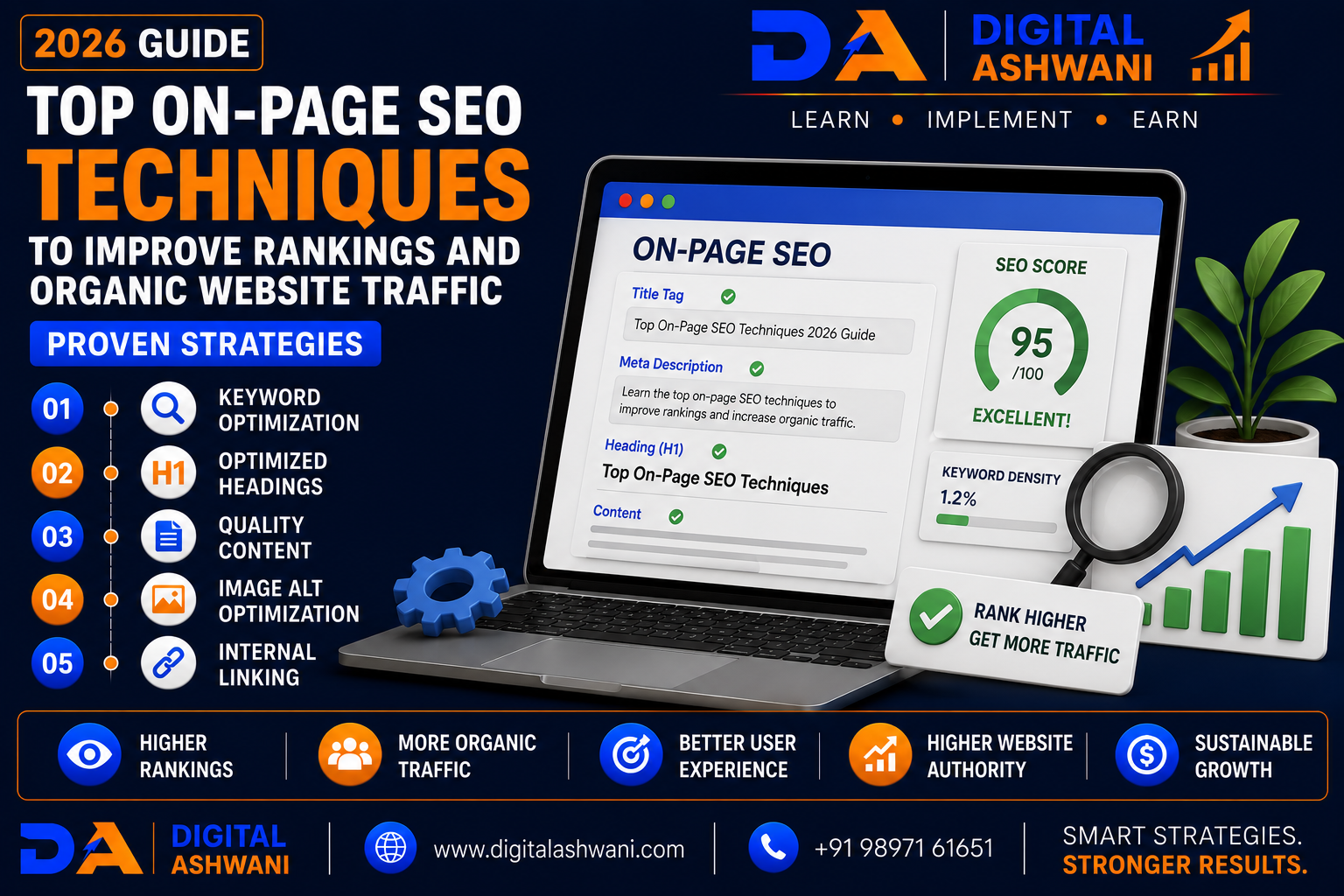
Top On-Page SEO Techniques to Improve Rankings and Organic Website Traffic
On-page SEO remains one of the most important ranking factors for websites in 2026. While Google’s algorithms and AI-powered search experiences continue evolving, the foundation of SEO still begins with well-optimized webpages that provide valuable, relevant, and trustworthy information.
Many websites struggle to rank not because of poor content, but because essential on-page SEO elements are missing or poorly implemented. Issues such as weak title tags, improper heading structures, slow-loading pages, duplicate content, and poor internal linking can prevent even high-quality articles from reaching the first page of search results.
Modern on-page SEO is no longer about repeating keywords. It focuses on satisfying search intent, improving user experience, demonstrating Experience, Expertise, Authoritativeness, and Trustworthiness (EEAT), and helping both search engines and AI systems understand your content.
In this comprehensive guide by Digital Ashwani, you’ll learn 15 proven on-page SEO techniques that help improve rankings, increase organic traffic, and strengthen your website’s visibility in both traditional and AI-powered search.
What Is On-Page SEO?
On-page SEO refers to optimizing the elements that exist directly on a webpage to improve its visibility in search engines.
These elements include:
- SEO Title
- Meta Description
- URL Structure
- Headings
- Content
- Images
- Internal Links
- Structured Data
Unlike off-page SEO, on-page SEO focuses entirely on improving your own website.
Why On-Page SEO Matters
Effective on-page SEO helps search engines understand:
- What your page is about
- Which keywords it targets
- How useful it is
- Whether it satisfies user intent
- How it relates to other pages
Well-optimized pages generally provide a better experience for both users and search engines.
Benefits of On-Page SEO
Strong on-page optimization helps:
- Improve Google Rankings
- Increase Organic Traffic
- Enhance User Experience
- Improve Click-Through Rate (CTR)
- Strengthen EEAT
- Support AI Search Optimization
- Increase Conversion Rates
- Improve Crawlability
15 Proven On-Page SEO Techniques
1. Perform Proper Keyword Research
Every successful page starts with understanding what users search for.
Identify:
- Primary Keyword
- Secondary Keywords
- Long-Tail Keywords
- Semantic Keywords
- Question-Based Searches
Choose keywords that match search intent rather than focusing only on search volume.
2. Optimize the SEO Title
Your SEO title should:
- Include the Focus Keyword
- Clearly describe the page
- Encourage clicks
- Stay within recommended length
- Include numbers or benefits when appropriate
A strong title improves both rankings and CTR.
3. Write Compelling Meta Descriptions
Although meta descriptions are not a direct ranking factor, they influence click-through rates.
A good meta description should:
- Include the Focus Keyword
- Explain the page’s value
- Encourage users to click
- Remain concise and relevant
4. Use a Clean URL Structure
SEO-friendly URLs should be:
- Short
- Descriptive
- Easy to Read
- Keyword-Focused
Avoid unnecessary parameters and random numbers.
5. Use Proper Heading Structure
Organize content logically using:
- H1
- H2
- H3
- H4
Clear headings improve readability and help search engines understand content hierarchy.
6. Create Helpful, Original Content
Google rewards content that demonstrates:
- Experience
- Expertise
- Originality
- Accuracy
- Practical Value
Avoid publishing thin, duplicate, or AI-generated content without human review.
7. Optimize Images
Every image should include:
- Descriptive File Name
- ALT Text
- Proper Compression
- Responsive Sizing
Optimized images improve accessibility, page speed, and image search visibility.
8. Build Strong Internal Links
Internal linking helps:
- Distribute Authority
- Improve Crawlability
- Increase Page Views
- Strengthen Topic Clusters
- Guide Users to Related Content
Use descriptive anchor text that naturally fits within the content.
9. Implement Structured Data (Schema Markup)
Schema markup helps search engines better understand your content.
Implement schema where appropriate for:
- Article
- FAQ
- Organization
- Local Business
- Product
- Breadcrumb
- Review
Structured data improves eligibility for rich results and supports AI-powered search.
10. Improve Page Speed
Website speed affects both user experience and SEO.
Optimize:
- Image Compression
- Browser Caching
- CSS & JavaScript Minification
- Lazy Loading
- CDN Usage
- Core Web Vitals
A fast-loading page reduces bounce rates and improves engagement.
11. Optimize for Mobile-First Indexing
Google primarily indexes the mobile version of websites.
Ensure your pages have:
- Responsive Design
- Readable Text
- Mobile-Friendly Navigation
- Clickable Buttons
- Fast Mobile Performance
A smooth mobile experience supports both rankings and conversions.
12. Demonstrate EEAT
Google values content that demonstrates:
- Experience
- Expertise
- Authoritativeness
- Trustworthiness
Strengthen EEAT by:
- Showing Author Information
- Publishing Original Research
- Citing Reliable Sources
- Updating Content Regularly
- Displaying Contact Information
Strong trust signals improve long-term SEO performance.
13. Optimize for AI Search
AI-powered search engines prefer well-structured, helpful content.
Improve AI visibility by:
- Writing Direct Answers
- Creating FAQ Sections
- Using Descriptive Headings
- Covering Topics Comprehensively
- Building Topic Clusters
- Keeping Content Updated
AI-friendly content increases visibility beyond traditional search.
14. Refresh Existing Content
SEO isn’t a one-time task.
Regularly update:
- Statistics
- Examples
- Internal Links
- Images
- Keywords
- FAQs
- Outdated Information
Fresh content helps maintain rankings over time.
15. Track SEO Performance
Monitor your SEO efforts using:
- Google Search Console
- Google Analytics 4
- PageSpeed Insights
- Looker Studio
- Bing Webmaster Tools
Track important metrics such as:
- Organic Traffic
- Keyword Rankings
- Click-Through Rate
- Bounce Rate
- Conversions
- Indexed Pages
Continuous monitoring helps identify opportunities for improvement.
On-Page SEO Checklist
Before publishing any page, verify the following:
- Focus Keyword Optimized
- SEO Title Written
- Meta Description Added
- SEO-Friendly URL Created
- Heading Structure Organized
- Images Optimized
- Internal Links Added
- Schema Markup Implemented
- Core Web Vitals Optimized
- Content Reviewed for EEAT
Following this checklist creates a strong SEO foundation.
Common On-Page SEO Mistakes
Keyword Stuffing
Repeating keywords unnaturally reduces readability and may negatively affect user experience.
Use keywords naturally throughout your content.
Duplicate Content
Publishing duplicate or nearly identical pages can confuse search engines.
Create original, valuable content for every page.
Ignoring Internal Linking
Without internal links, search engines and users may struggle to discover related content.
Build logical topic clusters across your website.
Slow Website Performance
Large images, unnecessary scripts, and poor hosting reduce page speed.
Optimize technical performance regularly.
Publishing Without Updating
SEO content should evolve with industry trends.
Review and refresh important pages periodically.
Internal Linking Suggestions (Digital Ashwani)
Strengthen your SEO content cluster by linking this article with:
- SEO Checklist for 2026: 25 Things You Must Do Before Publishing Any Blog
- How Search Engines Crawl, Index, and Rank Websites for Better Visibility
- Complete Beginner’s Guide to Understanding How Google Search Ranking Really Works
- How Structured Data Helps AI Understand Your Website Better
- AI SEO vs Traditional SEO
- What Is AI SEO and How Can It Improve Your Search Engine Rankings?
- Why Organic Traffic Is Dropping Even When Rankings Stay the Same
- How AI Is Changing Google Search & Digital Marketing
- How to Increase Website Conversion Rates Using Data-Driven Optimization Methods
- Ultimate Analytics and Tracking Guide for Long-Term Business Growth
These internal links strengthen topical authority while helping readers explore technical SEO, AI SEO, structured data, analytics, and conversion optimization.
External Resources
For trusted SEO guidance, refer to:
- Google Search Central
- Google Search Console Help
- Google Analytics Help Center
- PageSpeed Insights
- Schema.org Documentation
These official resources provide current recommendations for search optimization, website performance, structured data, and technical SEO.
Frequently Asked Questions
What is On-Page SEO?
On-page SEO is the process of optimizing the content and HTML elements of individual webpages to improve search engine rankings and provide a better user experience.
Is On-Page SEO still important in 2026?
Yes. On-page SEO remains one of the strongest foundations for ranking in both traditional Google Search and AI-powered search experiences.
How often should I update On-Page SEO?
Review important pages every few months or whenever significant industry changes occur. Refreshing content helps maintain relevance and rankings.
Can AI improve On-Page SEO?
Yes. AI can assist with keyword research, content optimization, metadata generation, topic clustering, and content analysis. Human review is still essential for accuracy and quality.
Which On-Page SEO factor is most important?
There is no single ranking factor. High-quality content, search intent, page experience, internal linking, technical optimization, and EEAT work together to improve SEO performance.
Final Thoughts
Mastering the Top On-Page SEO Techniques to Improve Rankings and Organic Website Traffic is essential for building sustainable organic growth. While search algorithms continue evolving with AI-powered experiences, the fundamentals remain the same: create valuable content, satisfy user intent, optimize technical elements, and provide an excellent user experience.
Instead of focusing on shortcuts or outdated SEO tactics, invest in comprehensive content, logical website architecture, strong internal linking, structured data, mobile optimization, and continuous content improvements. These practices help your pages perform better in both traditional search engines and AI-driven search platforms.
Businesses that consistently optimize their webpages while prioritizing users over algorithms are better positioned to achieve higher rankings, stronger organic traffic, improved engagement, and long-term digital success.
At Digital Ashwani, we regularly publish practical guides on SEO, AI SEO, Google Search, Google Ads, Analytics, Local SEO, and Digital Marketing to help businesses build long-term online visibility and sustainable growth.
