

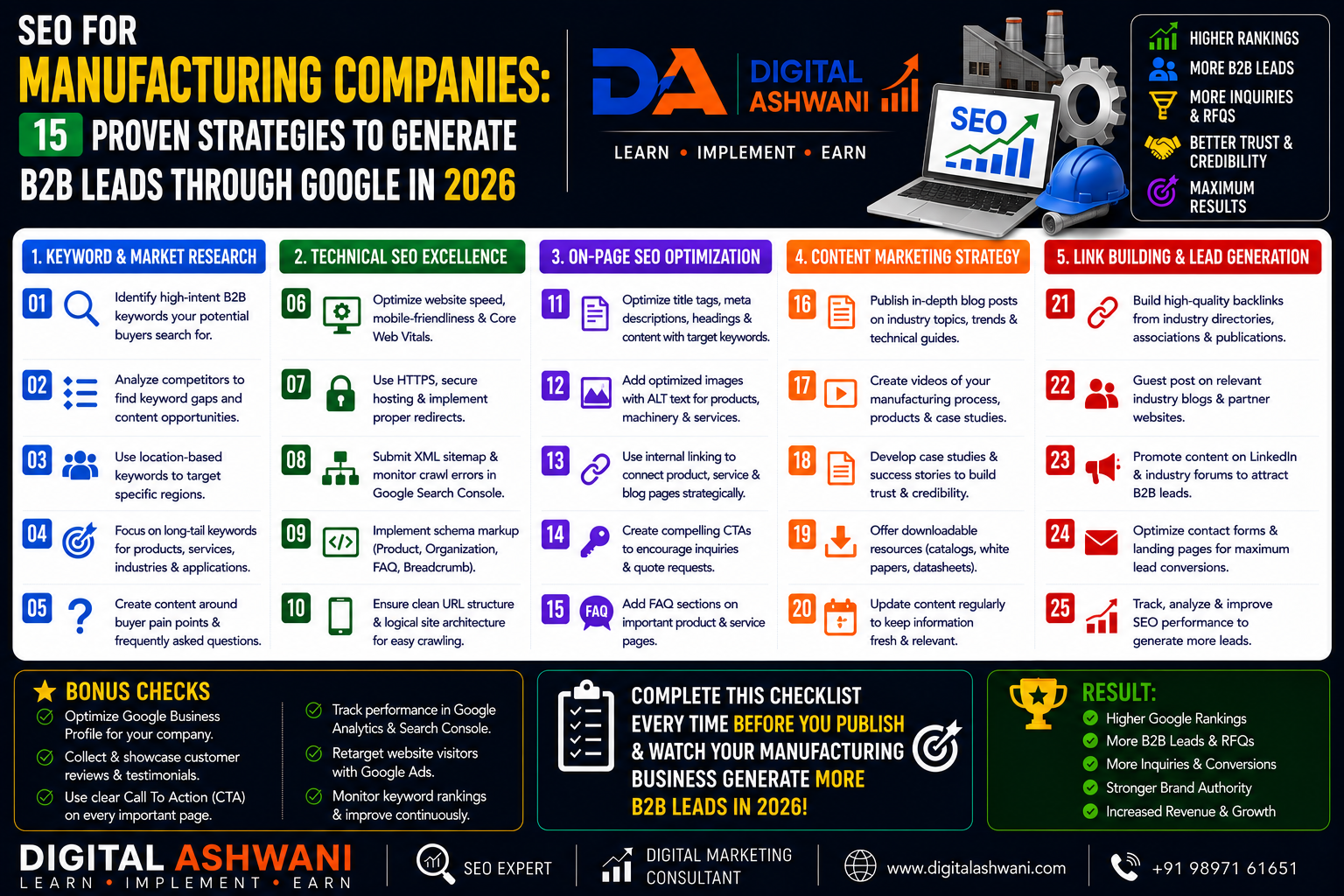
SEO for Manufacturing Companies
The manufacturing industry has changed dramatically over the past decade. Today, procurement managers, distributors, wholesalers, OEMs, exporters, and industrial buyers no longer rely only on trade shows or business directories—they begin their supplier search on Google.
Common searches include:
- Industrial Equipment Manufacturer
- Plastic Parts Manufacturer
- CNC Machining Company
- Steel Fabrication Company
- OEM Manufacturing Services
- Packaging Manufacturer in India
If your manufacturing company doesn’t appear in these search results, potential buyers are likely requesting quotes from your competitors.
This is where SEO for Manufacturing Companies becomes one of the most valuable long-term B2B marketing strategies.
Search Engine Optimization (SEO) helps manufacturers improve visibility in Google Search, Google Maps (for local manufacturing businesses), and AI-powered search experiences. A well-planned SEO strategy attracts qualified industrial buyers, generates Request for Quotes (RFQs), increases inbound B2B inquiries, and reduces dependence on paid advertising.
In this comprehensive guide by Digital Ashwani, you’ll learn 15 proven SEO strategies to improve Google rankings, generate qualified B2B leads, and grow your manufacturing business in 2026.
Why SEO Matters for Manufacturing Companies
Modern B2B buyers perform extensive online research before contacting a supplier.
They compare:
- Products
- Manufacturing capabilities
- Certifications
- Industries served
- Production capacity
- Pricing
- Case studies
- Customer reviews
SEO helps your company appear during every stage of the industrial buying journey.
Common search queries include:
- CNC Machining Manufacturer India
- Sheet Metal Fabrication Company
- Food Packaging Manufacturer
- Injection Molding Manufacturer
- Industrial Valve Manufacturer
- Automotive Parts Supplier
Appearing in these searches increases your chances of receiving high-quality RFQs from serious buyers.
Benefits of SEO for Manufacturing Companies
An effective Manufacturing SEO strategy helps:
- Generate qualified B2B leads
- Increase RFQs
- Improve Google rankings
- Build industry authority
- Reduce customer acquisition costs
- Increase organic website traffic
- Expand export opportunities
- Support long-term business growth
Unlike paid campaigns, SEO continues generating inbound inquiries over time.
15 Proven Strategies to Generate B2B Leads
1. Perform Manufacturing Keyword Research
Keyword research is the foundation of every successful Manufacturing SEO campaign.
Target Commercial Keywords
Examples include:
- Industrial Equipment Manufacturer
- CNC Machining Services
- Plastic Injection Molding Company
- Steel Fabrication Services
- OEM Manufacturing
These keywords target businesses actively searching for manufacturing partners.
Target Long-Tail B2B Keywords
Examples:
- Custom CNC Machining Services in India
- Stainless Steel Fabrication Company
- OEM Plastic Components Manufacturer
- Automotive Parts Manufacturer in Delhi
Long-tail keywords generally attract buyers with stronger purchasing intent.
2. Create Dedicated Product & Service Pages
Every product category and manufacturing service should have its own optimized page.
Examples of Dedicated Pages
Create pages for:
- CNC Machining
- Sheet Metal Fabrication
- Injection Molding
- Precision Engineering
- Industrial Packaging
- OEM Manufacturing
- Contract Manufacturing
- Custom Fabrication
Dedicated pages improve keyword relevance and search visibility.
Provide Complete Product Information
Each page should include:
- Product overview
- Technical specifications
- Industries served
- Manufacturing process
- Certifications
- Applications
- FAQs
- Request for Quote (RFQ) CTA
Detailed product pages improve both SEO performance and buyer confidence.
3. Build Industry-Specific Landing Pages
Different industries have different manufacturing requirements.
Target Industry Keywords
Examples include:
- Automotive Component Manufacturer
- Medical Device Manufacturer
- Aerospace Parts Supplier
- Pharmaceutical Packaging Manufacturer
- Food Processing Equipment Manufacturer
Industry-specific pages help attract highly qualified B2B traffic.
Create Dedicated Industry Pages
Develop separate pages for industries such as:
- Automotive
- Healthcare
- Aerospace
- Electronics
- Food & Beverage
- Construction
- Energy
Industry landing pages improve topical authority and conversion rates.
4. Optimize Your Google Business Profile
Google Business Profile is valuable for manufacturers serving regional or national markets.
Complete Your Business Profile
Include:
- Company name
- Address
- Phone number
- Website
- Business hours
- Manufacturing categories
- Product photos
- Factory images
- Customer reviews
A complete profile increases trust and local visibility.
Publish Regular Updates
Share updates about:
- New manufacturing capabilities
- Product launches
- Factory expansion
- Trade exhibitions
- Certifications
- Company milestones
Regular updates keep your profile active and informative.
5. Publish Educational Industrial Content
Industrial buyers often research technical topics before contacting suppliers.
Create Helpful Content
Examples include:
- CNC Machining Guide
- Injection Molding Process
- Manufacturing Quality Standards
- ISO Certification Guide
- Material Selection Guide
- OEM Manufacturing Explained
Educational content builds credibility and attracts qualified traffic.
Answer Buyer Questions
Cover topics such as:
- What manufacturing process is best?
- How long is production time?
- What certifications are required?
- How are custom parts manufactured?
Helpful content establishes your company as an industry expert.
6. Improve Website Speed
Industrial buyers expect fast and professional websites.
Optimize Website Performance
Improve speed by:
- Compressing product images
- Optimizing CSS & JavaScript
- Enabling browser caching
- Using lazy loading
- Implementing a CDN
- Choosing reliable hosting
A faster website improves both SEO performance and user experience.
Monitor Core Web Vitals
Track:
- Largest Contentful Paint (LCP)
- Interaction to Next Paint (INP)
- Cumulative Layout Shift (CLS)
Optimized Core Web Vitals contribute to better rankings.
7. Showcase Certifications & Case Studies
Trust is essential in B2B manufacturing.
Highlight Certifications
Display certifications such as:
- ISO Certification
- CE Certification
- Industry-specific approvals
- Export certifications
- Quality management systems
These certifications reassure buyers about quality and compliance.
Publish Case Studies
Include:
- Customer success stories
- Manufacturing challenges solved
- Production improvements
- ROI achieved
- Technical innovations
- Long-term partnerships
Case studies demonstrate real-world expertise and build confidence.
8. Optimize Product Images & Videos
Visual content helps buyers understand manufacturing capabilities.
Use High-Quality Visual Assets
Include:
- Factory images
- Production lines
- Machinery
- Product photos
- Quality inspection
- Packaging process
- Team at work
Professional visuals increase trust and engagement.
Follow Image SEO Best Practices
Optimize media by:
- Compressing images
- Using descriptive filenames
- Adding keyword-rich ALT text
- Enabling lazy loading
Image optimization improves page speed and search visibility.
Quick Manufacturing SEO Checklist
| SEO Area | Importance |
|---|---|
| Keyword Research | ⭐⭐⭐⭐⭐ |
| Product Page SEO | ⭐⭐⭐⭐⭐ |
| Industry Landing Pages | ⭐⭐⭐⭐⭐ |
| Google Business Profile | ⭐⭐⭐⭐⭐ |
| Technical Content | ⭐⭐⭐⭐⭐ |
| Website Speed | ⭐⭐⭐⭐☆ |
| Certifications & Case Studies | ⭐⭐⭐⭐⭐ |
| Image SEO | ⭐⭐⭐⭐☆ |
9. Implement Manufacturing Schema Markup
Structured data helps search engines understand your manufacturing business and improves your chances of appearing in rich search results.
Use Relevant Schema Types
Implement schema markup for:
- Organization
- Local Business
- Product
- Service
- FAQ
- Breadcrumb
- Review (where applicable)
If you manufacture multiple product categories, use Product Schema on individual product pages and Organization Schema on your company pages.
Validate Structured Data
Test your structured data using Google’s Rich Results Test or Schema Markup Validator to ensure it is implemented correctly and free from errors.
10. Optimize Product & RFQ Landing Pages
Industrial buyers expect detailed information before requesting a quotation.
Create High-Converting Product Pages
Every product or manufacturing service page should include:
- Product description
- Technical specifications
- Material options
- Manufacturing process
- Certifications
- Applications
- Product images
- Downloadable brochures
- RFQ button
Detailed product pages improve user experience and increase inquiry rates.
Use Strong Calls-to-Action
Examples include:
- Request a Quote
- Get Custom Pricing
- Contact Our Engineering Team
- Schedule a Manufacturing Consultation
- Download Product Catalog
Clear CTAs encourage buyers to submit inquiries quickly.
11. Develop a B2B Content Marketing Strategy
Educational content attracts industrial buyers during the research phase.
Create Content for Every Buying Stage
Develop content for:
Awareness Stage
- Manufacturing guides
- Industry trends
- Process explanations
- Material comparisons
Consideration Stage
- Product comparisons
- Industry applications
- Manufacturing methods
- Cost optimization guides
Decision Stage
- Case studies
- Customer success stories
- Technical documentation
- Product catalogs
This full-funnel approach supports buyers throughout the purchasing journey.
Update Existing Content
Regularly refresh:
- Product specifications
- Industry standards
- Manufacturing technologies
- Certifications
- Compliance requirements
- Market trends
Updated content helps maintain rankings and improves buyer confidence.
12. Build High-Quality Industrial Backlinks
Backlinks remain a strong ranking factor for B2B websites.
Earn Links from Trusted Industry Sources
Focus on backlinks from:
- Manufacturing associations
- Industrial directories
- Engineering blogs
- Industry magazines
- Business chambers
- Trade organizations
- Supplier directories
Relevant backlinks strengthen your website’s authority and improve search rankings.
Publish Link-Worthy Resources
Create valuable assets such as:
- Manufacturing process guides
- Technical whitepapers
- Engineering calculators
- Industry reports
- Product comparison charts
- Quality control checklists
These resources naturally attract backlinks from industry websites.
13. Monitor SEO Performance
SEO requires continuous analysis and optimization.
Track Key Performance Metrics
Monitor:
- Organic traffic
- RFQs
- Contact form submissions
- Keyword rankings
- Organic conversions
- Bounce rate
- Lead quality
- Revenue from organic search
Tracking performance helps identify opportunities for growth.
Use Professional SEO Tools
Recommended tools include:
- Google Search Console
- Google Analytics
- Google PageSpeed Insights
- Google Tag Manager
- Microsoft Clarity
These tools help improve technical performance, user experience, and lead generation.
14. Demonstrate EEAT
Industrial buyers prefer experienced and trustworthy manufacturing partners.
Highlight Your Expertise
Showcase:
- Years of manufacturing experience
- ISO certifications
- Factory infrastructure
- Quality control process
- Industry awards
- Client testimonials
- Export capabilities
- Technical team expertise
These trust signals improve credibility with both users and search engines.
Increase Transparency
Clearly display:
- Company address
- Phone number
- Factory location
- Business hours
- Privacy Policy
- Terms & Conditions
Transparent business information increases buyer confidence.
15. Continuously Improve Your SEO Strategy
SEO is an ongoing investment that evolves with search behavior and industry trends.
Keep Product Pages Updated
Regularly review:
- Product specifications
- Manufacturing capabilities
- Certifications
- Machinery
- Factory photos
- Industry applications
- Service offerings
Accurate information improves both SEO performance and user trust.
Publish Fresh Manufacturing Content
Create blogs covering:
- Manufacturing innovations
- Industry 4.0
- Automation
- Lean manufacturing
- Sustainability
- Supply chain optimization
- Export opportunities
Consistent publishing strengthens topical authority and attracts decision-makers.
Manufacturing SEO Checklist
| SEO Task | Status |
|---|---|
| Keyword Research | ✅ |
| Product Page SEO | ✅ |
| Industry Landing Pages | ✅ |
| Content Marketing | ✅ |
| Schema Markup | ✅ |
| Technical SEO | ✅ |
| Website Speed | ✅ |
| Internal Linking | ✅ |
| Backlink Strategy | ✅ |
| Conversion Optimization | ✅ |
Common Manufacturing SEO Mistakes
Using Generic Product Descriptions
Many manufacturers publish short or duplicate product descriptions. Detailed, unique product pages with technical specifications perform significantly better in search results.
Ignoring Industry-Specific Pages
Trying to target every buyer with a single page reduces relevance. Dedicated pages for different industries improve rankings and conversion rates.
Weak Technical Content
Industrial buyers expect technical documentation, process explanations, certifications, and application details. Thin content reduces trust and lead quality.
Poor Technical SEO
Slow loading speeds, broken links, crawl issues, duplicate content, and indexing errors can negatively affect rankings and user experience.
No RFQ Optimization
Generating traffic without optimizing RFQ forms, CTAs, or contact pages limits the effectiveness of your SEO efforts.
Internal Linking Suggestions (Digital Ashwani)
Strengthen your manufacturing SEO content cluster by linking this article with:
- SEO Checklist for 2026: 25 Things You Must Do Before Publishing Any Blog
- AI SEO vs Traditional SEO
- How to Rank in ChatGPT Search Results
- Zero-Click SEO Strategy
- Google AI Mode Rollout: Complete SEO Impact Analysis
- Why Organic Traffic Is Dropping Even When Rankings Stay the Same
- Top Digital Marketing Trends in 2026
- Technical SEO Complete Guide
- Local SEO Services in Delhi
- Google Search Console Guide
- Keyword Research Guide
These internal links improve topical authority, strengthen your website architecture, and help readers explore more valuable Digital Ashwani resources.
External Resources
For trusted SEO and manufacturing guidance, refer to:
- Google Search Central
- Google Search Console Help
- Google PageSpeed Insights
- Schema.org Documentation
- Google Analytics Help Center
These resources provide best practices for technical SEO, structured data implementation, and website optimization.
Frequently Asked Questions
How long does SEO for Manufacturing Companies take to show results?
Most manufacturing businesses begin seeing measurable SEO improvements within 3–6 months, although highly competitive industries may require more time. Consistent optimization, technical improvements, and content creation are essential for long-term success.
Why is SEO important for manufacturing companies?
SEO helps manufacturers reach procurement managers, distributors, wholesalers, exporters, and industrial buyers who are actively searching online for suppliers, products, and manufacturing services.
Can SEO generate qualified B2B leads?
Yes. A strong SEO strategy attracts buyers with high purchase intent. Combined with detailed product pages, technical content, and optimized RFQ forms, SEO can significantly increase qualified business inquiries.
Should every manufacturing service have its own page?
Yes. Separate pages for each product category, manufacturing process, industry application, and service improve keyword targeting, user experience, and organic search visibility.
Why is content marketing important for manufacturers?
Educational content such as manufacturing guides, process explanations, industry reports, technical documentation, and case studies builds trust, demonstrates expertise, and helps attract decision-makers during the research phase.
Final Thoughts
Implementing SEO for Manufacturing Companies is one of the most effective long-term strategies for generating qualified B2B leads, increasing RFQs, and building a stronger digital presence. By combining keyword research, industry-specific landing pages, technical SEO, structured data, educational content, optimized product pages, authoritative backlinks, and conversion-focused RFQ pages, manufacturers can create a reliable source of inbound business opportunities.
Instead of relying only on traditional marketing channels, focus on creating a website that answers buyer questions, showcases technical expertise, demonstrates manufacturing capabilities, and makes it easy for prospects to request a quote. A buyer-focused SEO strategy builds trust, strengthens brand authority, and supports sustainable business growth.
