

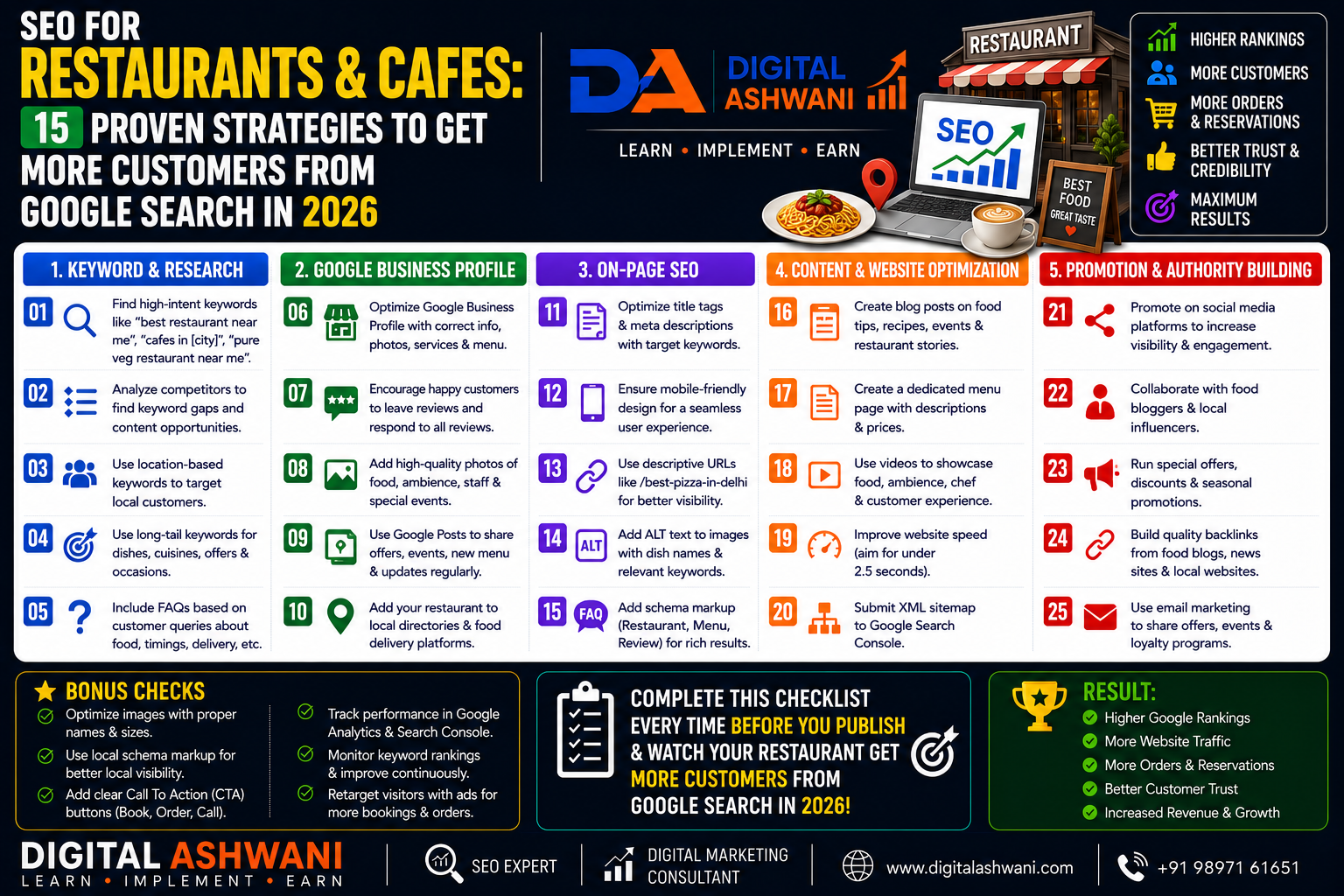
SEO for Restaurants & Cafes
Today, most customers search online before deciding where to eat. Whether they are looking for a fine-dining restaurant, a family restaurant, a rooftop café, a coffee shop, or a fast-food outlet, Google Search is often the first place they turn to.
Popular searches include:
- Best Restaurant Near Me
- Best Cafe in Delhi
- Family Restaurant in Noida
- Coffee Shop Near Me
- Italian Restaurant in Gurgaon
- Best Pizza Near Me
If your restaurant or café doesn’t appear in these search results, you’re losing valuable customers to competitors.
This is where SEO for Restaurants & Cafes becomes one of the most effective long-term marketing strategies.
Search Engine Optimization (SEO) helps restaurants improve their visibility in Google Search, Google Maps, and AI-powered search experiences. A strong SEO strategy increases local visibility, attracts nearby customers, boosts online reservations, and generates more direct orders without relying entirely on food delivery platforms.
In this complete guide by Digital Ashwani, you’ll learn 15 proven SEO strategies to improve your restaurant’s online presence, rank higher in Google Search, and attract more customers in 2026.
Why SEO Matters for Restaurants & Cafes
Consumers increasingly rely on Google to discover dining options before visiting a restaurant.
They often compare:
- Menus
- Prices
- Reviews
- Ratings
- Photos
- Location
- Opening hours
- Customer experiences
SEO ensures your business appears when customers are actively searching for places to eat.
Common search queries include:
- Best Cafe in Connaught Place
- Restaurant Near Metro Station
- Vegetarian Restaurant Near Me
- Rooftop Restaurant in Jaipur
- Best Coffee Shop in Gurgaon
- Family Restaurant with Outdoor Seating
Appearing in these searches increases your chances of attracting customers with high purchase intent.
Benefits of SEO for Restaurants & Cafes
An effective Restaurant SEO strategy can help:
- Increase local customer visits
- Improve Google Search rankings
- Dominate Google Maps results
- Increase online reservations
- Generate more direct food orders
- Strengthen brand visibility
- Build customer trust
- Reduce dependence on third-party delivery apps
Unlike paid advertising, SEO continues delivering long-term visibility and customer acquisition.
15 Proven Strategies to Get More Customers
1. Perform Restaurant Keyword Research
Keyword research helps you understand how customers search for restaurants.
Target High-Intent Keywords
Examples include:
- Best Restaurant in Delhi
- Cafe Near Me
- Pizza Restaurant in Noida
- Best Coffee Shop
- Fine Dining Restaurant
These keywords indicate users who are actively looking for a place to dine.
Use Long-Tail Keywords
Examples:
- Best Rooftop Cafe in Gurgaon
- Family Restaurant with Kids Play Area
- Romantic Restaurant in Jaipur
- Vegan Cafe Near Me
Long-tail keywords often attract highly qualified local customers.
2. Optimize Individual Menu Pages
Every major menu category should have its own optimized page.
Create Dedicated Pages
Examples include:
- Breakfast Menu
- Lunch Menu
- Dinner Menu
- Coffee Menu
- Desserts
- Beverages
- Party Packages
Dedicated pages improve search visibility for menu-related searches.
Provide Complete Information
Include:
- Dish descriptions
- Ingredients
- Pricing
- Photos
- Dietary information
- Popular recommendations
Detailed menu pages improve both SEO and customer experience.
3. Strengthen Local SEO
Local SEO is essential for restaurants because most customers search within a specific area.
Target Local Keywords
Examples include:
- Restaurant in Delhi
- Cafe in Noida
- Pizza Near Me
- Coffee Shop in Gurgaon
- Restaurant Near Airport
Location-based keywords improve local search visibility.
Create Location-Specific Pages
If you operate multiple branches, create separate pages for each location with unique content, address details, business hours, and local information.
4. Optimize Your Google Business Profile
Google Business Profile is one of the most powerful local SEO tools for restaurants.
Complete Your Business Profile
Include:
- Restaurant name
- Address
- Phone number
- Website
- Business hours
- Categories
- Menu link
- Photos
- Customer reviews
A complete profile increases trust and local rankings.
Publish Regular Updates
Share updates about:
- New menu items
- Seasonal offers
- Events
- Live music nights
- Festivals
- Special discounts
Regular posts keep your profile active and engaging.
5. Create Helpful Food & Travel Content
Content marketing attracts potential customers before they decide where to eat.
Write Useful Blog Articles
Examples include:
- Best Breakfast Spots in Delhi
- Top Cafes for Remote Work
- Romantic Dinner Ideas
- Healthy Eating Tips
- Coffee Brewing Guide
- Local Food Festivals
Helpful content increases topical authority and attracts organic traffic.
Answer Customer Questions
Cover topics such as:
- Best dishes to try
- Parking availability
- Vegan options
- Outdoor seating
- Reservation policy
- Pet-friendly facilities
Providing answers improves user experience and builds trust.
6. Improve Website Speed
A fast website creates a better browsing experience and supports higher search rankings.
Optimize Website Performance
Improve speed by:
- Compressing food images
- Optimizing CSS & JavaScript
- Using browser caching
- Lazy loading images
- Reliable web hosting
- CDN implementation
Fast-loading pages reduce bounce rates and encourage reservations.
Monitor Core Web Vitals
Track:
- Largest Contentful Paint (LCP)
- Interaction to Next Paint (INP)
- Cumulative Layout Shift (CLS)
Optimizing these metrics enhances website usability.
7. Showcase Customer Reviews
Positive reviews strongly influence dining decisions.
Collect Authentic Reviews
Encourage satisfied customers to leave reviews on your Google Business Profile after their visit.
Genuine reviews improve trust and local SEO performance.
Respond to Every Review
Thank customers for positive feedback and professionally address concerns raised in negative reviews.
Responsive communication demonstrates excellent customer service.
8. Optimize Images and Videos
Food photography has a significant impact on customer decisions.
Use High-Quality Visual Content
Include:
- Signature dishes
- Restaurant interiors
- Outdoor seating
- Café ambiance
- Kitchen highlights
- Team members
- Events
- Customer experiences
Professional visuals encourage customers to visit your restaurant.
Follow Image SEO Best Practices
Optimize media by:
- Compressing images
- Using descriptive filenames
- Adding keyword-focused ALT text
- Enabling lazy loading
Optimized visuals improve page speed and search visibility.
Quick Restaurant SEO Checklist
| SEO Area | Importance |
|---|---|
| Keyword Research | ⭐⭐⭐⭐⭐ |
| Menu Page SEO | ⭐⭐⭐⭐⭐ |
| Local SEO | ⭐⭐⭐⭐⭐ |
| Google Business Profile | ⭐⭐⭐⭐⭐ |
| Food Content Marketing | ⭐⭐⭐⭐⭐ |
| Website Speed | ⭐⭐⭐⭐☆ |
| Customer Reviews | ⭐⭐⭐⭐⭐ |
| Image SEO | ⭐⭐⭐⭐☆ |
9. Implement Restaurant Schema Markup
Structured data helps search engines better understand your restaurant website and can improve your visibility in search results.
Use Relevant Schema Types
Implement schema markup for:
- Restaurant
- Local Business
- Menu
- Organization
- FAQ
- Breadcrumb
- Review (where applicable)
Schema markup helps search engines display important information such as business details, ratings, opening hours, and menu information more effectively.
Validate Structured Data
Test your structured data using Google’s Rich Results Test or Schema Markup Validator to ensure there are no implementation errors.
10. Optimize for Mobile Users
Most customers search for restaurants, browse menus, and make reservations using their smartphones.
Create a Mobile-Friendly Website
Your website should:
- Load quickly
- Be responsive on all devices
- Include click-to-call buttons
- Provide simple navigation
- Display readable text
- Have fast-loading menu pages
A smooth mobile experience increases customer engagement and reservations.
Simplify Customer Navigation
Visitors should quickly find:
- Menu
- Location
- Contact number
- Reservation form
- Business hours
- Google Maps directions
- Online ordering options
Easy navigation improves user experience and conversion rates.
11. Increase Reservations & Online Orders
Getting website traffic is only valuable if visitors become customers.
Provide Multiple Contact Options
Offer:
- Reserve a Table
- Order Online
- Click to Call
- Contact Form
- Live Chat
Multiple communication options make it easier for customers to connect with your business.
Use Strong Calls-to-Action
Examples include:
- Reserve Your Table
- Order Food Now
- View Today’s Specials
- Book a Private Event
- Contact Our Team
Clear CTAs encourage users to take action.
12. Build High-Quality Local Backlinks
Backlinks remain one of the strongest ranking factors in SEO.
Earn Links from Relevant Sources
Focus on backlinks from:
- Local food blogs
- Tourism websites
- City business directories
- News websites
- Lifestyle magazines
- Hospitality associations
- Event organizers
Relevant backlinks strengthen your website’s authority and improve local rankings.
Create Link-Worthy Content
Publish valuable content such as:
- City food guides
- Festival dining recommendations
- Chef interviews
- Signature recipe stories
- Local event guides
- Restaurant anniversary updates
Useful and engaging content naturally attracts backlinks over time.
13. Monitor SEO Performance
SEO is an ongoing process that requires regular analysis.
Track Important Metrics
Monitor:
- Organic traffic
- Keyword rankings
- Google Business Profile performance
- Reservation requests
- Online orders
- Bounce rate
- Conversion rate
These insights help identify opportunities to improve your SEO strategy.
Use Professional SEO Tools
Recommended tools include:
- Google Search Console
- Google Analytics
- Google Business Profile Insights
- Google PageSpeed Insights
These tools help measure search visibility and website performance.
14. Demonstrate EEAT
Trust is a major factor for restaurants and cafés.
Build Trust Signals
Include:
- About Us page
- Chef introduction
- Awards
- Customer testimonials
- Hygiene certifications
- Media coverage
- Years of experience
These trust elements improve credibility with both customers and search engines.
Increase Transparency
Clearly display:
- Restaurant address
- Phone number
- Business hours
- Reservation policy
- Privacy Policy
- Terms & Conditions
Transparent business information improves customer confidence.
15. Keep Your Website Updated
Fresh content keeps your restaurant relevant and encourages repeat visits.
Update Existing Pages
Regularly update:
- Menu items
- Pricing
- Seasonal dishes
- Business hours
- Events
- Promotions
- Photo gallery
Keeping information accurate improves user trust and search relevance.
Publish Fresh Content
Create blogs about:
- Seasonal menus
- Food festivals
- Cooking tips
- Chef specials
- Local dining guides
- Restaurant events
Consistent publishing builds topical authority and attracts new visitors.
Restaurant SEO Checklist
| SEO Task | Status |
|---|---|
| Keyword Research | ✅ |
| Menu Page SEO | ✅ |
| Local SEO | ✅ |
| Google Business Profile | ✅ |
| Restaurant Schema | ✅ |
| Mobile Optimization | ✅ |
| Website Speed | ✅ |
| Internal Linking | ✅ |
| Backlink Strategy | ✅ |
| Content Marketing | ✅ |
Common Restaurant SEO Mistakes
Using Duplicate Menu Descriptions
Copying menu descriptions across multiple pages reduces uniqueness and makes it harder for search engines to understand your content. Write original descriptions for signature dishes and menu categories.
Ignoring Google Business Profile
An incomplete or outdated Google Business Profile can reduce visibility in Google Search and Google Maps. Keep business hours, menu links, photos, and contact details updated.
Slow Website Performance
Large image files, unnecessary scripts, and poor hosting can slow your website, leading to higher bounce rates and fewer reservations or online orders.
Not Optimizing for Local Searches
Restaurants depend heavily on local customers. Failing to target location-based keywords or optimize location pages can limit your reach.
Ignoring Customer Reviews
Not requesting reviews or failing to respond to customer feedback can negatively affect both trust and local SEO performance.
Internal Linking Suggestions (Digital Ashwani)
Strengthen your restaurant marketing content cluster by linking this article with:
- SEO Checklist for 2026: 25 Things You Must Do Before Publishing Any Blog
- AI SEO vs Traditional SEO
- How to Rank in ChatGPT Search Results
- Zero-Click SEO Strategy
- Google AI Mode Rollout: Complete SEO Impact Analysis
- Why Organic Traffic Is Dropping Even When Rankings Stay the Same
- Top Digital Marketing Trends in 2026
- SEO for Hotels & Resorts
- SEO for Healthcare Clinics
- SEO for Educational Institutes & Coaching Centers
- SEO for E-commerce Websites
- Local SEO Services in Delhi
These internal links strengthen your website’s topical authority, improve navigation, and encourage readers to explore more Digital Ashwani resources.
External Resources
For trusted SEO and restaurant marketing guidance, refer to:
- Google Search Central
- Google Search Console Help
- Google Business Profile Help
- Google PageSpeed Insights
- Schema.org Restaurant Documentation
These resources provide best practices for improving restaurant websites and increasing local search visibility.
Frequently Asked Questions
How long does SEO for Restaurants & Cafes take to show results?
Most restaurants begin seeing measurable SEO improvements within 3–6 months, depending on competition, location, website quality, and the consistency of optimization efforts.
Why is Local SEO important for restaurants?
Most diners search using location-based keywords such as “restaurants near me” or “best café in Delhi.” Local SEO helps your business appear in Google Search and Google Maps, increasing visibility among nearby customers.
Can SEO increase restaurant reservations?
Yes. A strong SEO strategy attracts people actively searching for dining options. Reservation growth also depends on menu quality, pricing, customer reviews, user experience, and the ease of making a booking.
Should every menu category have its own page?
Yes. Dedicated pages for breakfast, lunch, dinner, beverages, desserts, and special menus improve keyword targeting, user experience, and search visibility.
Why is content marketing important for Restaurant SEO?
Publishing destination guides, food blogs, chef stories, and local dining tips helps attract organic traffic, builds authority, and engages potential customers before they decide where to eat.
Final Thoughts
Implementing SEO for Restaurants & Cafes is one of the most effective long-term strategies for attracting local customers, increasing reservations, and generating more direct online orders. By combining keyword research, Local SEO, optimized menu pages, technical SEO, structured data, customer reviews, high-quality visuals, and valuable content, restaurants can improve search visibility and reduce dependence on third-party food delivery platforms.
Instead of focusing only on rankings, build a website that showcases your menu, highlights your dining experience, answers customer questions, and makes it easy to reserve a table or place an order. A customer-first SEO strategy supports sustainable organic growth, stronger brand recognition, and higher revenue.
