

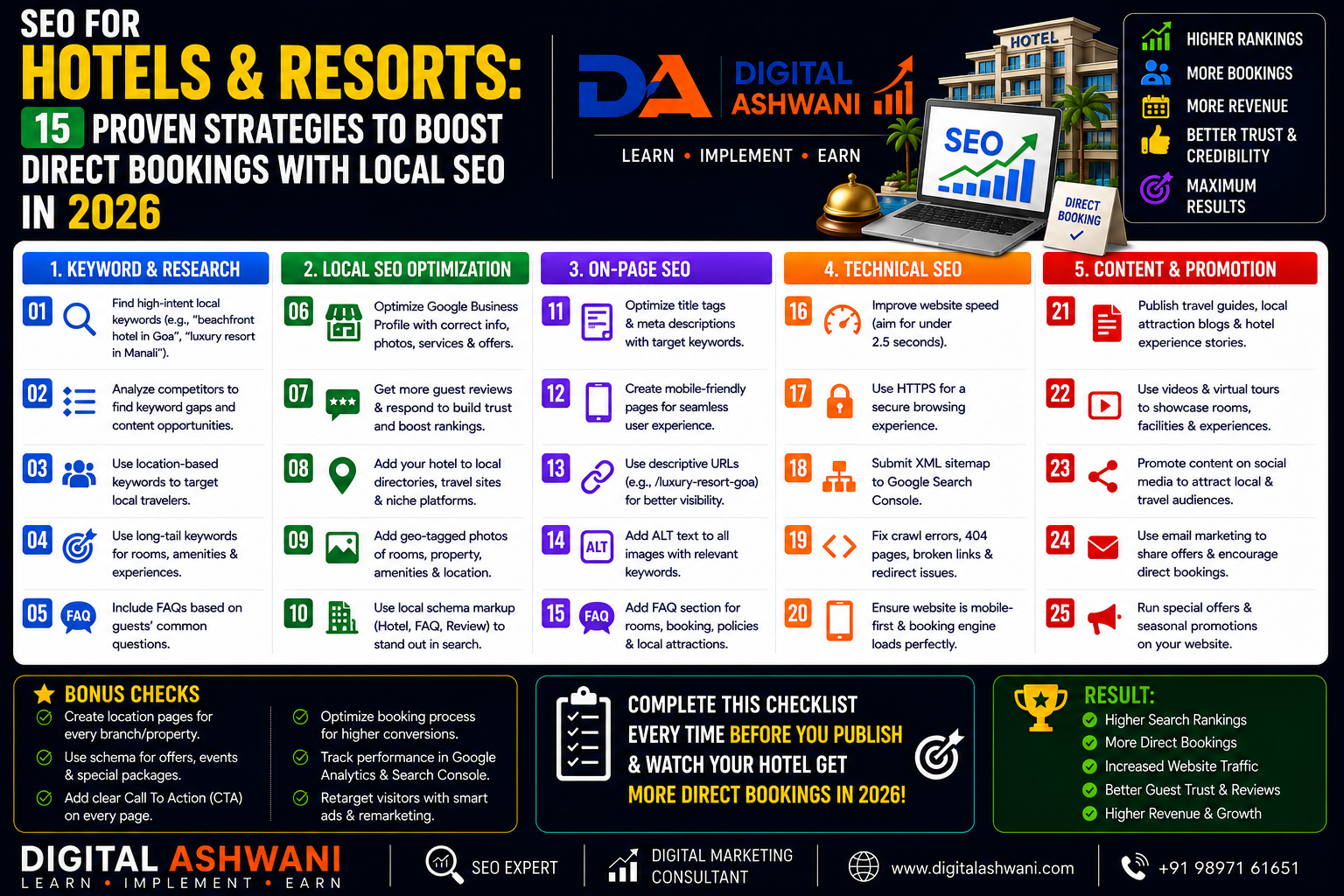
SEO for Hotels & Resorts
The hospitality industry has become increasingly competitive as travelers now rely on Google to research destinations, compare hotels, read reviews, and book accommodations. Whether you own a luxury resort, boutique hotel, business hotel, homestay, or vacation property, having a strong online presence is essential for attracting guests.
People search for queries like:
- Best Hotels Near Me
- Luxury Resort in Goa
- Family Resort in Manali
- Budget Hotel in Jaipur
- Beach Resort in Kerala
- Hotels with Swimming Pool
If your hotel or resort doesn’t appear in these search results, potential guests may book with your competitors instead.
This is where SEO for Hotels & Resorts becomes one of the most effective long-term marketing strategies.
Search Engine Optimization (SEO) helps hospitality businesses improve visibility in Google Search, Google Maps, Google Travel, and AI-powered search experiences. A well-planned SEO strategy can increase direct bookings, reduce reliance on Online Travel Agencies (OTAs), and strengthen your brand’s online reputation.
In this complete guide by Digital Ashwani, you’ll learn 15 proven SEO strategies to improve Google rankings, attract more travelers, and increase direct hotel bookings in 2026.
Why SEO Matters for Hotels & Resorts
Today’s travelers begin their journey online.
Before making a reservation, they compare:
- Hotels
- Resorts
- Prices
- Amenities
- Reviews
- Photos
- Nearby attractions
- Location
SEO ensures your hotel appears when travelers search for accommodation in your destination.
Common search queries include:
- Best Hotel in Delhi
- Luxury Resort in Goa
- Family Hotel Near Airport
- Business Hotel in Gurgaon
- Beach Resort Near Me
- Budget Hotels in Jaipur
Appearing in these search results helps you reach travelers with strong booking intent.
Benefits of SEO for Hotels & Resorts
An effective Hotel SEO strategy can help:
- Increase direct bookings
- Improve Google rankings
- Reduce OTA commission costs
- Increase organic traffic
- Improve brand visibility
- Strengthen customer trust
- Generate qualified booking inquiries
- Support long-term business growth
Unlike paid advertising, SEO continues generating bookings even after your content has been optimized.
15 Proven Strategies to Boost Direct Bookings
1. Perform Hotel Keyword Research
Keyword research is the foundation of every successful Hotel SEO campaign.
Target Booking Intent Keywords
Examples include:
- Luxury Hotel in Goa
- Best Resort in Manali
- Budget Hotel in Delhi
- Hotel Near Airport
- Family Resort in Shimla
These keywords often indicate users who are ready to book accommodation.
Use Long-Tail Keywords
Examples:
- Best Beach Resort in Goa for Families
- Luxury Hotel Near Delhi Airport
- Pet-Friendly Hotel in Jaipur
- Honeymoon Resort in Kerala
Long-tail keywords generally attract highly qualified visitors with clear booking intent.
2. Optimize Individual Room Pages
Every room category should have its own SEO-optimized page.
Create Dedicated Room Pages
Examples include:
- Deluxe Room
- Executive Room
- Family Suite
- Luxury Villa
- Ocean View Room
- Presidential Suite
Dedicated pages help each room rank for relevant searches.
Include Complete Room Information
Every room page should include:
- Room description
- Amenities
- Occupancy
- Pricing
- High-quality images
- Availability details
- Booking CTA
- Frequently Asked Questions
Comprehensive information improves both user experience and search relevance.
3. Strengthen Local SEO
Most hotel searches include location-specific intent.
Target Local Keywords
Examples include:
- Hotel in Delhi
- Resort in Goa
- Hotel Near Railway Station
- Hotels Near Airport
- Best Resort in Rishikesh
Location-based optimization improves local visibility.
Create Destination Pages
If your hotel serves different traveler types or locations, create useful destination guides featuring nearby attractions, restaurants, shopping areas, transportation options, and travel tips.
4. Optimize Your Google Business Profile
Google Business Profile is one of the most valuable assets for hotel marketing.
Complete Your Profile
Include:
- Hotel name
- Address
- Phone number
- Website
- Business hours
- Categories
- Photos
- Amenities
- Reviews
Complete and accurate information improves local search visibility.
Post Regular Updates
Publish updates about:
- Seasonal offers
- Events
- Holiday packages
- Weekend deals
- Restaurant promotions
- Local attractions
Regular activity keeps your profile fresh and informative.
5. Create Helpful Travel Content
Content marketing attracts travelers before they make booking decisions.
Write Destination Guides
Examples include:
- Top Attractions in Goa
- Weekend Trip to Manali
- Best Places to Visit in Jaipur
- Family Vacation Guide
- Honeymoon Travel Tips
Helpful travel content builds topical authority.
Answer Traveler Questions
Cover topics such as:
- Best time to visit
- Local transportation
- Nearby tourist attractions
- Weather information
- Packing tips
- Budget planning
Answering common questions helps travelers plan their trips.
6. Improve Website Speed
A slow hotel website can reduce bookings.
Optimize Performance
Improve speed by:
- Compressing hotel images
- Optimizing CSS & JavaScript
- Enabling browser caching
- Using lazy loading
- Choosing reliable hosting
- Implementing a CDN
Fast websites improve user satisfaction and booking completion rates.
Monitor Core Web Vitals
Track:
- Largest Contentful Paint (LCP)
- Interaction to Next Paint (INP)
- Cumulative Layout Shift (CLS)
Good performance supports both SEO and user experience.
7. Showcase Guest Reviews
Reviews strongly influence booking decisions.
Collect Genuine Reviews
Encourage satisfied guests to leave honest reviews on your Google Business Profile and other trusted platforms after their stay.
Authentic reviews build credibility and can improve local visibility.
Respond Professionally
Thank guests for positive feedback and address concerns politely when responding to critical reviews.
Professional responses demonstrate excellent customer service.
8. Optimize Hotel Images & Videos
Visual content plays a major role in hotel marketing.
Use High-Quality Visual Content
Include:
- Guest rooms
- Lobby
- Swimming pool
- Restaurant
- Spa
- Conference halls
- Outdoor areas
- Nearby attractions
Professional visuals help travelers understand the guest experience.
Follow Image SEO Best Practices
Optimize media by:
- Compressing image sizes
- Using descriptive filenames
- Adding keyword-rich ALT text
- Enabling lazy loading
Optimized media improves both page speed and search performance.
Quick Hotel SEO Checklist
| SEO Area | Importance |
|---|---|
| Keyword Research | ⭐⭐⭐⭐⭐ |
| Room Page SEO | ⭐⭐⭐⭐⭐ |
| Local SEO | ⭐⭐⭐⭐⭐ |
| Google Business Profile | ⭐⭐⭐⭐⭐ |
| Travel Content | ⭐⭐⭐⭐⭐ |
| Website Speed | ⭐⭐⭐⭐☆ |
| Guest Reviews | ⭐⭐⭐⭐⭐ |
| Image SEO | ⭐⭐⭐⭐☆ |
9. Implement Hotel Schema Markup
Structured data helps search engines understand your hotel information and may improve how your pages appear in search results.
Use Relevant Schema Types
Implement schema for:
- Hotel
- Lodging Business
- Organization
- FAQ
- Breadcrumb
- Review (where applicable)
- Local Business
Schema markup can help search engines better interpret details such as hotel amenities, ratings, location, and contact information.
Validate Your Structured Data
Before publishing, test your markup using Google’s Rich Results Test or Schema Markup Validator to identify and fix errors.
10. Optimize for Mobile Bookings
Most travelers now search and book hotels using smartphones.
Create a Mobile-Friendly Booking Experience
Your hotel website should:
- Load quickly
- Display perfectly on all devices
- Have click-to-call functionality
- Offer a simple booking process
- Use readable fonts
- Feature large action buttons
A smooth mobile experience encourages more direct bookings.
Simplify Navigation
Visitors should quickly find:
- Room types
- Pricing
- Amenities
- Photo gallery
- Booking form
- Contact details
- Location map
Easy navigation improves both user experience and conversions.
11. Improve Direct Booking Conversions
Driving traffic is only effective if visitors complete reservations.
Offer Multiple Contact Options
Provide:
- Book Now button
- Call Now
- Live Chat
- Request Callback
Giving guests multiple communication options increases booking opportunities.
Use Strong Calls-to-Action
Examples include:
- Book Your Stay
- Check Availability
- Reserve Now
- Get the Best Price
- View Special Offers
Clear CTAs encourage travelers to complete their reservations.
12. Build High-Quality Hospitality Backlinks
Backlinks remain one of the strongest ranking signals.
Earn Links from Relevant Websites
Focus on backlinks from:
- Travel blogs
- Tourism websites
- Local business directories
- Travel magazines
- News publications
- Destination guides
- Hospitality associations
Relevant backlinks strengthen your hotel’s authority and online visibility.
Create Link-Worthy Content
Publish resources such as:
- Destination guides
- Local travel itineraries
- Festival travel guides
- Weekend getaway ideas
- Seasonal travel tips
- Travel infographics
Useful travel resources naturally attract backlinks over time.
13. Monitor SEO Performance
SEO requires regular analysis and optimization.
Track Important Metrics
Measure:
- Organic traffic
- Direct bookings
- Keyword rankings
- Booking conversion rate
- Google Business Profile performance
- Bounce rate
- Average booking value
Monitoring these metrics helps improve your SEO strategy.
Use Professional SEO Tools
Recommended tools include:
- Google Search Console
- Google Analytics
- Google Business Profile Insights
- Google PageSpeed Insights
These tools provide valuable insights into search performance and user behavior.
14. Demonstrate EEAT
Travelers are more likely to book hotels they trust.
Build Trust Signals
Include:
- About Us page
- Hotel history
- Awards
- Certifications
- Guest testimonials
- Media mentions
- Safety information
These elements strengthen credibility.
Increase Transparency
Clearly display:
- Hotel address
- Phone number
- Check-in & check-out timings
- Cancellation policy
- Privacy Policy
- Terms & Conditions
Providing complete information helps guests make informed booking decisions.
15. Keep Your Website Updated
Fresh content keeps your website relevant for both users and search engines.
Update Existing Pages
Regularly refresh:
- Room availability
- Pricing
- Amenities
- Seasonal offers
- Packages
- Photo gallery
- Local attractions
Accurate information improves user trust.
Publish New Travel Content
Create blogs covering:
- Local festivals
- Weekend travel guides
- Destination itineraries
- Family vacation ideas
- Business travel tips
- Seasonal attractions
Consistent publishing builds topical authority and attracts new visitors.
Hotel SEO Checklist
| SEO Task | Status |
|---|---|
| Keyword Research | ✅ |
| Room Page SEO | ✅ |
| Local SEO | ✅ |
| Google Business Profile | ✅ |
| Hotel Schema Markup | ✅ |
| Mobile Optimization | ✅ |
| Website Speed | ✅ |
| Internal Linking | ✅ |
| Backlink Strategy | ✅ |
| Content Marketing | ✅ |
Common Hotel SEO Mistakes
Using Duplicate Room Descriptions
Copying the same description across multiple room pages makes it difficult for search engines to understand the differences between room categories. Each room page should contain unique, detailed content.
Ignoring Local SEO
Many travelers search using location-specific keywords. Without Local SEO optimization, your hotel may miss valuable booking opportunities in Google Search and Google Maps.
Slow Website Performance
Heavy images, unoptimized code, and poor hosting can slow your website, leading to higher bounce rates and fewer completed bookings.
Poor Booking Experience
A complicated booking process, unclear pricing, or difficult navigation can discourage guests from completing reservations.
Outdated Hotel Information
Incorrect room rates, unavailable offers, outdated amenities, or old images can reduce trust and negatively impact user experience.
Internal Linking Suggestions (Digital Ashwani)
Strengthen your hospitality SEO content cluster by linking this article with:
- SEO Checklist for 2026: 25 Things You Must Do Before Publishing Any Blog
- AI SEO vs Traditional SEO
- Zero-Click SEO Strategy
- How to Rank in ChatGPT Search Results
- Google AI Mode Rollout: Complete SEO Impact Analysis
- Why Organic Traffic Is Dropping Even When Rankings Stay the Same
- Top Digital Marketing Trends in 2026
- SEO for Healthcare Clinics
- SEO for Real Estate Companies
- SEO for Educational Institutes & Coaching Centers
- SEO for Law Firms
- SEO for E-commerce Websites
These internal links strengthen topical authority, improve site architecture, and encourage visitors to explore more Digital Ashwani resources.
External Resources
For trusted SEO and hospitality guidance, refer to:
- Google Search Central
- Google Search Console Help
- Google Business Profile Help
- Google PageSpeed Insights
- Google Hotel Center documentation
- Schema.org documentation for Hotel and Lodging Business
These resources provide authoritative guidance for improving hotel websites and search visibility.
Frequently Asked Questions
How long does SEO for Hotels & Resorts take to show results?
Most hotel websites begin seeing measurable SEO improvements within 3–6 months, although timelines vary depending on competition, destination popularity, website quality, and the consistency of optimization efforts.
Why is Local SEO important for hotels?
Most travelers search using destination or nearby location keywords. Local SEO helps your hotel appear in Google Maps and local search results, increasing visibility among people planning trips to your area.
Can SEO increase direct hotel bookings?
Yes. A well-executed SEO strategy can attract travelers actively searching for accommodation. The number of direct bookings depends on factors such as pricing, reviews, user experience, competition, and the booking process.
Should every room type have its own page?
Absolutely. Dedicated pages with unique descriptions, amenities, photos, pricing information, FAQs, and optimized metadata improve both SEO and the booking experience.
Why is travel content important for Hotel SEO?
Destination guides, travel tips, itineraries, and local attraction articles help attract travelers during the planning stage, build topical authority, and support long-term organic traffic growth.
Final Thoughts
Implementing SEO for Hotels & Resorts is one of the most effective long-term strategies for increasing direct bookings and reducing reliance on Online Travel Agencies (OTAs). By combining keyword research, Local SEO, optimized room pages, technical SEO, structured data, high-quality travel content, strong backlinks, and an exceptional booking experience, hotels and resorts can improve search visibility and attract more qualified guests.
Rather than focusing only on rankings, create a website that inspires confidence, provides complete travel information, and makes booking simple. A guest-first SEO strategy supports sustainable organic growth, stronger brand recognition, and increased direct revenue over time.
