

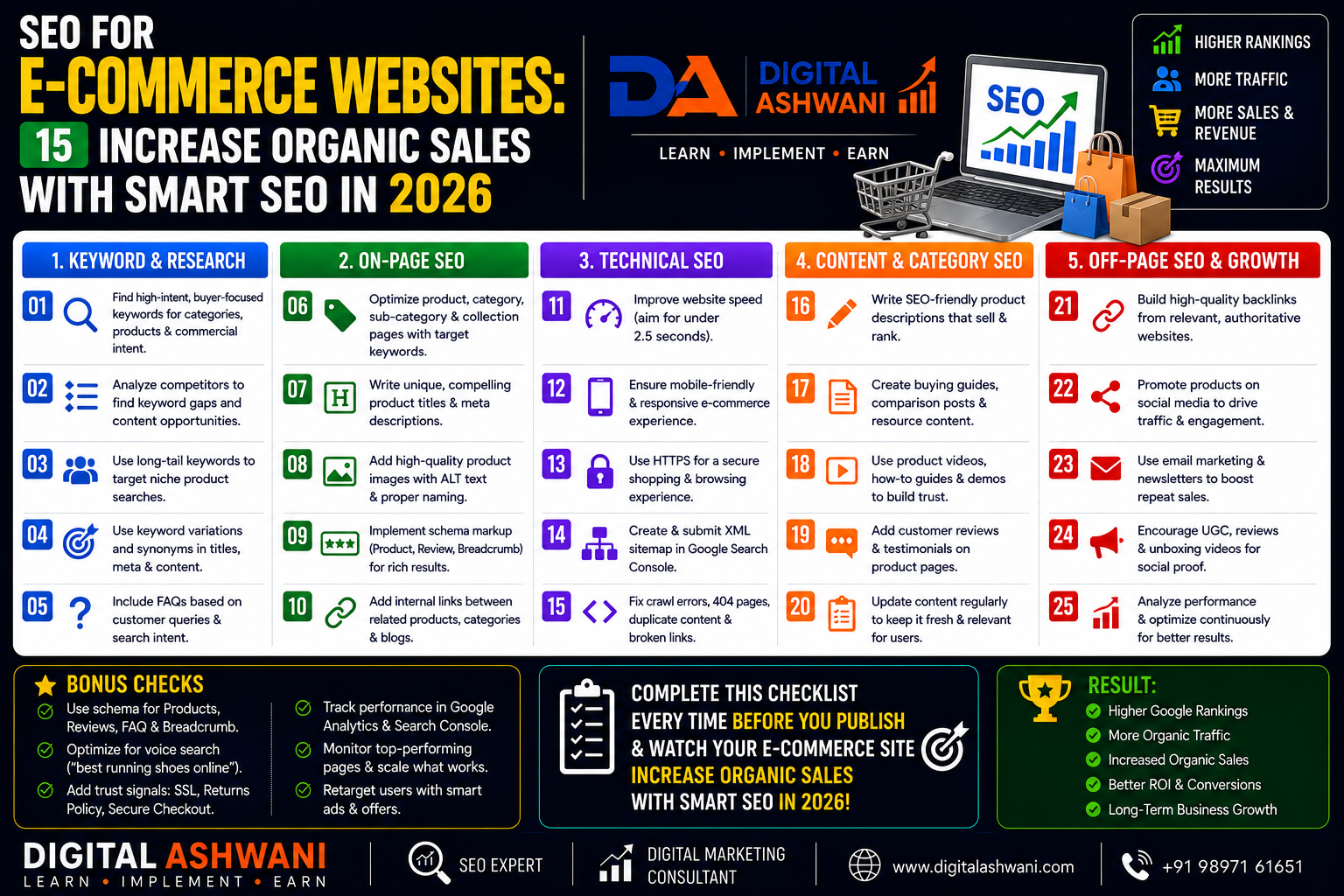
SEO for E-commerce Websites
Running an online store is more competitive than ever. Whether you sell fashion, electronics, furniture, beauty products, or digital goods, thousands of businesses are competing for the same customers on Google.
Most online shoppers begin their buying journey with a search.
Common searches include:
- Best Wireless Earbuds Under ₹5000
- Buy Running Shoes Online
- Gaming Laptop Deals
- Organic Skin Care Products
- Office Chair for Home
- Best Smartphone Under ₹30000
If your products don’t appear in Google’s search results, potential customers may purchase from your competitors instead.
This is where SEO for E-commerce Websites becomes essential.
Search Engine Optimization (SEO) helps online stores improve their visibility in Google Search, Google Shopping, Google Images, and AI-powered search experiences. A well-planned SEO strategy increases qualified organic traffic, improves user experience, and generates consistent product sales without relying entirely on paid advertising.
In this complete guide by Digital Ashwani, you’ll learn 15 proven SEO strategies to help your e-commerce website rank higher on Google, attract buyers with strong purchase intent, and increase organic sales in 2026.
Why SEO Matters for E-commerce Websites
Consumers rely on search engines throughout the buying process.
They compare products, prices, reviews, specifications, and brands before making a purchase.
SEO helps your online store appear when shoppers search for:
- Product names
- Brand names
- Product categories
- Buying guides
- Product comparisons
- Reviews
- Best products
Unlike paid advertising, SEO can continue driving traffic and sales long after your pages have been optimized.
Benefits of SEO for E-commerce Websites
A successful Ecommerce SEO strategy can help:
- Increase qualified organic traffic
- Improve Google rankings
- Generate more product sales
- Reduce advertising costs
- Improve conversion rates
- Strengthen brand visibility
- Build customer trust
- Support long-term business growth
SEO works best as part of a comprehensive digital marketing strategy.
15 Smart SEO Strategies to Increase Organic Sales
1. Perform Ecommerce Keyword Research
Every successful SEO campaign begins with understanding what customers are searching for.
Target Purchase-Intent Keywords
Examples include:
- Buy Running Shoes Online
- Best Gaming Laptop
- Wireless Earbuds Under ₹5000
- Organic Face Wash
- Bluetooth Speaker Online
These keywords often indicate strong buying intent.
Use Long-Tail Keywords
Examples:
- Best Office Chair for Back Pain
- Waterproof Hiking Shoes for Men
- Cotton T-Shirts for Summer
- DSLR Camera Under ₹60000
Long-tail keywords generally have lower competition and can attract highly qualified shoppers.
2. Optimize Product Pages
Product pages are among the most important assets of an e-commerce website.
Write Unique Product Descriptions
Avoid copying manufacturer descriptions.
Instead, include:
- Product overview
- Key features
- Benefits
- Technical specifications
- FAQs
- Usage tips
Original content improves both SEO and user experience.
Optimize Metadata
Each product page should have:
- Unique SEO Title
- Meta Description
- URL
- H1 Heading
- Image ALT text
Optimized metadata helps search engines understand your products more effectively.
3. Optimize Category Pages
Category pages often target broader, high-volume keywords.
Create SEO-Friendly Categories
Examples:
- Men’s Shoes
- Smartphones
- Kitchen Appliances
- Office Furniture
- Home Decor
Category pages should include descriptive introductory content rather than only product listings.
Improve User Navigation
Use:
- Filters
- Sorting options
- Breadcrumb navigation
- Internal links
- Clear category descriptions
Good navigation improves both usability and crawlability.
4. Improve Website Speed
Page speed directly affects user experience and conversions.
Optimize Performance
Improve loading speed by:
- Compressing product images
- Using lazy loading
- Optimizing CSS & JavaScript
- Browser caching
- Using a CDN
- Choosing reliable hosting
Faster websites reduce bounce rates and improve customer satisfaction.
Monitor Core Web Vitals
Track:
- Largest Contentful Paint (LCP)
- Interaction to Next Paint (INP)
- Cumulative Layout Shift (CLS)
Strong Core Web Vitals contribute to a better user experience.
5. Optimize Product Images
Images play a major role in online shopping.
Use High-Quality Images
Include:
- Multiple product angles
- Lifestyle photos
- Zoom functionality
- Product videos (where applicable)
High-quality visuals help customers make informed purchasing decisions.
Image SEO Best Practices
Optimize images by:
- Compressing files
- Using descriptive filenames
- Adding keyword-rich ALT text
- Serving modern image formats where appropriate
Optimized images support both SEO and faster page loads.
6. Strengthen Internal Linking
Internal links help users discover more products while improving SEO.
Connect Related Products
Examples:
- Similar Products
- Frequently Bought Together
- Customers Also Viewed
- Matching Accessories
These links improve user engagement and can increase average order value.
Create Topic Clusters
Link:
- Buying Guides → Categories
- Categories → Products
- Blogs → Product Pages
- Product Pages → Related Articles
This structure strengthens topical authority.
7. Publish Helpful Buying Guides
Educational content attracts visitors before they are ready to purchase.
Examples
Create guides such as:
- Best Laptop Buying Guide
- How to Choose Running Shoes
- Smartphone Buying Guide
- Furniture Buying Tips
- Camera Comparison Guide
Buying guides help customers make informed decisions.
Target Informational Searches
Examples:
- Which Laptop Should I Buy?
- DSLR vs Mirrorless Camera
- Best Shoes for Walking
- How to Choose a Mattress
Informational content supports long-term organic growth.
8. Encourage Customer Reviews
Reviews improve trust and may contribute valuable user-generated content.
Collect Genuine Reviews
Ask verified customers to leave honest feedback after their purchase.
Authentic reviews help future buyers evaluate products.
Respond to Customer Feedback
Address questions and concerns professionally.
Helpful responses improve customer confidence and demonstrate active support.
Quick Ecommerce SEO Checklist
| SEO Area | Importance |
|---|---|
| Keyword Research | ⭐⭐⭐⭐⭐ |
| Product Page SEO | ⭐⭐⭐⭐⭐ |
| Category Page SEO | ⭐⭐⭐⭐⭐ |
| Website Speed | ⭐⭐⭐⭐⭐ |
| Image SEO | ⭐⭐⭐⭐☆ |
| Internal Linking | ⭐⭐⭐⭐☆ |
| Buying Guides | ⭐⭐⭐⭐⭐ |
| Customer Reviews | ⭐⭐⭐⭐☆ |
9. Implement Product Schema Markup
Structured data helps search engines understand your product pages and can improve how they appear in search results.
Use Product Schema
Implement structured data for:
- Product name
- Brand
- Price
- Availability
- SKU
- Product images
- Ratings
- Reviews
When implemented correctly, eligible pages may display rich results such as prices, ratings, and stock availability.
Validate Your Schema
Use Google’s Rich Results Test or Schema Markup Validator to ensure your structured data is error-free and follows current guidelines.
10. Optimize for Mobile Shopping
Most online shoppers now browse and purchase products using smartphones.
Create a Mobile-Friendly Store
Your e-commerce website should:
- Load quickly
- Display correctly on all screen sizes
- Have large, tappable buttons
- Offer easy navigation
- Simplify the checkout process
A seamless mobile experience improves engagement and conversions.
Improve Mobile Navigation
Include:
- Sticky navigation
- Search bar
- Product filters
- Clear categories
- Easy checkout
Reducing friction helps users complete purchases more efficiently.
11. Optimize the Checkout Experience
Driving traffic is only valuable if visitors complete their purchases.
Reduce Cart Abandonment
Improve the checkout process by:
- Offering guest checkout
- Minimizing form fields
- Showing shipping costs early
- Supporting multiple payment methods
- Displaying trust badges
A simpler checkout experience often leads to higher conversion rates.
Use Strong Calls-to-Action
Examples include:
- Buy Now
- Add to Cart
- Checkout Securely
- Order Today
- Shop Now
Clear CTAs encourage users to take action.
12. Build High-Quality Ecommerce Backlinks
Backlinks remain one of the strongest ranking factors for e-commerce websites.
Earn Links from Relevant Websites
Focus on backlinks from:
- Industry blogs
- Product review websites
- News publications
- Business directories
- Influencers
- Manufacturers
- Partners
Quality is far more important than quantity.
Create Link-Worthy Content
Develop resources such as:
- Product comparison guides
- Industry reports
- Infographics
- Shopping checklists
- Buying guides
- Research-based articles
Valuable resources naturally attract backlinks over time.
13. Monitor SEO Performance
SEO requires continuous analysis and optimization.
Track Key Metrics
Monitor:
- Organic traffic
- Product rankings
- Click-through rate (CTR)
- Conversion rate
- Revenue from organic search
- Bounce rate
- Average order value
These metrics help evaluate the effectiveness of your SEO strategy.
Use Professional SEO Tools
Examples include:
- Google Search Console
- Google Analytics
- Google Merchant Center
- PageSpeed Insights
These tools provide valuable insights into search performance and website health.
14. Demonstrate Trust & EEAT
Customers are more likely to buy from stores they trust.
Show Trust Signals
Include:
- About Us page
- Contact information
- Privacy Policy
- Return Policy
- Shipping Policy
- Secure payment badges
- Customer testimonials
These signals improve confidence throughout the buying journey.
Display Business Information
Clearly provide:
- Business address
- Phone number
- Email support
- Customer service details
- Social media profiles
Transparency contributes to a positive user experience.
15. Keep Your Store Updated
Search engines and customers both value fresh, accurate information.
Update Existing Pages
Regularly refresh:
- Product descriptions
- Pricing
- Stock availability
- Product specifications
- Images
- FAQs
Accurate information improves both usability and search relevance.
Publish New Content
Create articles covering:
- Product launches
- Buying guides
- Product comparisons
- Industry trends
- Seasonal shopping tips
- Maintenance guides
Consistent publishing strengthens topical authority and attracts new visitors.
E-commerce SEO Checklist
| SEO Task | Status |
|---|---|
| Keyword Research | ✅ |
| Product Page Optimization | ✅ |
| Category Page SEO | ✅ |
| Product Schema Markup | ✅ |
| Mobile Optimization | ✅ |
| Website Speed | ✅ |
| Internal Linking | ✅ |
| Customer Reviews | ✅ |
| Backlink Strategy | ✅ |
| Content Marketing | ✅ |
Common Ecommerce SEO Mistakes
Using Duplicate Product Descriptions
Copying manufacturer descriptions across product pages reduces uniqueness and can make it harder for search engines to understand the value of your content.
Ignoring Category Pages
Many stores focus only on product pages. Well-optimized category pages often target broader, high-volume keywords and can generate significant traffic.
Slow Website Performance
Large images, unnecessary scripts, and poor hosting can slow your store and negatively affect both user experience and conversions.
Poor Internal Linking
Without strategic internal links, users and search engines may struggle to discover important products and categories.
Not Updating Out-of-Stock Products
Leaving outdated product pages without clear stock information can frustrate users. Update inventory regularly and suggest relevant alternatives when products are unavailable.
Internal Linking Suggestions (Digital Ashwani)
Strengthen your e-commerce SEO content cluster by linking this article with:
- SEO Checklist for 2026: 25 Things You Must Do Before Publishing Any Blog
- AI SEO vs Traditional SEO
- Zero-Click SEO Strategy
- How to Rank in ChatGPT Search Results
- Google AI Mode Rollout: Complete SEO Impact Analysis
- Why Organic Traffic Is Dropping Even When Rankings Stay the Same
- Performance Marketing vs Digital Marketing
- Top Digital Marketing Trends in 2026
- SEO for Real Estate Companies
- SEO for Healthcare Clinics
- SEO for Law Firms
These internal links improve topical authority, strengthen your website structure, and help visitors discover related resources across the Digital Ashwani blog.
External Resources
For trusted SEO and e-commerce guidance, refer to:
- Google Search Central
- Google Search Console Help
- Google Merchant Center Help
- Google PageSpeed Insights
- Schema.org Product Documentation
These resources provide best practices for optimizing online stores and improving search visibility.
Frequently Asked Questions
How long does Ecommerce SEO take to show results?
Many online stores begin seeing measurable SEO improvements within 3–6 months, although timelines depend on competition, website authority, product catalog size, and the consistency of optimization efforts.
Is Product Schema important for Ecommerce SEO?
Yes. Product schema helps search engines understand product information and may enable eligible pages to display rich results such as prices, ratings, and availability in Google Search.
Can SEO increase online sales?
Yes. A well-executed SEO strategy can attract qualified shoppers who are actively searching for products. Sales results depend on factors such as product demand, pricing, user experience, website trust, and conversion optimization.
Should every product have a unique page?
Absolutely. Every product should have its own dedicated page with unique descriptions, specifications, images, FAQs, and optimized metadata.
Why are category pages important for Ecommerce SEO?
Category pages target broader keywords, improve site architecture, help users discover products, and often become major sources of organic traffic.
Final Thoughts
Implementing SEO for E-commerce Websites is one of the most effective long-term strategies for increasing organic sales and reducing dependence on paid advertising. By combining keyword research, optimized product and category pages, technical SEO, structured data, mobile optimization, high-quality backlinks, and a strong focus on user experience, online stores can improve visibility and attract shoppers with high purchase intent.
Instead of optimizing only for search engines, focus on building an online store that makes it easy for customers to find products, compare options, and complete purchases confidently. A customer-first SEO strategy supports sustainable traffic, stronger brand authority, and long-term revenue growth.
