

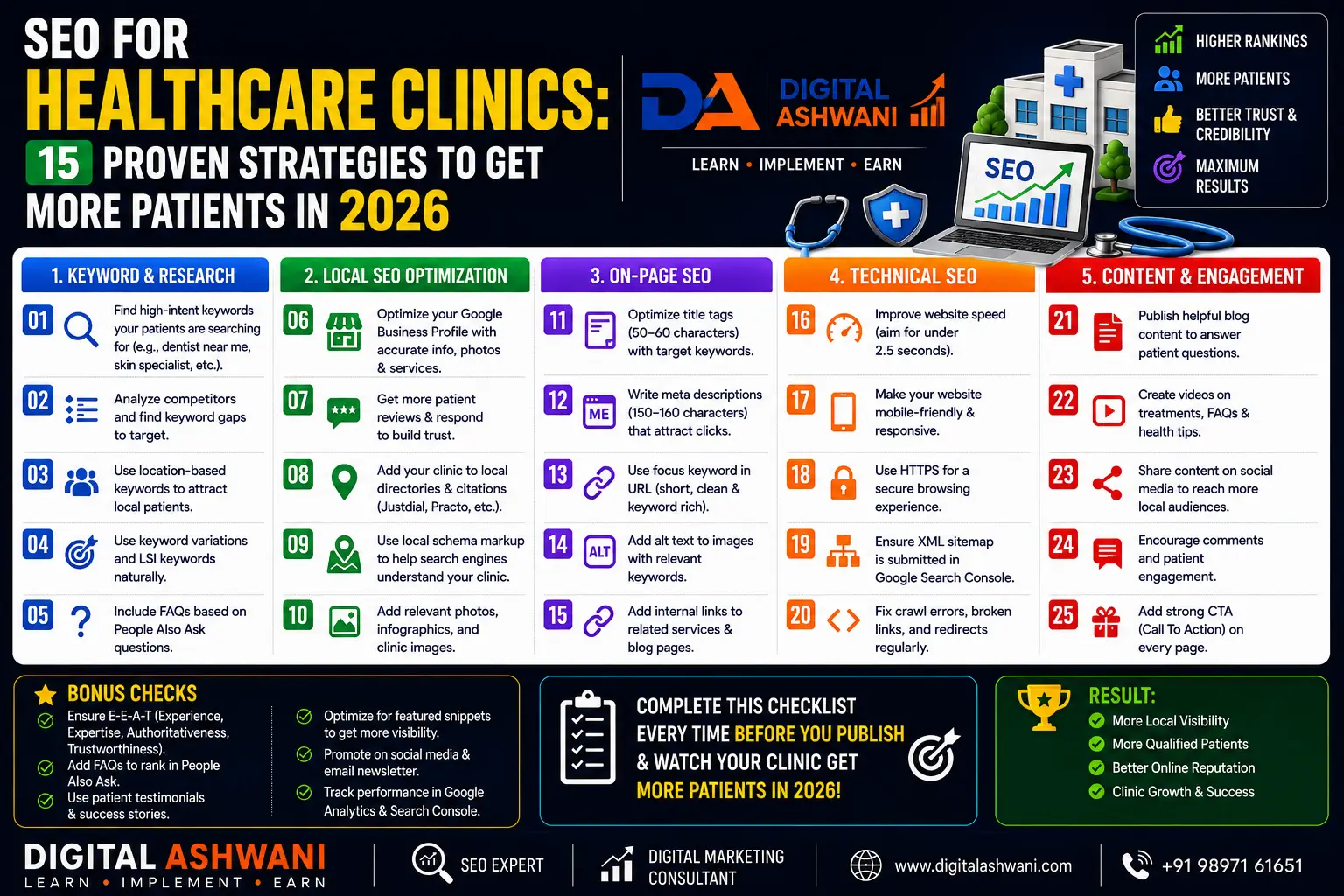
SEO for Healthcare Clinics
Healthcare has become increasingly digital. Today, many patients search online before choosing a doctor, clinic, dentist, physiotherapist, or diagnostic center. They compare reviews, browse websites, check Google Maps, and read educational content before booking an appointment.
If your clinic isn’t appearing prominently in search results, potential patients may choose a competitor instead.
This is where SEO for Healthcare Clinics becomes essential.
Search Engine Optimization (SEO) helps healthcare providers improve their visibility in Google Search, Google Maps, and other search platforms. A well-planned SEO strategy can increase qualified website traffic, strengthen patient trust, and generate more appointment requests over time.
However, healthcare websites are considered Your Money or Your Life (YMYL) content by Google, meaning they are held to a higher standard of quality, accuracy, and trustworthiness. Successful healthcare SEO requires not only technical optimization but also reliable, patient-focused information that demonstrates Experience, Expertise, Authoritativeness, and Trustworthiness (EEAT).
In this comprehensive guide by Digital Ashwani, you’ll learn 15 proven strategies to improve your clinic’s online visibility, attract more patients, and build sustainable organic growth in 2026.
Why SEO Matters for Healthcare Clinics
Most patients begin their healthcare journey with an online search.
Common searches include:
- Best Dentist Near Me
- Orthopedic Doctor in Delhi
- Pediatric Clinic Near Me
- Dermatologist Near Me
- Eye Specialist Near Me
- Best Physiotherapy Clinic
If your clinic ranks higher for relevant searches, more people are likely to discover your services.
SEO also helps patients find important information such as:
- Clinic location
- Opening hours
- Doctor profiles
- Services offered
- Patient reviews
- Appointment options
Unlike paid advertising, SEO can continue generating organic visibility long after content is published.
Benefits of SEO for Healthcare Clinics
A strong Healthcare SEO strategy can help:
- Increase qualified patient inquiries
- Improve Google Search visibility
- Rank in Google Maps
- Build trust through educational content
- Reduce long-term marketing costs
- Strengthen local brand awareness
- Improve website usability
- Support sustainable practice growth
SEO should complement—not replace—other patient acquisition strategies.
15 Proven Strategies to Get More Patients
1. Optimize Your Google Business Profile
A Google Business Profile is one of the most important local SEO assets for any healthcare clinic.
Complete Every Profile Section
Ensure your profile includes:
- Clinic name
- Address
- Phone number
- Website
- Business category
- Opening hours
- Photos
- Services
- Appointment information
Accurate and complete information helps patients find and contact your clinic more easily.
Keep Information Updated
Update your profile whenever there are changes to:
- Working hours
- Holiday schedules
- Contact details
- Services
- Clinic photos
Regular updates improve the user experience and maintain accurate local listings.
2. Focus on Local SEO
Most healthcare searches have local intent.
Use Location-Based Keywords
Examples include:
- Dentist in Delhi
- Cardiologist in Noida
- Orthopedic Clinic in Gurgaon
- Best ENT Doctor Near Me
Location-specific keywords help connect your clinic with nearby patients.
Create Local Landing Pages
If your clinic serves multiple areas, create dedicated pages for each location while ensuring each page contains unique and helpful information.
3. Improve Website Speed
Patients expect healthcare websites to load quickly.
Optimize Performance
Improve speed by:
- Compressing images
- Enabling browser caching
- Optimizing CSS and JavaScript
- Reducing unnecessary plugins
- Using a reliable hosting provider
Faster websites generally provide a better user experience.
Monitor Core Web Vitals
Pay attention to metrics such as:
- Largest Contentful Paint (LCP)
- Interaction to Next Paint (INP)
- Cumulative Layout Shift (CLS)
These metrics help evaluate page performance and usability.
4. Create Helpful Medical Content
Educational content builds trust and helps answer common patient questions.
Write Patient-Focused Articles
Examples include:
- Symptoms of common conditions
- Treatment options
- Preventive healthcare tips
- Recovery guidance
- Frequently asked questions
Content should be written in clear, understandable language while remaining medically accurate.
Maintain Accuracy
Healthcare information should be reviewed regularly and updated when guidelines or recommendations change.
5. Optimize Doctor Profile Pages
Patients often want to learn about healthcare professionals before booking an appointment.
Include Relevant Information
Doctor profile pages should feature:
- Qualifications
- Areas of specialization
- Professional experience
- Languages spoken
- Consultation availability
- Professional memberships (where applicable)
Detailed profiles help build confidence and transparency.
Add Professional Photos
High-quality clinic and doctor photos contribute to a professional online presence.
6. Encourage Patient Reviews
Online reviews influence both local visibility and patient trust.
Request Reviews Ethically
Invite satisfied patients to leave honest reviews on platforms such as your Google Business Profile after their visit.
Avoid offering incentives or posting fake reviews.
Respond Professionally
Reply politely to reviews while protecting patient privacy.
Responses should never reveal confidential medical information.
7. Optimize Service Pages
Each healthcare service deserves its own optimized page.
Examples
Create dedicated pages for:
- General Consultation
- Dental Implants
- Physiotherapy
- Dermatology
- Cardiology
- Pediatrics
Separate pages help search engines understand your services more clearly.
Include Useful Information
Each page should explain:
- Who the service is for
- What patients can expect
- Benefits
- Frequently asked questions
- Appointment options
The goal is to help users make informed decisions.
8. Implement Healthcare Schema Markup
Structured data helps search engines better understand your website.
Useful Schema Types
Depending on your website, consider implementing:
- MedicalBusiness
- Physician
- LocalBusiness
- FAQ
- Organization
- Breadcrumb
Correct implementation may improve how eligible pages appear in search results.
Validate Structured Data
Use appropriate testing tools to ensure your structured data follows current guidelines.
Quick Healthcare SEO Checklist
| SEO Area | Importance |
|---|---|
| Google Business Profile | ⭐⭐⭐⭐⭐ |
| Local SEO | ⭐⭐⭐⭐⭐ |
| Website Speed | ⭐⭐⭐⭐☆ |
| Helpful Content | ⭐⭐⭐⭐⭐ |
| Doctor Profiles | ⭐⭐⭐⭐☆ |
| Patient Reviews | ⭐⭐⭐⭐⭐ |
| Service Pages | ⭐⭐⭐⭐⭐ |
| Schema Markup | ⭐⭐⭐⭐☆ |
9. Build High-Quality Healthcare Backlinks
Backlinks remain one of Google’s strongest ranking signals, especially for healthcare websites where trust and authority are critical.
Earn Links from Trusted Websites
Focus on acquiring backlinks from:
- Healthcare organizations
- Medical associations
- Hospitals
- Universities
- Government health websites
- Local business directories
- Reputable healthcare blogs
Links from authoritative websites help strengthen your clinic’s online credibility.
Publish Link-Worthy Content
Create valuable resources such as:
- Health awareness guides
- Preventive care checklists
- Medical FAQs
- Research summaries
- Infographics
- Seasonal healthcare tips
Useful content naturally attracts citations and backlinks over time.
10. Optimize for Mobile Users
Most patients search for healthcare services using smartphones.
Mobile-Friendly Website
Your clinic website should:
- Load quickly
- Display properly on all devices
- Have readable text
- Use clickable phone numbers
- Include easy appointment buttons
A seamless mobile experience increases patient satisfaction.
Simple Navigation
Patients should find important information within a few clicks, including:
- Contact details
- Services
- Doctors
- Appointment forms
- Emergency information
11. Improve Appointment Conversion Rate
Generating traffic is only valuable if visitors become patients.
Easy Appointment Booking
Offer multiple booking options:
- Online appointment form
- Phone call
- Live chat (if available)
Reducing booking friction improves conversion rates.
Strong Call-to-Action
Examples include:
- Book an Appointment
- Schedule Your Consultation
- Contact Our Clinic Today
- Speak with Our Doctor
Every important page should guide users toward the next step.
12. Optimize Internal Linking
Internal links help users navigate your website while improving crawlability.
Connect Related Pages
For example:
- Doctor Profiles → Services
- Services → Blog Articles
- Blog Articles → Appointment Page
- Homepage → Major Departments
A logical internal linking structure strengthens topical authority.
Build Content Clusters
Create topic clusters around:
- Cardiology
- Dental Care
- Pediatrics
- Women’s Health
- Orthopedics
- Skin Care
Content clusters help search engines understand your expertise.
13. Monitor SEO Performance
Healthcare SEO requires continuous improvement.
Track Important Metrics
Measure:
- Organic traffic
- Keyword rankings
- Appointment requests
- Google Business Profile performance
- Local search visibility
- Bounce rate
- Conversion rate
Regular analysis helps identify opportunities for optimization.
Use Reliable SEO Tools
Examples include:
- Google Search Console
- Google Analytics
- Google Business Profile Insights
- PageSpeed Insights
These tools provide valuable performance data.
14. Demonstrate EEAT
Healthcare is a Your Money or Your Life (YMYL) category, making trust especially important.
Show Expertise
Include:
- Doctor qualifications
- Certifications
- Years of experience
- Professional memberships
- Awards (where applicable)
Transparent information builds patient confidence.
Maintain Trust
Your website should clearly display:
- Privacy Policy
- Contact information
- Clinic address
- Terms & Conditions
- Medical disclaimer
These trust signals support both users and search engines.
15. Keep Your Website Updated
Healthcare information changes over time.
Refresh Existing Content
Regularly update:
- Treatment information
- Doctor profiles
- Pricing (if displayed)
- Clinic timings
- Medical guidelines
- FAQs
Fresh, accurate content improves user experience.
Publish New Content Consistently
Create blogs covering:
- Disease prevention
- Seasonal illnesses
- Healthy lifestyle tips
- Medical awareness campaigns
- New healthcare technologies
Consistent publishing helps build long-term topical authority.
Healthcare Local SEO Checklist
| Task | Status |
|---|---|
| Google Business Profile Optimized | ✅ |
| Consistent NAP Information | ✅ |
| Local Keywords Targeted | ✅ |
| Doctor Profile Pages | ✅ |
| Individual Service Pages | ✅ |
| Patient Reviews | ✅ |
| Mobile-Friendly Website | ✅ |
| Fast Loading Speed | ✅ |
| Healthcare Schema Markup | ✅ |
| Internal Linking | ✅ |
Common Healthcare SEO Mistakes
Publishing Thin Content
Short or generic medical articles rarely provide enough value for patients or search engines.
Ignoring Local SEO
Without Local SEO, clinics may miss opportunities to appear in Google Maps and location-based searches.
Using Duplicate Service Pages
Each service page should contain unique, helpful, and patient-focused content.
Not Updating Medical Information
Outdated healthcare information can reduce trust and should be reviewed regularly.
Slow Website Performance
Patients often leave slow websites before booking an appointment, making speed optimization essential.
Internal Linking Suggestions (Digital Ashwani)
Strengthen your healthcare SEO content cluster by linking this article with:
- Google Search Ranking Fluctuation 2026: Why Your Website Traffic Dropped?
- SEO Checklist for 2026: 25 Things You Must Do Before Publishing Any Blog
- AI SEO vs Traditional SEO
- Zero-Click SEO Strategy
- How to Rank in ChatGPT Search Results
- Google AI Mode Rollout: Complete SEO Impact Analysis
- Why Organic Traffic Is Dropping Even When Rankings Stay the Same
- Recommendation for SEO Services in Delhi That Specialize in Technical SEO
- Best SEO Company in Delhi for Improving Google Ranking Quickly
- Top Digital Marketing Trends in 2026
These internal links improve topical relevance, help users discover related resources, and strengthen your overall SEO architecture.
External Resources
For accurate healthcare and SEO guidance, consult:
- Google Search Central (Search Essentials and Helpful Content guidance)
- Google Business Profile Help
- World Health Organization (WHO)
- India’s Ministry of Health & Family Welfare
- PageSpeed Insights
These authoritative resources support best practices for healthcare websites.
Frequently Asked Questions
How long does Healthcare SEO take to show results?
Many clinics begin seeing improvements within 3–6 months, although timelines vary depending on competition, website quality, and the consistency of SEO efforts.
Why is Local SEO important for healthcare clinics?
Most patients search for nearby doctors and clinics. Local SEO improves your chances of appearing in Google Maps and local search results, helping attract patients in your service area.
Can Healthcare SEO help increase patient appointments?
Yes. A well-optimized website can improve online visibility, attract relevant visitors, and make it easier for potential patients to book appointments. Actual results depend on factors such as competition, service quality, website usability, and overall marketing strategy.
Does every clinic need a Google Business Profile?
Yes. A complete and regularly updated Google Business Profile helps patients find your clinic, view contact details, read reviews, and navigate using Google Maps.
Why is EEAT important for Healthcare SEO?
Because healthcare content can affect people’s health decisions, Google expects strong signals of Experience, Expertise, Authoritativeness, and Trustworthiness (EEAT). Demonstrating these qualities helps build confidence with both users and search engines.
Final Thoughts
Implementing SEO for Healthcare Clinics is one of the most effective long-term strategies for increasing online visibility and attracting qualified patients. By combining Technical SEO, Local SEO, high-quality medical content, mobile optimization, structured data, and strong EEAT signals, healthcare providers can build a trustworthy online presence that supports sustainable growth.
Instead of chasing quick ranking gains, focus on creating an accurate, patient-centered website that answers real questions, offers an excellent user experience, and demonstrates professional expertise. Over time, this approach can strengthen your clinic’s visibility, reputation, and patient acquisition efforts.
